AI-generated content for informational purposes only. Not financial advice. Always do your own research.

Sobre

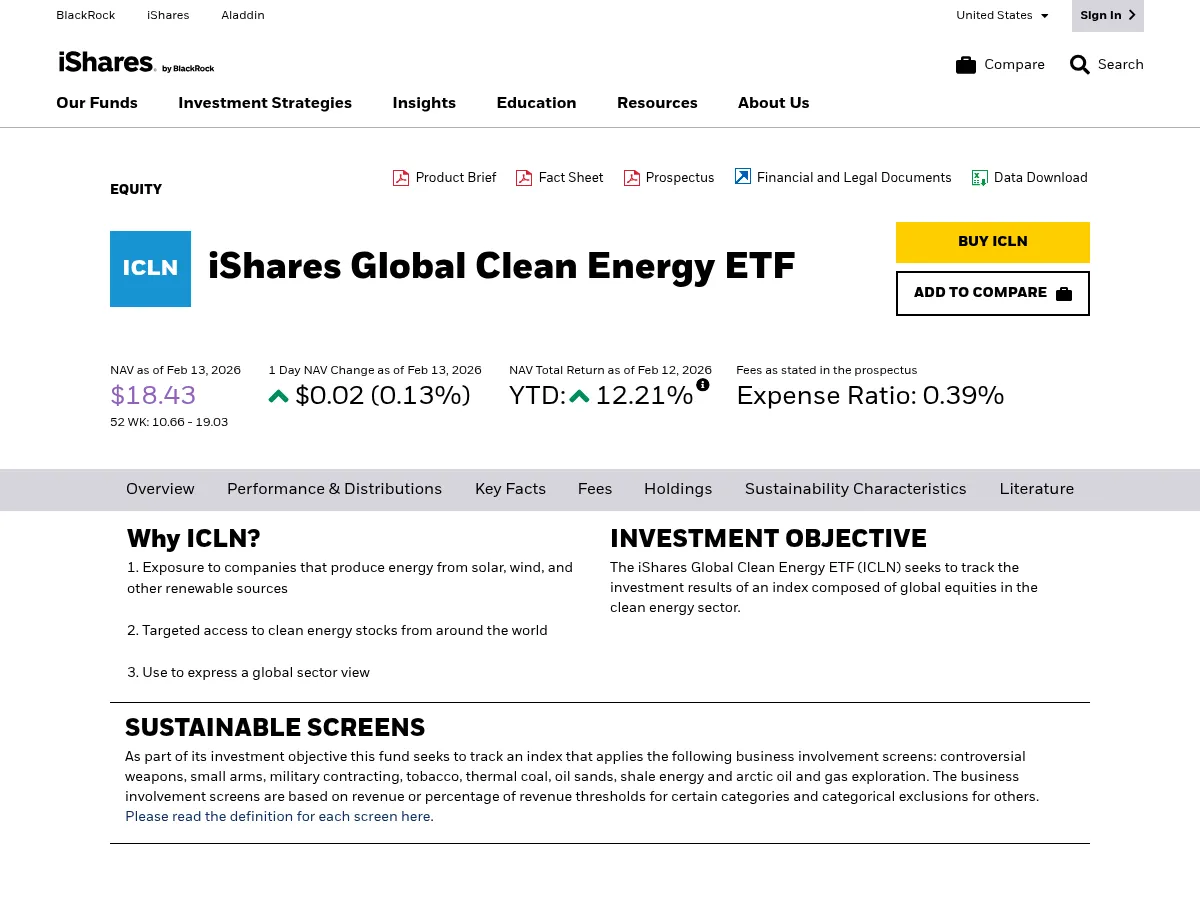
ETF que acompanha o S&P Global Clean Energy Index, proporcionando exposição a empresas que produzem energia solar, eólica e outras fontes renováveis em todo o mundo.

ETFs de Energia Limpa

ICLN é um dos ETFs de energia limpa mais populares, oferecendo exposição global a empresas de energia solar, eólica e energia renovável através do S&P Global Clean Energy Index.

Ações de Energia Verde

ICLN rastreia o S&P Global Clean Energy Index, proporcionando exposição a empresas que produzem energia solar, eólica e outras fontes renováveis em todo o mundo.

4.0
1 reviews
Management Quality
4.2
Valuation
4
Fundamentals
4
Performance
3.8
Risk Profile
3.6
Claude Opus 4.6
AI Review
4.0/5

The iShares Global Clean Energy ETF (ICLN) is one of the most recognized and liquid vehicles for gaining broad exposure to the global clean energy sector. Managed by BlackRock, the fund tracks the S&P Global Clean Energy Index, holding roughly 100 stocks spanning solar, wind, hydrogen, and other renewable energy companies worldwide. Its diversified approach reduces single-stock risk compared to individual green energy plays. On the bull side, ICLN benefits from powerful secular tailwinds including government subsidies (IRA in the US, EU Green Deal), declining renewable costs, and accelerating corporate decarbonization commitments. The fund's low expense ratio (~0.40%) and strong liquidity make it accessible. However, the bear case is notable: ICLN has significantly underperformed since its 2021 peak, weighed down by rising interest rates that punish capital-intensive clean energy firms, supply chain disruptions, and stretched valuations during the initial hype cycle. Political risks around subsidy rollbacks remain a concern. Investors should view ICLN as a long-term thematic allocation rather than a short-term trade, accepting meaningful volatility for exposure to the energy transition megatrend.

Management Quality
4.2
Fundamentals
4
Valuation
4
Performance
3.8
Risk Profile
3.6
Feb 15, 2026

Latest from Otrai

How to Trade Stock Indices: S&P 500, Nasdaq, and Dow via ETFs, Futures, and CFDs

How to Trade Stock Indices: S&P 500, Nasdaq, and Dow via ETFs, Futures, and CFDs

A stock index is a single number that summarizes the price action of a basket of companies. The S&P 500 tracks roughly 500 large US firms, the Nasdaq-100 tracks the 100 largest non-financial names on the Nasdaq exchange, and the Dow Jones Industrial Average follows 30 blue-chip stocks.
The Options Greeks Explained: Delta, Gamma, Theta, and Vega

The Options Greeks Explained: Delta, Gamma, Theta, and Vega

The Greeks explain why an option costs what it costs and how that price changes when the stock moves, time passes, and volatility shifts. Delta, Gamma, Theta, and Vega, made accessible.

Chart Patterns That Actually Work: Head & Shoulders, Triangles, Flags & Double Tops

Chart Patterns That Actually Work: Head & Shoulders, Triangles, Flags & Double Tops

Chart patterns are the most recognizable part of technical analysis and the most misunderstood. Most fail or break out the wrong way before reversing. This guide covers head and shoulders, double tops and bottoms, triangles, and flags — with realistic reliability, target measurement, and false-breakout confirmation.

Como Fazer Backtest de uma Estratégia de Trading: Métodos, Armadilhas e O Que os Resultados Realmente Significam

Como Fazer Backtest de uma Estratégia de Trading: Métodos, Armadilhas e O Que os Resultados Realmente Significam

Todo trader tem uma estratégia que parece ótima em sua cabeça. Backtesting é como você descobre se ela realmente funciona. Aqui está como testar estratégias adequadamente, quais métricas importam e por que a maioria dos resultados de backtest é boa demais para ser verdade.