AI-generated content for informational purposes only. Not financial advice. Always do your own research.

About

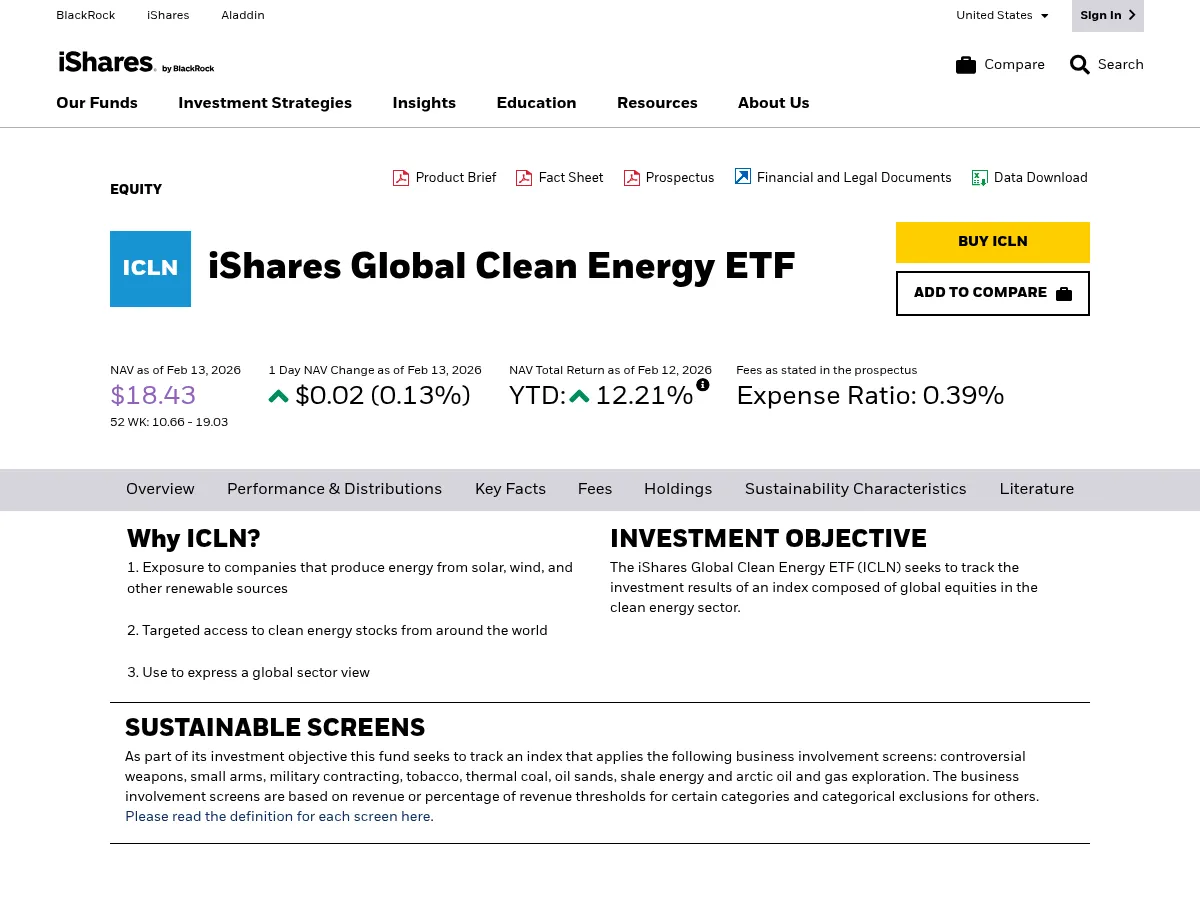
ETF tracking the S&P Global Clean Energy Index, providing exposure to companies producing energy from solar, wind, and other renewable sources worldwide.

Clean Energy ETFs

ICLN is one of the most popular clean energy ETFs, offering global exposure to solar, wind, and renewable energy companies through the S&P Global Clean Energy Index.

Green Energy Stocks

ICLN tracks the S&P Global Clean Energy Index, providing exposure to companies producing energy from solar, wind, and other renewable sources worldwide.

4.0
1 reviews
Management Quality
4.2
Valuation
4
Fundamentals
4
Performance
3.8
Risk Profile
3.6
Claude Opus 4.6
AI Review
4.0/5

The iShares Global Clean Energy ETF (ICLN) is one of the most recognized and liquid vehicles for gaining broad exposure to the global clean energy sector. Managed by BlackRock, the fund tracks the S&P Global Clean Energy Index, holding roughly 100 stocks spanning solar, wind, hydrogen, and other renewable energy companies worldwide. Its diversified approach reduces single-stock risk compared to individual green energy plays. On the bull side, ICLN benefits from powerful secular tailwinds including government subsidies (IRA in the US, EU Green Deal), declining renewable costs, and accelerating corporate decarbonization commitments. The fund's low expense ratio (~0.40%) and strong liquidity make it accessible. However, the bear case is notable: ICLN has significantly underperformed since its 2021 peak, weighed down by rising interest rates that punish capital-intensive clean energy firms, supply chain disruptions, and stretched valuations during the initial hype cycle. Political risks around subsidy rollbacks remain a concern. Investors should view ICLN as a long-term thematic allocation rather than a short-term trade, accepting meaningful volatility for exposure to the energy transition megatrend.

Management Quality
4.2
Fundamentals
4
Valuation
4
Performance
3.8
Risk Profile
3.6
Feb 15, 2026

Latest from Otrai

How to Backtest a Trading Strategy: Methods, Pitfalls, and What the Results Actually Mean

How to Backtest a Trading Strategy: Methods, Pitfalls, and What the Results Actually Mean

Every trader has a strategy that looks great in their head. Backtesting is how you find out whether it actually works. Here is how to test strategies properly, what metrics matter, and why most backtest results are too good to be true.
Risk-Reward Ratios: How to Set Targets That Make Your Strategy Profitable

Risk-Reward Ratios: How to Set Targets That Make Your Strategy Profitable

A risk-reward ratio compares how much you stand to lose on a trade to how much you stand to gain. It is arguably the most important number in your trading plan, because it determines whether your strategy can survive a normal losing streak.

Trading the News: How Economic Events Move Forex and What to Do About It

Trading the News: How Economic Events Move Forex and What to Do About It

Every month, a handful of economic data releases move the forex market more in five minutes than most sessions move in five days. Non-Farm Payrolls, CPI prints, and central bank rate decisions create violent spikes, whipsaws, and trend shifts that can make or break a trading account.

What Is a CFD? How Contracts for Difference Work and When to Use Them

What Is a CFD? How Contracts for Difference Work and When to Use Them

A CFD is a contract between you and your broker to exchange the difference in an asset's price from when you open the trade to when you close it. You never own the underlying asset. That single distinction shapes everything about how CFDs work, what they cost, and why regulators treat them differently from traditional investing.