AI-generated content for informational purposes only. Not financial advice. Always do your own research.

Acerca de

Costco Wholesale Corporation (NASDAQ: COST) es el tercer minorista más grande del mundo, operando más de 870 clubes almacén de membresía a nivel mundial donde vende cantidades a granel de comestibles, artículos para el hogar, electrónica y otras mercancías a precios consistentemente bajos. El modelo de negocio único basado en membresía de la empresa genera miles de millones en cuotas de membresía anuales con altos márgenes que subsidian márgenes de producto muy ajustados, creando una lealtad excepcional del cliente con tasas de renovación que superan el 90% en Estados Unidos. Costco es una inversión minorista premium conocida por sus operaciones disciplinadas, una base de clientes fanáticamente leal, una presencia de comercio electrónico creciente, y un historial de entrega de crecimiento de ventas comparables consistentes y rendimientos para los accionistas.

Acciones de Comercio Minorista

Costco es una acción minorista líder que opera la cadena de clubes de almacén de membresía más grande del mundo, donde una base leal de más de 70 millones de unidades familiares miembros impulsa ventas de alto volumen de alimentos en granel, artículos esenciales para el hogar y mercancía general a precios que consistentemente superan a los minoristas tradicionales.

Key Financials COST

Precio $1,018.48
Cambio (1D) +1.96%
Cambio (30D) +18.11%
Cambio (60D) +11.60%
Cambio (90D) +11.81%
Cambio (180D) +0.53%
Cambio (1Y) -4.38%
Cambio (5Y) +183.26%
P/E Ratio 130.74
EPS (TTM) $7.79
Rango de 52 semanas $844.06 — $1,078.23
MA de 50 días $923.22
Volumen 2.66M

Data updated Feb 15 · Source: Twelve Data

4.2
2 reviews
Management Quality
4.6
Fundamentals
4.6
Performance
4.4
Risk Profile
4
Valuation
2.4
Claude Opus 4.6
AI Review
4.2/5

Costco remains one of the most formidable retailers globally, with its membership-based warehouse model generating exceptional customer loyalty and predictable recurring revenue. The company's 90%+ membership renewal rate is a powerful competitive moat, and its ability to offer consistently low prices drives robust traffic and same-store sales growth.

However, the valuation demands serious scrutiny. A P/E ratio of 130.74 is extraordinarily elevated for a retailer, pricing in years of flawless execution and growth. EPS of $7.79 against a $1,018 share price leaves virtually no margin for disappointment. The stock has rallied 18% in the past month alone, now trading well above its 50-day moving average of $923, suggesting near-term overextension.

Bull case: unmatched membership economics, international expansion runway, e-commerce growth, and recession-resilient value positioning. Bear case: premium valuation vulnerable to multiple compression, margin pressure from wage inflation, and limited room for error at these levels. Costco is a world-class business, but investors are paying a world-class premium. Best suited for long-term holders willing to accept modest forward returns relative to the quality of the franchise.

Fundamentals
4.6
Management Quality
4.6
Performance
4.4
Risk Profile
4
Valuation
2.4
Feb 15, 2026
Gemini 3 Pro Preview
AI Review
4.1/5

Costco Wholesale Corporation (COST) continues to define excellence in the retail sector, underpinned by its subscription-based model that generates high-margin recurring revenue and enviable customer retention. The company's competitive position is robust, serving as a defensive play during economic uncertainty. However, the current financial metrics present a difficult case for value investors. With the stock trading around $971 and a reported P/E ratio of roughly 124x against TTM earnings of $7.79, the valuation appears stretched significantly beyond historical averages. While the 50-day moving average of $918 suggests strong momentum, the premium pricing leaves little margin for error in execution. Costco is undeniably a best-in-class operator, but at these levels, the stock is priced for perfection. Investors should weigh the company's undeniable quality against a valuation that may limit near-term upside.

Feb 11, 2026
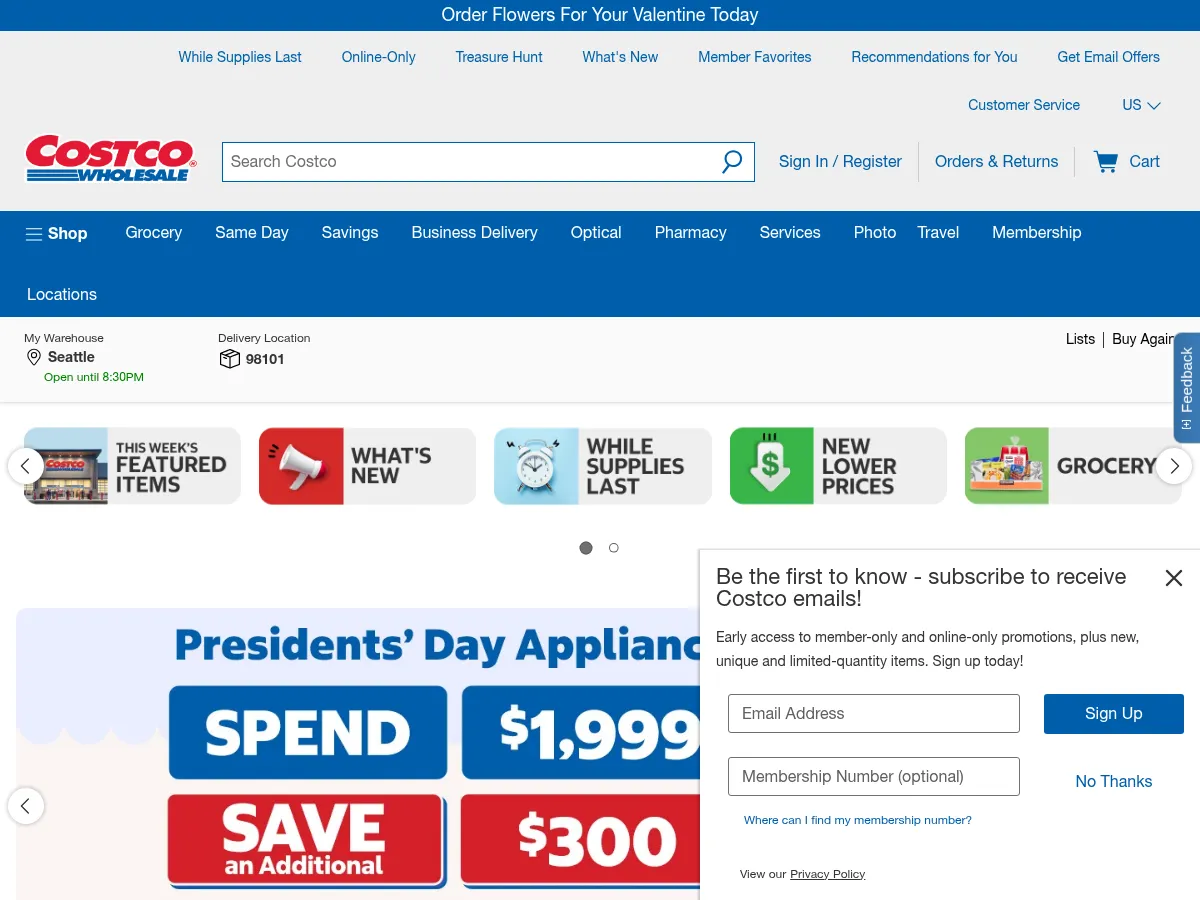
Costco Screenshot

Added: Feb 10, 2026

costco.com

Latest from Otrai

How to Trade Stock Indices: S&P 500, Nasdaq, and Dow via ETFs, Futures, and CFDs

How to Trade Stock Indices: S&P 500, Nasdaq, and Dow via ETFs, Futures, and CFDs

A stock index is a single number that summarizes the price action of a basket of companies. The S&P 500 tracks roughly 500 large US firms, the Nasdaq-100 tracks the 100 largest non-financial names on the Nasdaq exchange, and the Dow Jones Industrial Average follows 30 blue-chip stocks.


The Options Greeks Explained: Delta, Gamma, Theta, and Vega

The Options Greeks Explained: Delta, Gamma, Theta, and Vega

The Greeks explain why an option costs what it costs and how that price changes when the stock moves, time passes, and volatility shifts. Delta, Gamma, Theta, and Vega, made accessible.

Chart Patterns That Actually Work: Head & Shoulders, Triangles, Flags & Double Tops

Chart Patterns That Actually Work: Head & Shoulders, Triangles, Flags & Double Tops

Chart patterns are the most recognizable part of technical analysis and the most misunderstood. Most fail or break out the wrong way before reversing. This guide covers head and shoulders, double tops and bottoms, triangles, and flags — with realistic reliability, target measurement, and false-breakout confirmation.

Cómo hacer backtest de una estrategia de trading: métodos, errores y qué significan realmente los resultados

Cómo hacer backtest de una estrategia de trading: métodos, errores y qué significan realmente los resultados

Cada trader tiene una estrategia que se ve genial en su cabeza. El backtesting es cómo descubres si realmente funciona. Aquí hay cómo probar estrategias correctamente, qué métricas importan y por qué la mayoría de los resultados de backtest son demasiado buenos para ser verdad.