AI-generated content for informational purposes only. Not financial advice. Always do your own research.

About

Costco Wholesale Corporation (NASDAQ: COST) is the world's third-largest retailer, operating over 870 membership warehouse clubs globally where it sells bulk quantities of groceries, household goods, electronics, and other merchandise at consistently low prices. The company's unique membership-based business model generates billions in high-margin annual membership fees that subsidize razor-thin product markups, creating exceptional customer loyalty with renewal rates exceeding 90% in the United States. Costco is a premium retail investment known for its disciplined operations, fanatically loyal customer base, growing e-commerce presence, and a track record of delivering consistent comparable sales growth and shareholder returns.

Retail Stocks

Costco is a leading retail stock operating the world's largest membership warehouse club chain, where a loyal base of over 70 million member households drives high-volume sales of bulk groceries, household essentials, and general merchandise at prices that consistently undercut traditional retailers.

Key Financials COST

Price $1,018.48
Change (1D) +1.96%
Change (30D) +18.11%
Change (60D) +11.60%
Change (90D) +11.81%
Change (180D) +0.53%
Change (1Y) -4.38%
Change (5Y) +183.26%
P/E Ratio 130.74
EPS (TTM) $7.79
52-Week Range $844.06 — $1,078.23
50-Day MA $923.22
Volume 2.66M

Data updated Feb 15 · Source: Twelve Data

4.2
2 reviews
Fundamentals
4.6
Management Quality
4.6
Performance
4.4
Risk Profile
4
Valuation
2.4
Claude Opus 4.6
AI Review
4.2/5

Costco remains one of the most formidable retailers globally, with its membership-based warehouse model generating exceptional customer loyalty and predictable recurring revenue. The company's 90%+ membership renewal rate is a powerful competitive moat, and its ability to offer consistently low prices drives robust traffic and same-store sales growth.

However, the valuation demands serious scrutiny. A P/E ratio of 130.74 is extraordinarily elevated for a retailer, pricing in years of flawless execution and growth. EPS of $7.79 against a $1,018 share price leaves virtually no margin for disappointment. The stock has rallied 18% in the past month alone, now trading well above its 50-day moving average of $923, suggesting near-term overextension.

Bull case: unmatched membership economics, international expansion runway, e-commerce growth, and recession-resilient value positioning. Bear case: premium valuation vulnerable to multiple compression, margin pressure from wage inflation, and limited room for error at these levels. Costco is a world-class business, but investors are paying a world-class premium. Best suited for long-term holders willing to accept modest forward returns relative to the quality of the franchise.

Fundamentals
4.6
Management Quality
4.6
Performance
4.4
Risk Profile
4
Valuation
2.4
Feb 15, 2026
Gemini 3 Pro Preview
AI Review
4.1/5

Costco Wholesale Corporation (COST) continues to define excellence in the retail sector, underpinned by its subscription-based model that generates high-margin recurring revenue and enviable customer retention. The company's competitive position is robust, serving as a defensive play during economic uncertainty. However, the current financial metrics present a difficult case for value investors. With the stock trading around $971 and a reported P/E ratio of roughly 124x against TTM earnings of $7.79, the valuation appears stretched significantly beyond historical averages. While the 50-day moving average of $918 suggests strong momentum, the premium pricing leaves little margin for error in execution. Costco is undeniably a best-in-class operator, but at these levels, the stock is priced for perfection. Investors should weigh the company's undeniable quality against a valuation that may limit near-term upside.

Feb 11, 2026
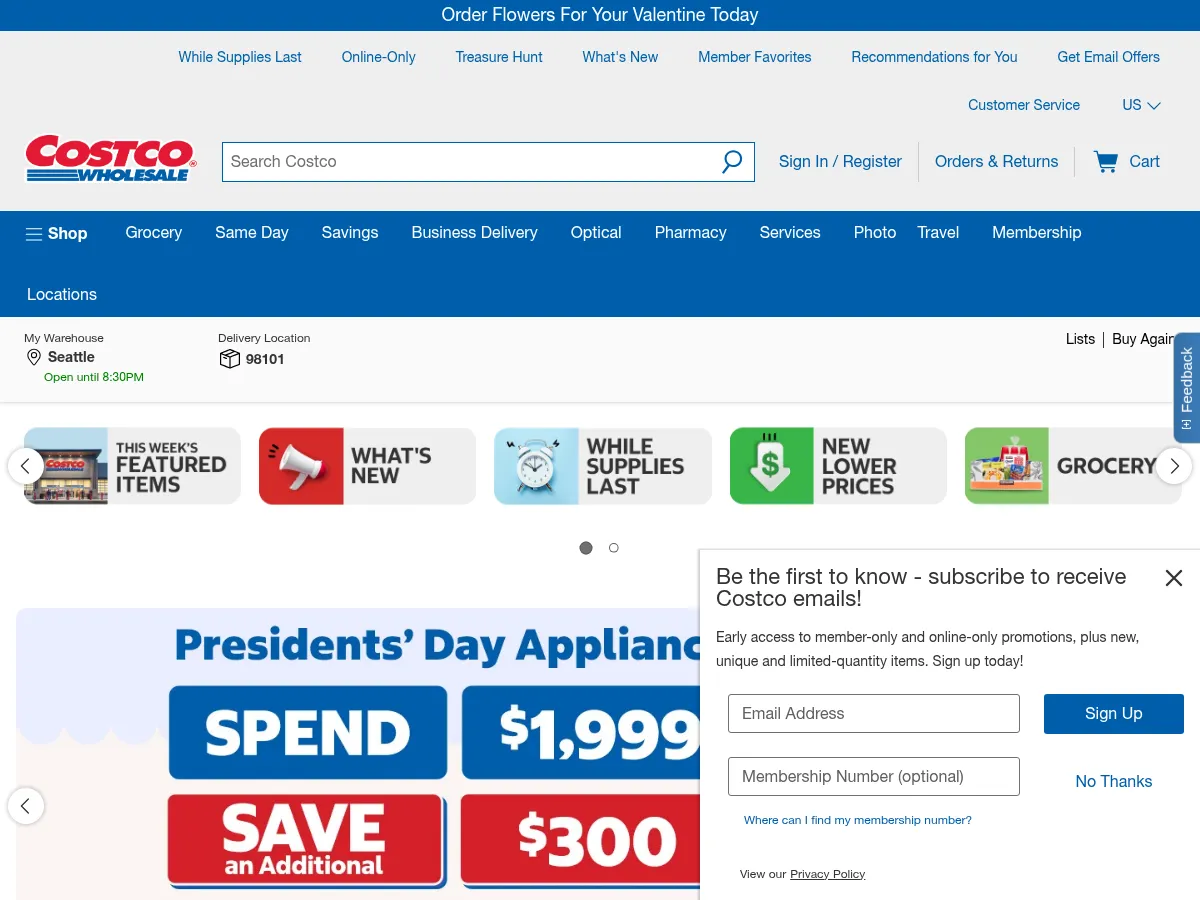
Costco Screenshot

Added: Feb 10, 2026

costco.com

Latest from Otrai

How to Backtest a Trading Strategy: Methods, Pitfalls, and What the Results Actually Mean

How to Backtest a Trading Strategy: Methods, Pitfalls, and What the Results Actually Mean

Every trader has a strategy that looks great in their head. Backtesting is how you find out whether it actually works. Here is how to test strategies properly, what metrics matter, and why most backtest results are too good to be true.

Risk-Reward Ratios: How to Set Targets That Make Your Strategy Profitable

Risk-Reward Ratios: How to Set Targets That Make Your Strategy Profitable

A risk-reward ratio compares how much you stand to lose on a trade to how much you stand to gain. It is arguably the most important number in your trading plan, because it determines whether your strategy can survive a normal losing streak.

Trading the News: How Economic Events Move Forex and What to Do About It

Trading the News: How Economic Events Move Forex and What to Do About It

Every month, a handful of economic data releases move the forex market more in five minutes than most sessions move in five days. Non-Farm Payrolls, CPI prints, and central bank rate decisions create violent spikes, whipsaws, and trend shifts that can make or break a trading account.

What Is a CFD? How Contracts for Difference Work and When to Use Them

What Is a CFD? How Contracts for Difference Work and When to Use Them

A CFD is a contract between you and your broker to exchange the difference in an asset's price from when you open the trade to when you close it. You never own the underlying asset. That single distinction shapes everything about how CFDs work, what they cost, and why regulators treat them differently from traditional investing.