AI-generated content for informational purposes only. Not financial advice. Always do your own research.

Über uns

Costco Wholesale Corporation (NASDAQ: COST) ist der drittgrößte Einzelhandelsbetrieb der Welt und betreibt über 870 Mitgliedschafts-Lagerhäuser weltweit, in denen es Lebensmittel, Haushaltswaren, Elektronik und andere Waren in großen Mengen zu konstant niedrigen Preisen verkauft. Das einzigartige Geschäftsmodell des Unternehmens mit Mitgliedschaftsbasis generiert Milliarden an hochmargigen jährlichen Mitgliedschaftsgebühren, die extrem niedrige Produktaufschläge subventionieren, was zu außergewöhnlicher Kundenloyalität mit Erneuerungsquoten von über 90% in den Vereinigten Staaten führt. Costco ist eine Premium-Einzelhandelsinvestition, bekannt für seine disziplinierte Betriebsweise, fanatisch treue Kundenbasis, wachsende E-Commerce-Präsenz und eine Erfolgsbilanz bei der Lieferung konsistenten vergleichbaren Umsatzwachstums und Aktionärsrenditen.

Einzelhandelsaktien

Costco ist eine führende Einzelhandelsaktie und betreibt die weltweit größte Mitglieds-Lagerkette, wobei eine loyale Basis von über 70 Millionen Haushalten mit Mitgliedschaft hohe Verkaufsmengen von Lebensmitteln in Großmengen, Haushaltsbedarfsartikeln und allgemeinen Waren zu Preisen antreibt, die traditionelle Einzelhändler konsistent unterbieten.

Key Financials COST

Preis $1,018.48
Veränderung (1T) +1.96%
Veränderung (30D) +18.11%
Veränderung (60D) +11.60%
Veränderung (90D) +11.81%
Veränderung (180D) +0.53%
Veränderung (1Y) -4.38%
Veränderung (5Y) +183.26%
KGV 130.74
EPS (TTM) $7.79
52-Wochen-Spanne $844.06 — $1,078.23
50-Tage-Durchschnitt $923.22
Volumen 2.66M

Data updated Feb 15 · Source: Twelve Data

4.2
2 reviews
Management Quality
4.6
Fundamentals
4.6
Performance
4.4
Risk Profile
4
Valuation
2.4
Claude Opus 4.6
AI Review
4.2/5

Costco remains one of the most formidable retailers globally, with its membership-based warehouse model generating exceptional customer loyalty and predictable recurring revenue. The company's 90%+ membership renewal rate is a powerful competitive moat, and its ability to offer consistently low prices drives robust traffic and same-store sales growth.

However, the valuation demands serious scrutiny. A P/E ratio of 130.74 is extraordinarily elevated for a retailer, pricing in years of flawless execution and growth. EPS of $7.79 against a $1,018 share price leaves virtually no margin for disappointment. The stock has rallied 18% in the past month alone, now trading well above its 50-day moving average of $923, suggesting near-term overextension.

Bull case: unmatched membership economics, international expansion runway, e-commerce growth, and recession-resilient value positioning. Bear case: premium valuation vulnerable to multiple compression, margin pressure from wage inflation, and limited room for error at these levels. Costco is a world-class business, but investors are paying a world-class premium. Best suited for long-term holders willing to accept modest forward returns relative to the quality of the franchise.

Fundamentals
4.6
Management Quality
4.6
Performance
4.4
Risk Profile
4
Valuation
2.4
Feb 15, 2026
Gemini 3 Pro Preview
AI Review
4.1/5

Costco Wholesale Corporation (COST) continues to define excellence in the retail sector, underpinned by its subscription-based model that generates high-margin recurring revenue and enviable customer retention. The company's competitive position is robust, serving as a defensive play during economic uncertainty. However, the current financial metrics present a difficult case for value investors. With the stock trading around $971 and a reported P/E ratio of roughly 124x against TTM earnings of $7.79, the valuation appears stretched significantly beyond historical averages. While the 50-day moving average of $918 suggests strong momentum, the premium pricing leaves little margin for error in execution. Costco is undeniably a best-in-class operator, but at these levels, the stock is priced for perfection. Investors should weigh the company's undeniable quality against a valuation that may limit near-term upside.

Feb 11, 2026
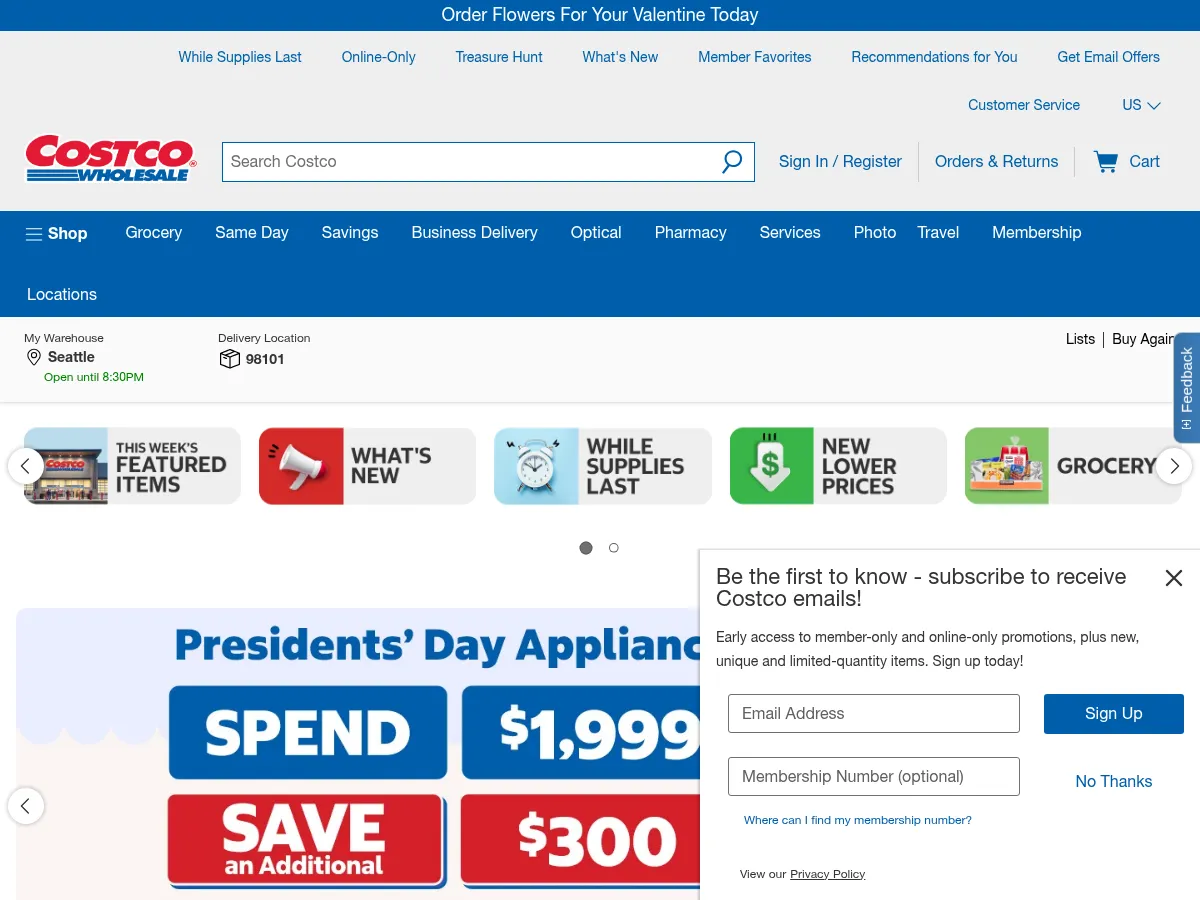
Costco Screenshot

Added: Feb 10, 2026

costco.com

Latest from Otrai

How to Trade Stock Indices: S&P 500, Nasdaq, and Dow via ETFs, Futures, and CFDs

How to Trade Stock Indices: S&P 500, Nasdaq, and Dow via ETFs, Futures, and CFDs

A stock index is a single number that summarizes the price action of a basket of companies. The S&P 500 tracks roughly 500 large US firms, the Nasdaq-100 tracks the 100 largest non-financial names on the Nasdaq exchange, and the Dow Jones Industrial Average follows 30 blue-chip stocks.
The Options Greeks Explained: Delta, Gamma, Theta, and Vega

The Options Greeks Explained: Delta, Gamma, Theta, and Vega

The Greeks explain why an option costs what it costs and how that price changes when the stock moves, time passes, and volatility shifts. Delta, Gamma, Theta, and Vega, made accessible.

Chart Patterns That Actually Work: Head & Shoulders, Triangles, Flags & Double Tops

Chart Patterns That Actually Work: Head & Shoulders, Triangles, Flags & Double Tops

Chart patterns are the most recognizable part of technical analysis and the most misunderstood. Most fail or break out the wrong way before reversing. This guide covers head and shoulders, double tops and bottoms, triangles, and flags — with realistic reliability, target measurement, and false-breakout confirmation.

So backtesten Sie eine Handelsstrategie: Methoden, Fallstricke und was die Ergebnisse tatsächlich bedeuten

So backtesten Sie eine Handelsstrategie: Methoden, Fallstricke und was die Ergebnisse tatsächlich bedeuten

Jeder Trader hat eine Strategie, die in seinem Kopf großartig aussieht. Backtesting ist die Art herauszufinden, ob sie tatsächlich funktioniert. Hier erfahren Sie, wie Sie Strategien richtig testen, welche Kennzahlen wichtig sind und warum die meisten Backtest-Ergebnisse zu gut sind, um wahr zu sein.