AI-generated content for informational purposes only. Not financial advice. Always do your own research.

Sobre

Holding de moda de luxo americana que possui Coach, Kate Spade e Stuart Weitzman. Principal player do segmento de luxo acessível.

Ações de Luxo de Consumo

Tapestry é proprietária da Coach, Kate Spade e Stuart Weitzman, operando no segmento de moda de luxo acessível e direcionando consumidores que buscam marcas premium a preços mais acessíveis.

Key Financials TPR

Preço $153.80
Variação (1D) +0.75%
Variação (30D) +20.37%
Variação (60D) +51.17%
Variação (90D) +33.17%
Variação (180D) +91.25%
Variação (1Y) +80.66%
Variação (5Y) +301.04%
P/E Ratio 27.32
EPS (TTM) $5.63
Faixa de 52 Semanas $58.39 — $158.28
MA de 50 Dias $130.62
Volume 2.94M

Data updated Feb 15 · Source: Twelve Data

3.9
1 reviews
Financial Performance
4.3
Management Quality
4.2
Market Position
3.5
Brand Prestige
3.5
Growth Potential
3.4
Claude Opus 4.6
AI Review
3.9/5

Tapestry Inc., parent of Coach, Kate Spade, and Stuart Weitzman, has delivered extraordinary stock performance, surging over 80% in the past year and trading near its 52-week high of $158.28. The stock's momentum accelerated following the failed Capri Holdings merger, allowing management to refocus on organic growth and aggressive share buybacks.

The bull case centers on Coach's remarkable brand revitalization, particularly with younger consumers, strong direct-to-consumer execution, and disciplined margin expansion. EPS of $5.63 reflects solid profitability, and management has demonstrated effective capital allocation through buybacks.

However, at a P/E of 27.32, the stock is no longer cheap for an accessible luxury company and trades at a premium to historical averages. Key risks include consumer spending deceleration, Kate Spade's ongoing turnaround challenges, and the reality that Tapestry competes in the accessible luxury segment rather than true luxury, making it more cyclically exposed. The 51% gain over 60 days suggests much good news is already priced in. Investors should watch for signs of demand normalization before adding at these elevated levels.

Financial Performance
4.3
Management Quality
4.2
Brand Prestige
3.5
Market Position
3.5
Growth Potential
3.4
Feb 15, 2026
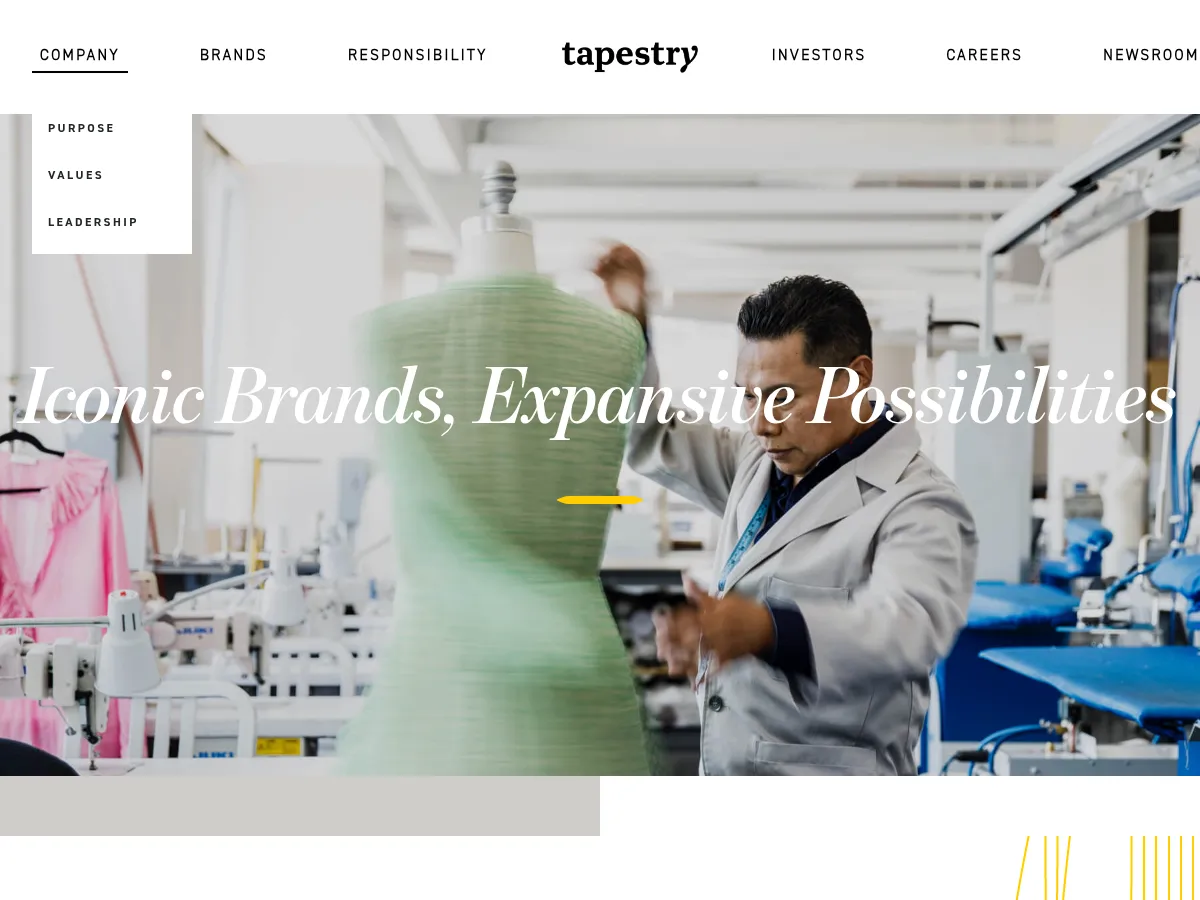
Tapestry Inc Screenshot

Added: Feb 15, 2026

tapestry.com

Latest from Otrai

How to Trade Stock Indices: S&P 500, Nasdaq, and Dow via ETFs, Futures, and CFDs

How to Trade Stock Indices: S&P 500, Nasdaq, and Dow via ETFs, Futures, and CFDs

A stock index is a single number that summarizes the price action of a basket of companies. The S&P 500 tracks roughly 500 large US firms, the Nasdaq-100 tracks the 100 largest non-financial names on the Nasdaq exchange, and the Dow Jones Industrial Average follows 30 blue-chip stocks.

The Options Greeks Explained: Delta, Gamma, Theta, and Vega

The Options Greeks Explained: Delta, Gamma, Theta, and Vega

The Greeks explain why an option costs what it costs and how that price changes when the stock moves, time passes, and volatility shifts. Delta, Gamma, Theta, and Vega, made accessible.

Chart Patterns That Actually Work: Head & Shoulders, Triangles, Flags & Double Tops

Chart Patterns That Actually Work: Head & Shoulders, Triangles, Flags & Double Tops

Chart patterns are the most recognizable part of technical analysis and the most misunderstood. Most fail or break out the wrong way before reversing. This guide covers head and shoulders, double tops and bottoms, triangles, and flags — with realistic reliability, target measurement, and false-breakout confirmation.

Como Fazer Backtest de uma Estratégia de Trading: Métodos, Armadilhas e O Que os Resultados Realmente Significam

Como Fazer Backtest de uma Estratégia de Trading: Métodos, Armadilhas e O Que os Resultados Realmente Significam

Todo trader tem uma estratégia que parece ótima em sua cabeça. Backtesting é como você descobre se ela realmente funciona. Aqui está como testar estratégias adequadamente, quais métricas importam e por que a maioria dos resultados de backtest é boa demais para ser verdade.