AI-generated content for informational purposes only. Not financial advice. Always do your own research.

About

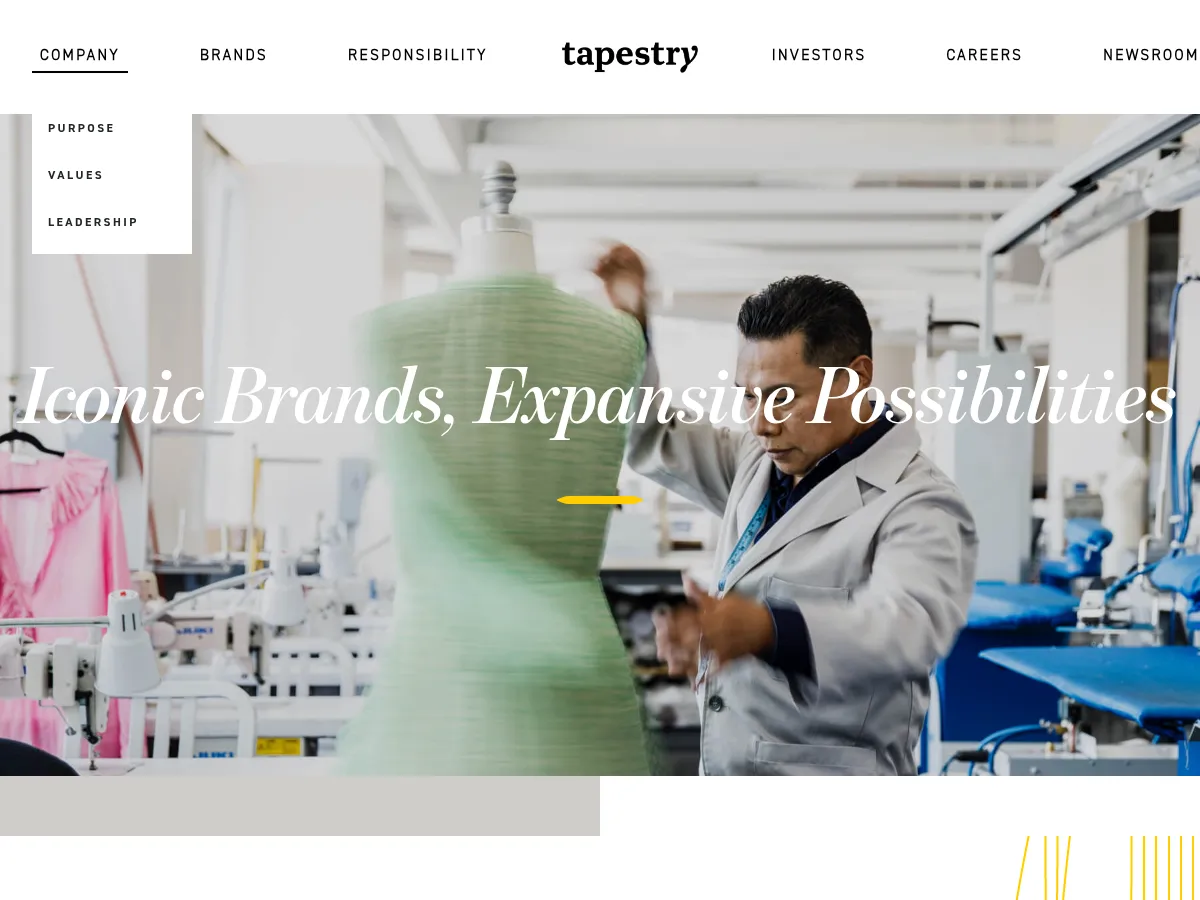
American luxury fashion holding company that owns Coach, Kate Spade, and Stuart Weitzman. Major player in the accessible luxury market segment.

Consumer Luxury Stocks

Tapestry owns Coach, Kate Spade, and Stuart Weitzman, operating in the accessible luxury fashion segment and targeting consumers seeking premium brands at more attainable price points.

Key Financials TPR

Price $153.80
Change (1D) +0.75%
Change (30D) +20.37%
Change (60D) +51.17%
Change (90D) +33.17%
Change (180D) +91.25%
Change (1Y) +80.66%
Change (5Y) +301.04%
P/E Ratio 27.32
EPS (TTM) $5.63
52-Week Range $58.39 — $158.28
50-Day MA $130.62
Volume 2.94M

Data updated Feb 15 · Source: Twelve Data

3.9
1 reviews
Financial Performance
4.3
Management Quality
4.2
Market Position
3.5
Brand Prestige
3.5
Growth Potential
3.4
Claude Opus 4.6
AI Review
3.9/5

Tapestry Inc., parent of Coach, Kate Spade, and Stuart Weitzman, has delivered extraordinary stock performance, surging over 80% in the past year and trading near its 52-week high of $158.28. The stock's momentum accelerated following the failed Capri Holdings merger, allowing management to refocus on organic growth and aggressive share buybacks.

The bull case centers on Coach's remarkable brand revitalization, particularly with younger consumers, strong direct-to-consumer execution, and disciplined margin expansion. EPS of $5.63 reflects solid profitability, and management has demonstrated effective capital allocation through buybacks.

However, at a P/E of 27.32, the stock is no longer cheap for an accessible luxury company and trades at a premium to historical averages. Key risks include consumer spending deceleration, Kate Spade's ongoing turnaround challenges, and the reality that Tapestry competes in the accessible luxury segment rather than true luxury, making it more cyclically exposed. The 51% gain over 60 days suggests much good news is already priced in. Investors should watch for signs of demand normalization before adding at these elevated levels.

Financial Performance
4.3
Management Quality
4.2
Brand Prestige
3.5
Market Position
3.5
Growth Potential
3.4
Feb 15, 2026
Tapestry Inc Screenshot

Added: Feb 15, 2026

tapestry.com

Latest from Otrai

How to Backtest a Trading Strategy: Methods, Pitfalls, and What the Results Actually Mean

How to Backtest a Trading Strategy: Methods, Pitfalls, and What the Results Actually Mean

Every trader has a strategy that looks great in their head. Backtesting is how you find out whether it actually works. Here is how to test strategies properly, what metrics matter, and why most backtest results are too good to be true.

Risk-Reward Ratios: How to Set Targets That Make Your Strategy Profitable

Risk-Reward Ratios: How to Set Targets That Make Your Strategy Profitable

A risk-reward ratio compares how much you stand to lose on a trade to how much you stand to gain. It is arguably the most important number in your trading plan, because it determines whether your strategy can survive a normal losing streak.

Trading the News: How Economic Events Move Forex and What to Do About It

Trading the News: How Economic Events Move Forex and What to Do About It

Every month, a handful of economic data releases move the forex market more in five minutes than most sessions move in five days. Non-Farm Payrolls, CPI prints, and central bank rate decisions create violent spikes, whipsaws, and trend shifts that can make or break a trading account.

What Is a CFD? How Contracts for Difference Work and When to Use Them

What Is a CFD? How Contracts for Difference Work and When to Use Them

A CFD is a contract between you and your broker to exchange the difference in an asset's price from when you open the trade to when you close it. You never own the underlying asset. That single distinction shapes everything about how CFDs work, what they cost, and why regulators treat them differently from traditional investing.