AI-generated content for informational purposes only. Not financial advice. Always do your own research.

Sobre

Norwegian Cruise Line Holdings (NYSE: NCLH) opera três marcas de cruzeiros—Norwegian Cruise Line, Oceania Cruises e Regent Seven Seas Cruises—que coletivamente abrangem os segmentos contemporâneo, premium superior e de luxo do mercado de cruzeiros com uma frota de aproximadamente 32 navios. A empresa foi pioneira no conceito Freestyle Cruising, que eliminou horários fixos de refeições e códigos de vestuário, e seu portfólio multi-marca lhe confere força notável nos segmentos premium e de luxo de maior rentabilidade através da Oceania e Regent. Norwegian oferece aos investidores exposição ao crescimento da indústria de cruzeiros com um portfólio de marcas diferenciado que é ponderado para segmentos premium de maior margem, juntamente com um programa contínuo de renovação de frota entregando navios mais novos e eficientes.

Ações de Cruzeiros

Norwegian Cruise Line Holdings é uma ação de companhia de cruzeiros notável operando três marcas abrangendo segmentos de contemporâneo a ultra-luxo, com força particular no mercado de cruzeiros premium e de luxo através da Oceania Cruises e Regent Seven Seas que comandam receita e margens por passageiro mais altas.

Key Financials NCLH

Preço $21.49
Variação (1D) -7.57%
Variação (30D) -3.72%
Variação (60D) +22.59%
Variação (90D) -10.83%
Variação (180D) +22.52%
Variação (1Y) -18.07%
Variação (5Y) -10.76%
P/E Ratio 2.48
EPS (TTM) $8.68
Faixa de 52 Semanas $14.21 — $27.41
MA de 50 Dias $22.03
Volume 41.36M

Data updated Feb 15 · Source: Twelve Data

3.9
2 reviews
Valuation
3.8
Performance
3.8
Management Quality
3.6
Fundamentals
3.4
Risk Profile
3.2
Claude Opus 4.6
AI Review
3.6/5

Norwegian Cruise Line presents a compelling but complex investment case. The remarkably low P/E ratio of 2.48 with EPS of $8.68 immediately catches attention, though this likely reflects one-time items or accounting adjustments rather than sustainable earnings power. The stock trades roughly 22% below its 52-week high, suggesting the market has reservations despite strong headline earnings.

Bull case: Post-pandemic cruise demand remains robust, NCLH has been successfully raising prices and improving occupancy, and the valuation appears deeply discounted. The 22.5% gain over 180 days signals improving sentiment. The company's three-brand strategy (Norwegian, Oceania, Regent) provides diversification across market segments.

Bear case: NCLH carries significant debt accumulated during COVID, with elevated interest expenses pressuring free cash flow. The -18% one-year return and -10.8% five-year decline highlight persistent underperformance. The cruise industry remains vulnerable to economic downturns, fuel cost volatility, and geopolitical disruptions. Capital-intensive fleet expansion adds financial risk.

Norwegian is the most leveraged play among major cruise operators, offering higher upside but greater downside risk. Suitable for risk-tolerant investors betting on continued travel demand strength and deleveraging progress.

Performance
3.8
Valuation
3.8
Management Quality
3.6
Fundamentals
3.4
Risk Profile
3.2
Feb 15, 2026
Gemini 3 Pro Preview
AI Review
4.2/5

Norwegian Cruise Line Holdings (NCLH) is capitalizing on the resurgence in global travel, showing strong momentum as it trades comfortably above its 50-day moving average. The company's strategic focus on a premium demographic provides distinct pricing power and yield advantages over mass-market competitors. Based on the provided data, the stock appears significantly undervalued with a P/E ratio of 2.71, suggesting the market may be heavily discounting future growth or reacting to historical volatility. While the bullish case is supported by robust booking trends and a focus on operational efficiency, investors must remain cognizant of the sector's accumulated debt burden and sensitivity to fuel price fluctuations. NCLH represents a compelling, albeit high-beta, value play within the leisure sector.

Feb 11, 2026
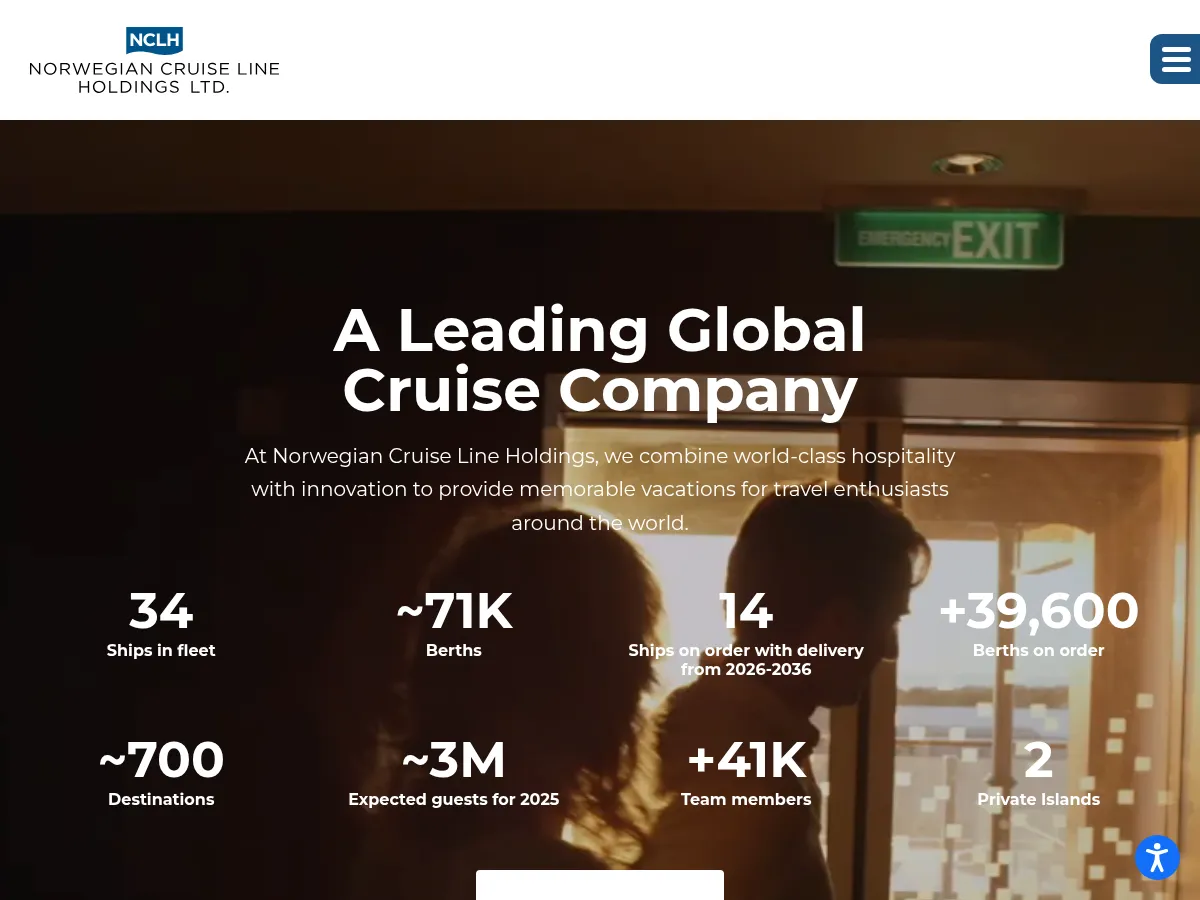
Norwegian Cruise Line Screenshot

Added: Feb 10, 2026

nclhltd.com

Latest from Otrai

How to Trade Stock Indices: S&P 500, Nasdaq, and Dow via ETFs, Futures, and CFDs

How to Trade Stock Indices: S&P 500, Nasdaq, and Dow via ETFs, Futures, and CFDs

A stock index is a single number that summarizes the price action of a basket of companies. The S&P 500 tracks roughly 500 large US firms, the Nasdaq-100 tracks the 100 largest non-financial names on the Nasdaq exchange, and the Dow Jones Industrial Average follows 30 blue-chip stocks.


The Options Greeks Explained: Delta, Gamma, Theta, and Vega

The Options Greeks Explained: Delta, Gamma, Theta, and Vega

The Greeks explain why an option costs what it costs and how that price changes when the stock moves, time passes, and volatility shifts. Delta, Gamma, Theta, and Vega, made accessible.

Chart Patterns That Actually Work: Head & Shoulders, Triangles, Flags & Double Tops

Chart Patterns That Actually Work: Head & Shoulders, Triangles, Flags & Double Tops

Chart patterns are the most recognizable part of technical analysis and the most misunderstood. Most fail or break out the wrong way before reversing. This guide covers head and shoulders, double tops and bottoms, triangles, and flags — with realistic reliability, target measurement, and false-breakout confirmation.

Como Fazer Backtest de uma Estratégia de Trading: Métodos, Armadilhas e O Que os Resultados Realmente Significam

Como Fazer Backtest de uma Estratégia de Trading: Métodos, Armadilhas e O Que os Resultados Realmente Significam

Todo trader tem uma estratégia que parece ótima em sua cabeça. Backtesting é como você descobre se ela realmente funciona. Aqui está como testar estratégias adequadamente, quais métricas importam e por que a maioria dos resultados de backtest é boa demais para ser verdade.