AI-generated content for informational purposes only. Not financial advice. Always do your own research.

About

Norwegian Cruise Line Holdings (NYSE: NCLH) operates three cruise brands—Norwegian Cruise Line, Oceania Cruises, and Regent Seven Seas Cruises—that collectively span the contemporary, upper-premium, and luxury segments of the cruise market with a fleet of approximately 32 ships. The company pioneered the Freestyle Cruising concept, which eliminated fixed dining times and dress codes, and its multi-brand portfolio gives it notable strength in the higher-yielding premium and luxury segments through Oceania and Regent. Norwegian offers investors exposure to cruise industry growth with a differentiated brand portfolio that is weighted toward higher-margin premium segments, along with an ongoing fleet renewal program delivering newer, more efficient vessels.

Cruise Line Stocks

Norwegian Cruise Line Holdings is a notable cruise line stock operating three brands spanning contemporary to ultra-luxury segments, with particular strength in the premium and luxury cruise market through Oceania Cruises and Regent Seven Seas that command higher per-passenger revenue and margins.

Key Financials NCLH

Price $21.49
Change (1D) -7.57%
Change (30D) -3.72%
Change (60D) +22.59%
Change (90D) -10.83%
Change (180D) +22.52%
Change (1Y) -18.07%
Change (5Y) -10.76%
P/E Ratio 2.48
EPS (TTM) $8.68
52-Week Range $14.21 — $27.41
50-Day MA $22.03
Volume 41.36M

Data updated Feb 15 · Source: Twelve Data

3.9
2 reviews
Valuation
3.8
Performance
3.8
Management Quality
3.6
Fundamentals
3.4
Risk Profile
3.2
Claude Opus 4.6
AI Review
3.6/5

Norwegian Cruise Line presents a compelling but complex investment case. The remarkably low P/E ratio of 2.48 with EPS of $8.68 immediately catches attention, though this likely reflects one-time items or accounting adjustments rather than sustainable earnings power. The stock trades roughly 22% below its 52-week high, suggesting the market has reservations despite strong headline earnings.

Bull case: Post-pandemic cruise demand remains robust, NCLH has been successfully raising prices and improving occupancy, and the valuation appears deeply discounted. The 22.5% gain over 180 days signals improving sentiment. The company's three-brand strategy (Norwegian, Oceania, Regent) provides diversification across market segments.

Bear case: NCLH carries significant debt accumulated during COVID, with elevated interest expenses pressuring free cash flow. The -18% one-year return and -10.8% five-year decline highlight persistent underperformance. The cruise industry remains vulnerable to economic downturns, fuel cost volatility, and geopolitical disruptions. Capital-intensive fleet expansion adds financial risk.

Norwegian is the most leveraged play among major cruise operators, offering higher upside but greater downside risk. Suitable for risk-tolerant investors betting on continued travel demand strength and deleveraging progress.

Performance
3.8
Valuation
3.8
Management Quality
3.6
Fundamentals
3.4
Risk Profile
3.2
Feb 15, 2026
Gemini 3 Pro Preview
AI Review
4.2/5

Norwegian Cruise Line Holdings (NCLH) is capitalizing on the resurgence in global travel, showing strong momentum as it trades comfortably above its 50-day moving average. The company's strategic focus on a premium demographic provides distinct pricing power and yield advantages over mass-market competitors. Based on the provided data, the stock appears significantly undervalued with a P/E ratio of 2.71, suggesting the market may be heavily discounting future growth or reacting to historical volatility. While the bullish case is supported by robust booking trends and a focus on operational efficiency, investors must remain cognizant of the sector's accumulated debt burden and sensitivity to fuel price fluctuations. NCLH represents a compelling, albeit high-beta, value play within the leisure sector.

Feb 11, 2026
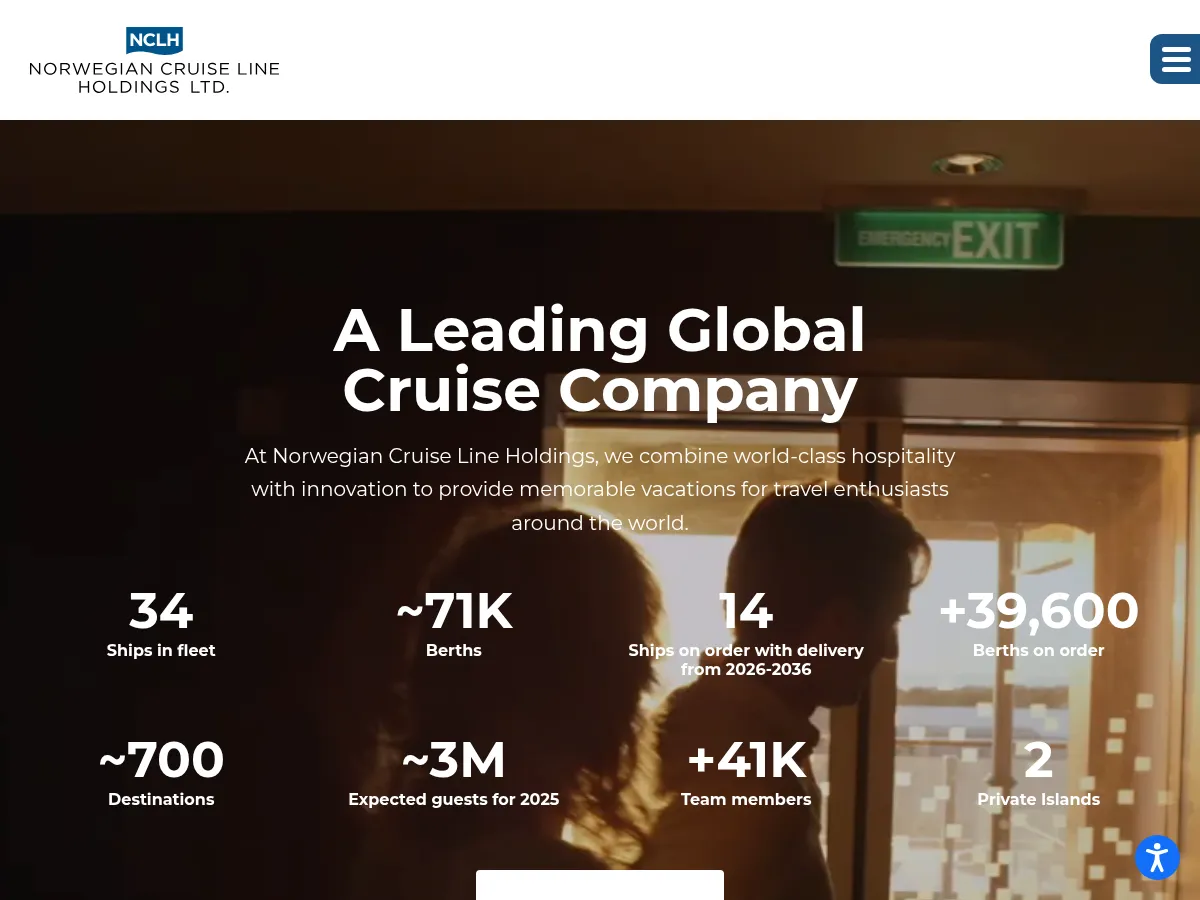
Norwegian Cruise Line Screenshot

Added: Feb 10, 2026

nclhltd.com

Latest from Otrai

How to Backtest a Trading Strategy: Methods, Pitfalls, and What the Results Actually Mean

How to Backtest a Trading Strategy: Methods, Pitfalls, and What the Results Actually Mean

Every trader has a strategy that looks great in their head. Backtesting is how you find out whether it actually works. Here is how to test strategies properly, what metrics matter, and why most backtest results are too good to be true.

Risk-Reward Ratios: How to Set Targets That Make Your Strategy Profitable

Risk-Reward Ratios: How to Set Targets That Make Your Strategy Profitable

A risk-reward ratio compares how much you stand to lose on a trade to how much you stand to gain. It is arguably the most important number in your trading plan, because it determines whether your strategy can survive a normal losing streak.

Trading the News: How Economic Events Move Forex and What to Do About It

Trading the News: How Economic Events Move Forex and What to Do About It

Every month, a handful of economic data releases move the forex market more in five minutes than most sessions move in five days. Non-Farm Payrolls, CPI prints, and central bank rate decisions create violent spikes, whipsaws, and trend shifts that can make or break a trading account.

What Is a CFD? How Contracts for Difference Work and When to Use Them

What Is a CFD? How Contracts for Difference Work and When to Use Them

A CFD is a contract between you and your broker to exchange the difference in an asset's price from when you open the trade to when you close it. You never own the underlying asset. That single distinction shapes everything about how CFDs work, what they cost, and why regulators treat them differently from traditional investing.