AI-generated content for informational purposes only. Not financial advice. Always do your own research.

Sobre

MetLife, Inc. (NYSE: MET) é uma líder global em seguros, anuidades e programas de benefícios de funcionários, atendendo aproximadamente 100 milhões de clientes em mais de 40 países. A empresa opera através de segmentos incluindo EUA, Ásia, América Latina e Europa, Oriente Médio e África, oferecendo seguros de vida em grupo e individual, dental, incapacidade e produtos de aposentadoria e poupança. MetLife se destaca como uma ação de seguro devido à sua diversificação internacional e posição dominante no mercado de benefícios em grupo dos EUA.

Ações de Seguros

A MetLife é uma ação de seguro globalmente diversificada com liderança tanto em seguro de vida quanto em benefícios para funcionários. Sua extensa presença internacional e escala em benefícios de grupo a diferenciam de seguradoras focadas domesticamente, oferecendo aos investidores ampla exposição à demanda global de seguros.

Key Financials MET

Preço $77.31
Variação (1D) -0.06%
Variação (30D) -2.06%
Variação (60D) +2.36%
Variação (90D) -6.12%
Variação (180D) -0.87%
Variação (1Y) -6.55%
Variação (5Y) +42.06%
P/E Ratio 8.75
EPS (TTM) $8.84
Faixa de 52 Semanas $65.21 — $87.39
MA de 50 Dias $78.86
Volume 3.11M

Data updated Feb 15 · Source: Twelve Data

4.2
2 reviews
Valuation
4.4
Fundamentals
4.3
Management Quality
4.2
Performance
3.8
Risk Profile
3.8
Claude Opus 4.6
AI Review
4.1/5

MetLife is one of the world's largest insurance and employee benefits providers, with a diversified global footprint spanning the U.S., Asia, Latin America, and EMEA. The stock trades at a compelling P/E of 8.75 with strong EPS of $8.84, reflecting the value-oriented nature typical of large-cap insurers. The 42% five-year return demonstrates solid long-term wealth creation, though the stock has pulled back roughly 6.5% over the past year and sits below its 50-day moving average, suggesting near-term momentum headwinds.

Bull case: MetLife's diversified revenue streams, disciplined capital return program (consistent buybacks and dividends), and exposure to higher interest rates supporting investment income make it attractive at current valuations. The Group Benefits segment provides stable, recurring revenue.

Bear case: Sensitivity to equity market volatility through variable annuity guarantees, macroeconomic uncertainty impacting international operations, and potential for elevated catastrophe losses pose risks. Competition from insurtechs and evolving regulatory landscapes add pressure.

Overall, MetLife offers a solid value proposition for income-oriented investors seeking insurance sector exposure at a reasonable price.

Valuation
4.4
Fundamentals
4.3
Management Quality
4.2
Performance
3.8
Risk Profile
3.8
Feb 15, 2026
Gemini 3 Pro Preview
AI Review
4.2/5

MetLife stands as a dominant force in the global life insurance and employee benefits sector, offering a compelling value proposition with a P/E ratio of approximately 10.9x. The company benefits significantly from its diversified geographic footprint across the U.S., Asia, and Latin America, which helps mitigate regional risks. Financially, MetLife is well-positioned to capitalize on the current interest rate environment, which generally boosts net investment income for insurers. With a robust EPS of $7.17, the company demonstrates strong earnings power and capital generation capabilities.

However, risks remain. Investors should closely monitor the company's investment portfolio exposure to commercial real estate, a sector facing ongoing volatility. Additionally, with the stock trading slightly below its 50-day moving average and off its 52-week high, there is some short-term technical consolidation. Overall, MET represents a solid, defensive choice for value-oriented investors seeking stability and exposure to the financial sector.

Feb 11, 2026
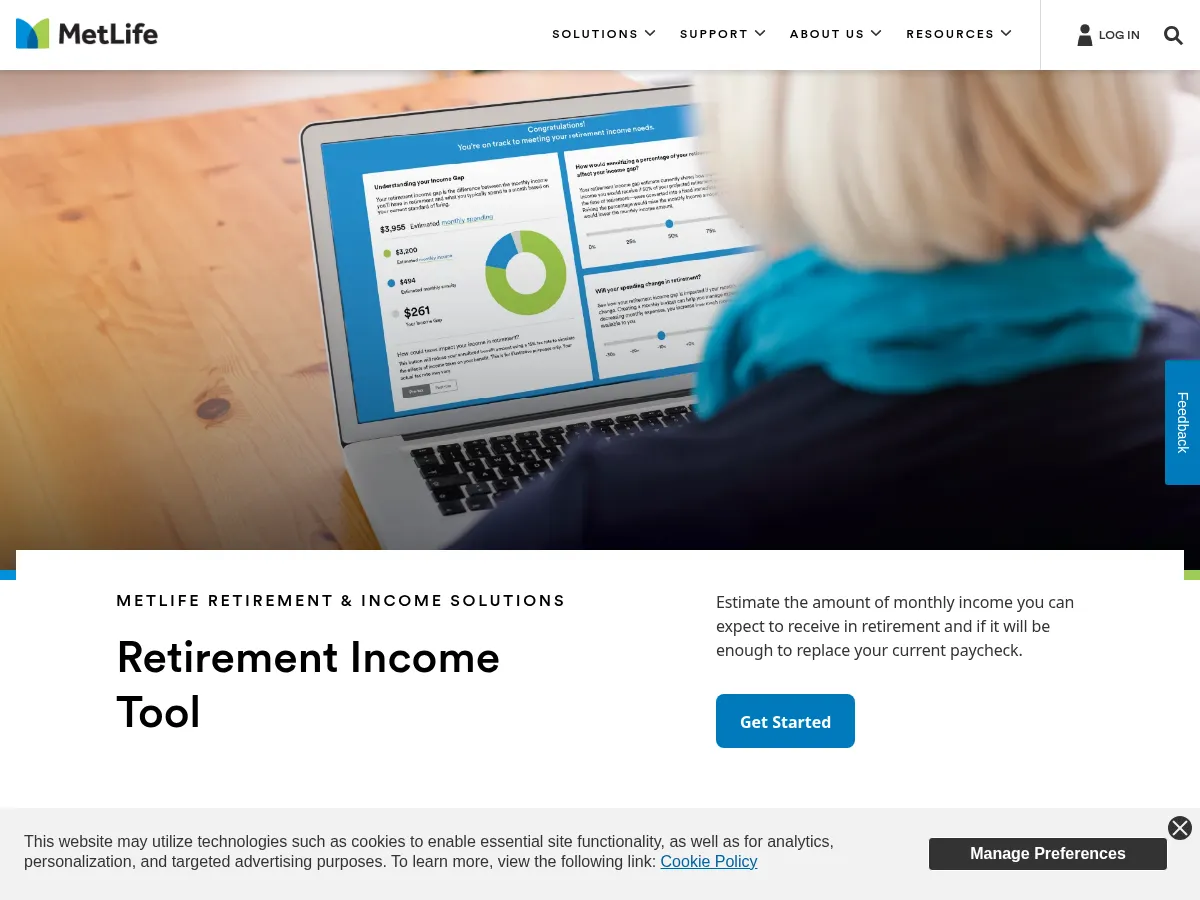
MetLife Screenshot

Added: Feb 10, 2026

metlife.com

Latest from Otrai

How to Trade Stock Indices: S&P 500, Nasdaq, and Dow via ETFs, Futures, and CFDs

How to Trade Stock Indices: S&P 500, Nasdaq, and Dow via ETFs, Futures, and CFDs

A stock index is a single number that summarizes the price action of a basket of companies. The S&P 500 tracks roughly 500 large US firms, the Nasdaq-100 tracks the 100 largest non-financial names on the Nasdaq exchange, and the Dow Jones Industrial Average follows 30 blue-chip stocks.


The Options Greeks Explained: Delta, Gamma, Theta, and Vega

The Options Greeks Explained: Delta, Gamma, Theta, and Vega

The Greeks explain why an option costs what it costs and how that price changes when the stock moves, time passes, and volatility shifts. Delta, Gamma, Theta, and Vega, made accessible.

Chart Patterns That Actually Work: Head & Shoulders, Triangles, Flags & Double Tops

Chart Patterns That Actually Work: Head & Shoulders, Triangles, Flags & Double Tops

Chart patterns are the most recognizable part of technical analysis and the most misunderstood. Most fail or break out the wrong way before reversing. This guide covers head and shoulders, double tops and bottoms, triangles, and flags — with realistic reliability, target measurement, and false-breakout confirmation.

Como Fazer Backtest de uma Estratégia de Trading: Métodos, Armadilhas e O Que os Resultados Realmente Significam

Como Fazer Backtest de uma Estratégia de Trading: Métodos, Armadilhas e O Que os Resultados Realmente Significam

Todo trader tem uma estratégia que parece ótima em sua cabeça. Backtesting é como você descobre se ela realmente funciona. Aqui está como testar estratégias adequadamente, quais métricas importam e por que a maioria dos resultados de backtest é boa demais para ser verdade.