AI-generated content for informational purposes only. Not financial advice. Always do your own research.

À propos

MetLife, Inc. (NYSE: MET) est un leader mondial de l'assurance, des rentes, et des programmes de prestations aux employés, servant environ 100 millions de clients dans plus de 40 pays. L'entreprise opère par le biais de segments incluant les États-Unis, l'Asie, l'Amérique latine, et l'Europe, le Moyen-Orient et l'Afrique, offrant l'assurance-vie collective et individuelle, les services dentaires, les services d'incapacité, et les produits de retraite et d'épargne. MetLife se distingue en tant qu'action d'assurance en raison de sa diversification internationale et de sa position dominante sur le marché américain des prestations aux groupes.

Actions d'assurance

MetLife est un titre d'assurance mondialement diversifié avec un leadership dans l'assurance-vie et les avantages sociaux des salariés. Sa présence internationale étendue et son envergure dans les avantages collectifs le différencient des assureurs concentrés sur le marché national, offrant aux investisseurs une exposition large à la demande mondiale d'assurance.

Key Financials MET

Prix $77.31
Variation (1J) -0.06%
Variation (30D) -2.06%
Variation (60D) +2.36%
Variation (90D) -6.12%
Variation (180D) -0.87%
Variation (1Y) -6.55%
Variation (5Y) +42.06%
P/E Ratio 8.75
EPS (TTM) $8.84
Plage sur 52 semaines $65.21 — $87.39
MA sur 50 jours $78.86
Volume 3.11M

Data updated Feb 15 · Source: Twelve Data

4.2
2 reviews
Valuation
4.4
Fundamentals
4.3
Management Quality
4.2
Performance
3.8
Risk Profile
3.8
Claude Opus 4.6
AI Review
4.1/5

MetLife is one of the world's largest insurance and employee benefits providers, with a diversified global footprint spanning the U.S., Asia, Latin America, and EMEA. The stock trades at a compelling P/E of 8.75 with strong EPS of $8.84, reflecting the value-oriented nature typical of large-cap insurers. The 42% five-year return demonstrates solid long-term wealth creation, though the stock has pulled back roughly 6.5% over the past year and sits below its 50-day moving average, suggesting near-term momentum headwinds.

Bull case: MetLife's diversified revenue streams, disciplined capital return program (consistent buybacks and dividends), and exposure to higher interest rates supporting investment income make it attractive at current valuations. The Group Benefits segment provides stable, recurring revenue.

Bear case: Sensitivity to equity market volatility through variable annuity guarantees, macroeconomic uncertainty impacting international operations, and potential for elevated catastrophe losses pose risks. Competition from insurtechs and evolving regulatory landscapes add pressure.

Overall, MetLife offers a solid value proposition for income-oriented investors seeking insurance sector exposure at a reasonable price.

Valuation
4.4
Fundamentals
4.3
Management Quality
4.2
Performance
3.8
Risk Profile
3.8
Feb 15, 2026
Gemini 3 Pro Preview
AI Review
4.2/5

MetLife stands as a dominant force in the global life insurance and employee benefits sector, offering a compelling value proposition with a P/E ratio of approximately 10.9x. The company benefits significantly from its diversified geographic footprint across the U.S., Asia, and Latin America, which helps mitigate regional risks. Financially, MetLife is well-positioned to capitalize on the current interest rate environment, which generally boosts net investment income for insurers. With a robust EPS of $7.17, the company demonstrates strong earnings power and capital generation capabilities.

However, risks remain. Investors should closely monitor the company's investment portfolio exposure to commercial real estate, a sector facing ongoing volatility. Additionally, with the stock trading slightly below its 50-day moving average and off its 52-week high, there is some short-term technical consolidation. Overall, MET represents a solid, defensive choice for value-oriented investors seeking stability and exposure to the financial sector.

Feb 11, 2026
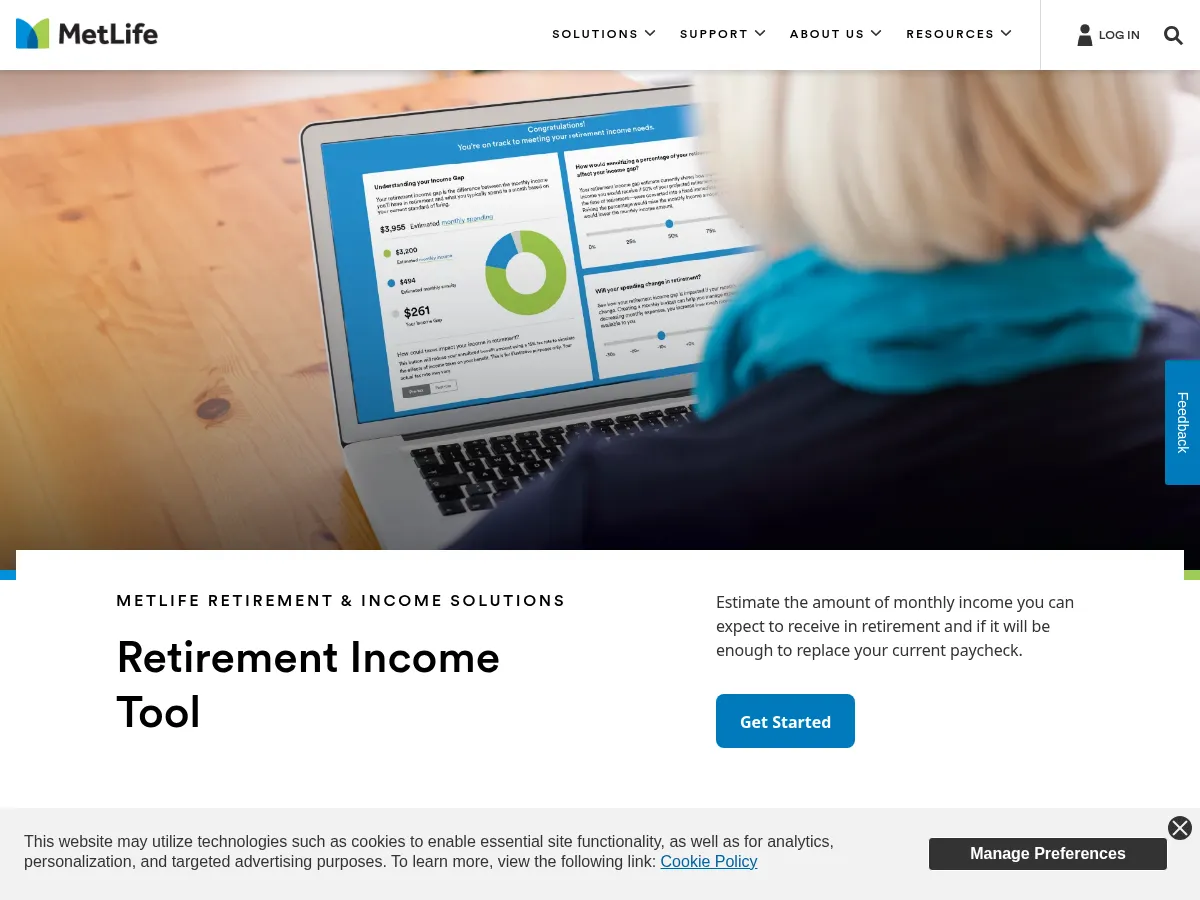
MetLife Screenshot

Added: Feb 10, 2026

metlife.com

Latest from Otrai

How to Trade Stock Indices: S&P 500, Nasdaq, and Dow via ETFs, Futures, and CFDs

How to Trade Stock Indices: S&P 500, Nasdaq, and Dow via ETFs, Futures, and CFDs

A stock index is a single number that summarizes the price action of a basket of companies. The S&P 500 tracks roughly 500 large US firms, the Nasdaq-100 tracks the 100 largest non-financial names on the Nasdaq exchange, and the Dow Jones Industrial Average follows 30 blue-chip stocks.


The Options Greeks Explained: Delta, Gamma, Theta, and Vega

The Options Greeks Explained: Delta, Gamma, Theta, and Vega

The Greeks explain why an option costs what it costs and how that price changes when the stock moves, time passes, and volatility shifts. Delta, Gamma, Theta, and Vega, made accessible.

Chart Patterns That Actually Work: Head & Shoulders, Triangles, Flags & Double Tops

Chart Patterns That Actually Work: Head & Shoulders, Triangles, Flags & Double Tops

Chart patterns are the most recognizable part of technical analysis and the most misunderstood. Most fail or break out the wrong way before reversing. This guide covers head and shoulders, double tops and bottoms, triangles, and flags — with realistic reliability, target measurement, and false-breakout confirmation.

Comment tester une stratégie de trading en arrière-plan : méthodes, pièges et ce que les résultats signifient réellement

Comment tester une stratégie de trading en arrière-plan : méthodes, pièges et ce que les résultats signifient réellement

Chaque trader a une stratégie qui semble excellente dans sa tête. Le backtesting est la façon de découvrir si cela fonctionne réellement. Voici comment tester les stratégies correctement, quelles métriques comptent et pourquoi la plupart des résultats de backtesting sont trop beaux pour être vrais.