
AI-generated content for informational purposes only. Not financial advice. Always do your own research.

Private Equity Stocks - Directory w/ AI Reviews

Private equity firms generate returns by acquiring, restructuring, and eventually selling businesses — a model that has consistently outperformed public markets over long periods. Blackstone and KKR are the largest alternative asset managers in the world, with billions under management across private equity, credit, and real estate. As these firms have listed their management companies publicly, they offer retail investors participation in the economics of alternative asset management, including performance fees that can accelerate earnings during strong deal markets.

Blackstone 1 4.5 Blackstone BX $129.86 +0.07% P/E: 17.3 1 review Blackstone is the world's largest alternative asset manager with over $1 trillion in AUM, leading in private equity, real estate, credit, and hedge fund strategies globally. Goldman Sachs 2 4.4 Goldman Sachs GS $905.14 +0.07% P/E: 17.7 2 reviews Goldman Sachs is a premier global investment bank with leading positions in advisory, trading, and asset management, increasingly expanding its alternatives and private equity capabilities. Apollo Global Management 3 4.3 Apollo Global Management APO $125.07 -0.24% P/E: 17.8 1 review Apollo manages approximately $671 billion in assets across credit, private equity, and real assets, with a strong emphasis on credit-oriented and value-driven investment strategies. BlackRock 4 4.3 BlackRock BLK $1,071.51 +1.50% P/E: 623.0 2 reviews BlackRock is the world's largest asset manager with over $10 trillion in AUM, increasingly expanding into private markets and alternative investments alongside its dominant iShares ETF platform. KKR & Co 5 4.3 KKR & Co KKR $101.73 +0.60% P/E: 20.9 1 review KKR manages $553 billion in assets across private equity, credit, and real assets as one of the original leveraged buyout firms that pioneered the alternative investment industry. Morgan Stanley 6 4.2 Morgan Stanley MS $171.15 +1.84% P/E: 16.1 2 reviews Morgan Stanley is a leading global financial services firm with top-tier wealth management and institutional securities franchises, increasingly expanding its alternative investment capabilities. Ares Management 7 4.1 Ares Management ARES $133.88 -0.04% P/E: 23.7 1 review Ares manages approximately $395 billion in AUM with a focus on credit and private equity strategies, offering investors exposure to one of the fastest-growing alternative asset managers. Carlyle Group 8 3.7 Carlyle Group CG $54.49 +0.07% P/E: 13.6 1 review Carlyle Group manages $426 billion in assets across private equity, credit, and investment solutions from 26 global offices, offering diversified alternative asset exposure. SoftBank Group 9 3.7 SoftBank Group SFTBY $14.60 -6.65% 1 review SoftBank Group is a Japanese investment conglomerate operating the Vision Fund, the world's largest technology-focused venture capital fund, with major stakes in global tech and AI companies.

Latest from Otrai

How to Backtest a Trading Strategy: Methods, Pitfalls, and What the Results Actually Mean

How to Backtest a Trading Strategy: Methods, Pitfalls, and What the Results Actually Mean

Every trader has a strategy that looks great in their head. Backtesting is how you find out whether it actually works. Here is how to test strategies properly, what metrics matter, and why most backtest results are too good to be true.
Risk-Reward Ratios: How to Set Targets That Make Your Strategy Profitable

Risk-Reward Ratios: How to Set Targets That Make Your Strategy Profitable

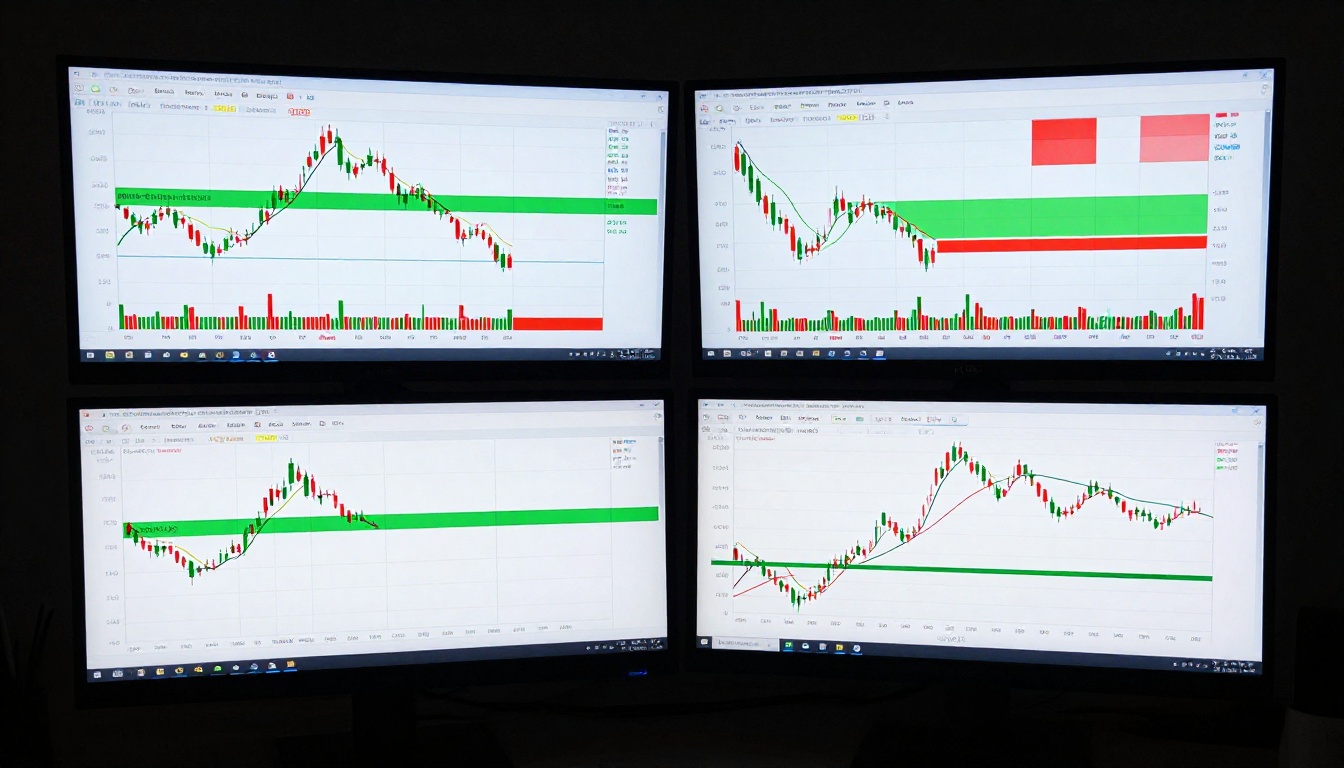
A risk-reward ratio compares how much you stand to lose on a trade to how much you stand to gain. It is arguably the most important number in your trading plan, because it determines whether your strategy can survive a normal losing streak.

Trading the News: How Economic Events Move Forex and What to Do About It

Trading the News: How Economic Events Move Forex and What to Do About It

Every month, a handful of economic data releases move the forex market more in five minutes than most sessions move in five days. Non-Farm Payrolls, CPI prints, and central bank rate decisions create violent spikes, whipsaws, and trend shifts that can make or break a trading account.

What Is a CFD? How Contracts for Difference Work and When to Use Them

What Is a CFD? How Contracts for Difference Work and When to Use Them

A CFD is a contract between you and your broker to exchange the difference in an asset's price from when you open the trade to when you close it. You never own the underlying asset. That single distinction shapes everything about how CFDs work, what they cost, and why regulators treat them differently from traditional investing.