AI-generated content for informational purposes only. Not financial advice. Always do your own research.

概要

WisdomTree Cotton ETC は ICE 綿先物を追跡しています。需要は繊維産業サイクル、栽培地域の天候、および合成繊維の競争に左右されます。

商品 - 農産物

COTNはICE綿花先物を追跡し、価格は繊維産業のサイクル、主要産地の気象、合成繊維との競合に影響されます。

Market Data COTN

価格 $2.13
変動(1日) +0.05%
変動 (30D) -2.70%
変動 (60D) -3.93%
変動 (90D) -5.44%
変動 (180D) -10.15%
変動 (1Y) -13.31%
変動 (5Y) -18.66%
52週レンジ $1.93 — $2.52
50日MA $2.19
出来高 8.3K

Data updated Feb 15 · Source: Twelve Data

2.4
1 reviews
Accessibility
2.8
Market Fundamentals
2.4
Liquidity
2.4
Volatility
2.2
Historical Performance
2
Claude Opus 4.6
AI Review
2.4/5

Cotton has been in a sustained downtrend, declining over 13% in the past year and trading well below its 52-week high of $2.52. Currently at $2.13, the price sits below its 50-day moving average of $2.19, confirming bearish momentum across all timeframes. Demand-side pressures stem from slowing global textile consumption, particularly in China and Southeast Asia, amid broader economic weakness. Strong U.S. and Brazilian harvests have kept supply ample, weighing on prices. A relatively firm U.S. dollar further pressures this dollar-denominated commodity. On the bullish side, prices are approaching the 52-week low of $1.93, suggesting potential support levels, and any weather disruptions during planting seasons could tighten supply. Seasonal demand typically picks up ahead of textile manufacturing cycles. However, synthetic fiber competition and elevated global inventories remain persistent headwinds. The relatively low trading volume of 8.3K suggests limited speculative interest. Cotton currently offers a weak risk-reward profile, though contrarian investors may find value near multi-year support levels if macroeconomic conditions stabilize.

Accessibility
2.8
Liquidity
2.4
Market Fundamentals
2.4
Volatility
2.2
Historical Performance
2
Feb 15, 2026
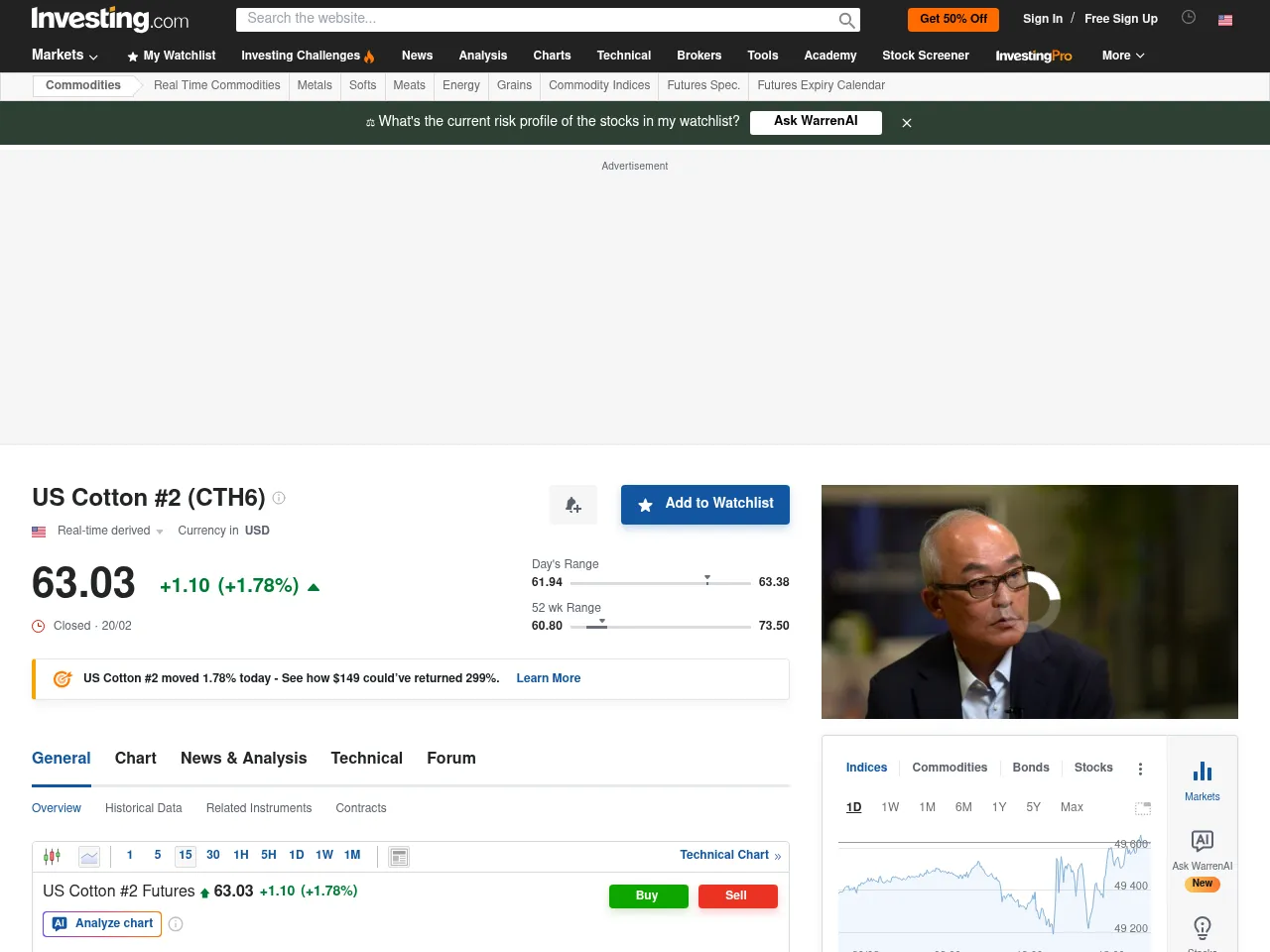
Cotton (COTN) Screenshot

Added: Feb 15, 2026

investing.com/commodities/us-cotton-no.2

Latest from Otrai

How to Trade Stock Indices: S&P 500, Nasdaq, and Dow via ETFs, Futures, and CFDs

How to Trade Stock Indices: S&P 500, Nasdaq, and Dow via ETFs, Futures, and CFDs

A stock index is a single number that summarizes the price action of a basket of companies. The S&P 500 tracks roughly 500 large US firms, the Nasdaq-100 tracks the 100 largest non-financial names on the Nasdaq exchange, and the Dow Jones Industrial Average follows 30 blue-chip stocks.
The Options Greeks Explained: Delta, Gamma, Theta, and Vega

The Options Greeks Explained: Delta, Gamma, Theta, and Vega

The Greeks explain why an option costs what it costs and how that price changes when the stock moves, time passes, and volatility shifts. Delta, Gamma, Theta, and Vega, made accessible.

Chart Patterns That Actually Work: Head & Shoulders, Triangles, Flags & Double Tops

Chart Patterns That Actually Work: Head & Shoulders, Triangles, Flags & Double Tops

Chart patterns are the most recognizable part of technical analysis and the most misunderstood. Most fail or break out the wrong way before reversing. This guide covers head and shoulders, double tops and bottoms, triangles, and flags — with realistic reliability, target measurement, and false-breakout confirmation.

取引戦略のバックテスト方法:手法、落とし穴、結果が実際に何を意味するのか

取引戦略のバックテスト方法:手法、落とし穴、結果が実際に何を意味するのか

すべてのトレーダーは頭の中で良さそうに見える戦略を持っています。バックテストは、それが実際に機能するかどうかを調べる方法です。ここは戦略を適切にテストする方法、どのメトリクスが重要か、そしてほとんどのバックテスト結果が本当とは思えないほど良い理由です。