AI-generated content for informational purposes only. Not financial advice. Always do your own research.

Chi siamo

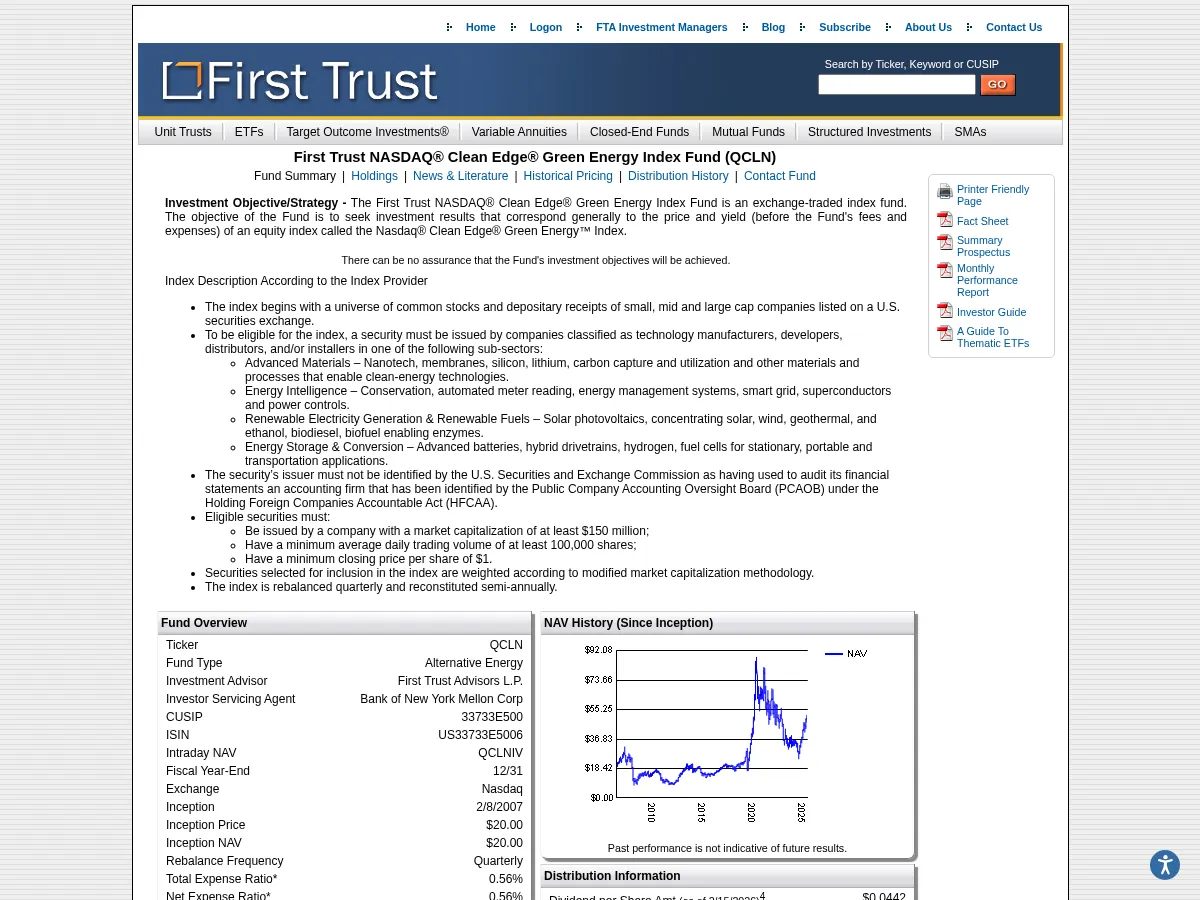
ETF che traccia l'indice NASDAQ Clean Edge Green Energy, che copre società nel settore dell'energia pulita inclusi solare, eolico, veicoli elettrici e batterie avanzate.

ETF sull'energia pulita

Questo ETF di energia pulita fornisce un'esposizione diversificata a società che stanno avanzando nel solare, eolico, veicoli elettrici e accumulo di energia mediante batterie attraverso il NASDAQ Clean Edge Green Energy Index.

Azioni Energia Verde

Questo ETF replica il NASDAQ Clean Edge Green Energy Index, coprendo società nel solare, eolico, veicoli elettrici e tecnologie avanzate di batterie che guidano la transizione all'energia pulita.

3.7
1 reviews
Valuation
3.9
Fundamentals
3.8
Management Quality
3.7
Performance
3.4
Risk Profile
3.2
Claude Opus 4.6
AI Review
3.7/5

First Trust NASDAQ Clean Edge Green Energy ETF (QCLN) tracks the NASDAQ Clean Edge Green Energy Index, providing broad exposure to clean energy companies including solar, wind, EVs, and battery technology. The fund holds notable positions in companies like Tesla, Enphase Energy, ON Semiconductor, and First Solar, offering diversified access to the green energy transition theme.

**Bull Case:** QCLN benefits from long-term secular tailwinds including the Inflation Reduction Act, global decarbonization commitments, and declining renewable energy costs. Its diversification across clean energy sub-sectors reduces single-stock risk while capturing broad industry growth.

**Bear Case:** The fund has experienced significant volatility and drawdowns from its 2021 highs, reflecting stretched valuations that have since corrected. Rising interest rates have pressured growth-oriented clean energy names, and policy uncertainty around subsidies remains a risk. The expense ratio of 0.58% is moderate but higher than some competing ETFs like ICLN.

**Bottom Line:** QCLN is a solid vehicle for long-term clean energy exposure, though investors should be prepared for continued volatility and consider dollar-cost averaging into positions.

Valuation
3.9
Fundamentals
3.8
Management Quality
3.7
Performance
3.4
Risk Profile
3.2
Feb 15, 2026

Latest from Otrai

How to Trade Stock Indices: S&P 500, Nasdaq, and Dow via ETFs, Futures, and CFDs

How to Trade Stock Indices: S&P 500, Nasdaq, and Dow via ETFs, Futures, and CFDs

A stock index is a single number that summarizes the price action of a basket of companies. The S&P 500 tracks roughly 500 large US firms, the Nasdaq-100 tracks the 100 largest non-financial names on the Nasdaq exchange, and the Dow Jones Industrial Average follows 30 blue-chip stocks.
The Options Greeks Explained: Delta, Gamma, Theta, and Vega

The Options Greeks Explained: Delta, Gamma, Theta, and Vega

The Greeks explain why an option costs what it costs and how that price changes when the stock moves, time passes, and volatility shifts. Delta, Gamma, Theta, and Vega, made accessible.

Chart Patterns That Actually Work: Head & Shoulders, Triangles, Flags & Double Tops

Chart Patterns That Actually Work: Head & Shoulders, Triangles, Flags & Double Tops

Chart patterns are the most recognizable part of technical analysis and the most misunderstood. Most fail or break out the wrong way before reversing. This guide covers head and shoulders, double tops and bottoms, triangles, and flags — with realistic reliability, target measurement, and false-breakout confirmation.

Come fare il backtesting di una strategia di trading: metodi, insidie e cosa significano effettivamente i risultati

Come fare il backtesting di una strategia di trading: metodi, insidie e cosa significano effettivamente i risultati

Ogni trader ha una strategia che sembra fantastica nella sua testa. Il backtesting è il modo per scoprire se effettivamente funziona. Ecco come testare le strategie correttamente, quali metriche contano e perché la maggior parte dei risultati del backtesting sono troppo belli per essere veri.