AI-generated content for informational purposes only. Not financial advice. Always do your own research.

Acerca de

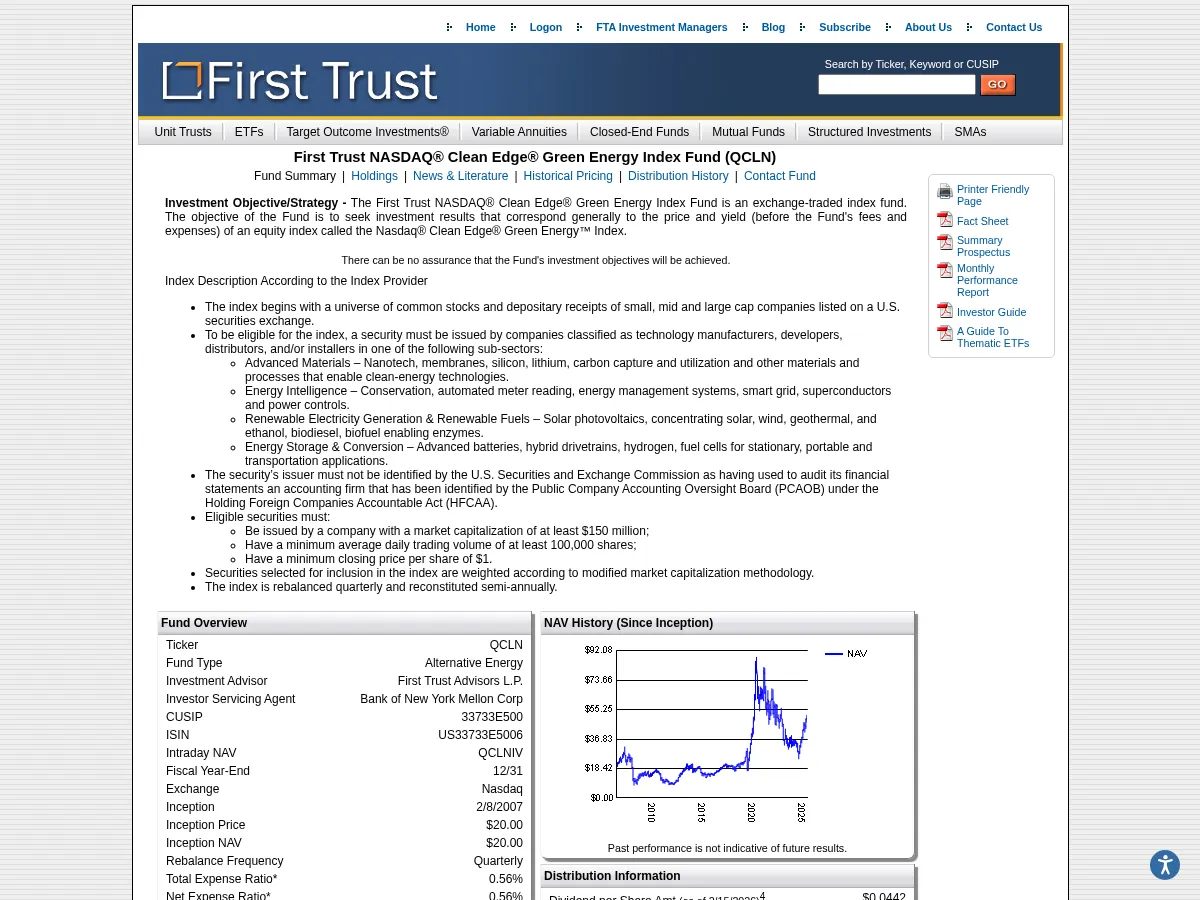
ETF que replica el NASDAQ Clean Edge Green Energy Index, cubriendo empresas en energía limpia incluyendo solar, eólica, vehículos eléctricos y baterías avanzadas.

ETF de energía limpia

Este ETF de energía limpia proporciona exposición diversificada a empresas que avanzan en energía solar, eólica, vehículos eléctricos y almacenamiento en baterías a través del NASDAQ Clean Edge Green Energy Index.

Acciones de Energía Verde

Este ETF rastrea el NASDAQ Clean Edge Green Energy Index, cubriendo empresas en energía solar, eólica, vehículos eléctricos y tecnologías de baterías avanzadas impulsando la transición a energía limpia.

3.7
1 reviews
Valuation
3.9
Fundamentals
3.8
Management Quality
3.7
Performance
3.4
Risk Profile
3.2
Claude Opus 4.6
AI Review
3.7/5

First Trust NASDAQ Clean Edge Green Energy ETF (QCLN) tracks the NASDAQ Clean Edge Green Energy Index, providing broad exposure to clean energy companies including solar, wind, EVs, and battery technology. The fund holds notable positions in companies like Tesla, Enphase Energy, ON Semiconductor, and First Solar, offering diversified access to the green energy transition theme.

**Bull Case:** QCLN benefits from long-term secular tailwinds including the Inflation Reduction Act, global decarbonization commitments, and declining renewable energy costs. Its diversification across clean energy sub-sectors reduces single-stock risk while capturing broad industry growth.

**Bear Case:** The fund has experienced significant volatility and drawdowns from its 2021 highs, reflecting stretched valuations that have since corrected. Rising interest rates have pressured growth-oriented clean energy names, and policy uncertainty around subsidies remains a risk. The expense ratio of 0.58% is moderate but higher than some competing ETFs like ICLN.

**Bottom Line:** QCLN is a solid vehicle for long-term clean energy exposure, though investors should be prepared for continued volatility and consider dollar-cost averaging into positions.

Valuation
3.9
Fundamentals
3.8
Management Quality
3.7
Performance
3.4
Risk Profile
3.2
Feb 15, 2026

Latest from Otrai

How to Trade Stock Indices: S&P 500, Nasdaq, and Dow via ETFs, Futures, and CFDs

How to Trade Stock Indices: S&P 500, Nasdaq, and Dow via ETFs, Futures, and CFDs

A stock index is a single number that summarizes the price action of a basket of companies. The S&P 500 tracks roughly 500 large US firms, the Nasdaq-100 tracks the 100 largest non-financial names on the Nasdaq exchange, and the Dow Jones Industrial Average follows 30 blue-chip stocks.
The Options Greeks Explained: Delta, Gamma, Theta, and Vega

The Options Greeks Explained: Delta, Gamma, Theta, and Vega

The Greeks explain why an option costs what it costs and how that price changes when the stock moves, time passes, and volatility shifts. Delta, Gamma, Theta, and Vega, made accessible.

Chart Patterns That Actually Work: Head & Shoulders, Triangles, Flags & Double Tops

Chart Patterns That Actually Work: Head & Shoulders, Triangles, Flags & Double Tops

Chart patterns are the most recognizable part of technical analysis and the most misunderstood. Most fail or break out the wrong way before reversing. This guide covers head and shoulders, double tops and bottoms, triangles, and flags — with realistic reliability, target measurement, and false-breakout confirmation.

Cómo hacer backtest de una estrategia de trading: métodos, errores y qué significan realmente los resultados

Cómo hacer backtest de una estrategia de trading: métodos, errores y qué significan realmente los resultados

Cada trader tiene una estrategia que se ve genial en su cabeza. El backtesting es cómo descubres si realmente funciona. Aquí hay cómo probar estrategias correctamente, qué métricas importan y por qué la mayoría de los resultados de backtest son demasiado buenos para ser verdad.