AI-generated content for informational purposes only. Not financial advice. Always do your own research.

Chi siamo

Southern Company (NYSE: SO) è un'importante azienda energetica che serve circa 9 milioni di clienti attraverso le sue filiali nel sud-est degli Stati Uniti, incluse Georgia Power, Alabama Power e Mississippi Power. L'azienda opera con un ampio mix di asset generativi includendo energia nucleare, gas naturale, energie rinnovabili e il progetto di espansione nucleare di riferimento Vogtle, mentre mantiene anche un significativo business di distribuzione del gas naturale attraverso Southern Company Gas. Il modello di business regolamentato di Southern Company, la crescita coerente dei dividendi che si estende per oltre due decenni e la posizione di infrastruttura critica la rendono un'importante partecipazione difensiva nel settore dei servizi pubblici.

Azioni delle utility

Southern Company è una delle più grandi holding di utility elettriche negli Stati Uniti, fornendo servizio elettrico e di gas naturale regolamentato nel sud-est con una reputazione per una crescita affidabile dei dividendi e utili stabili e prevedibili che definiscono la tradizionale tesi di investimento nel settore utility.

Key Financials SO

Prezzo $94.95
Variazione (1G) +2.58%
Variazione (30D) +8.89%
Variazione (60D) +4.82%
Variazione (90D) -0.57%
Variazione (180D) +7.63%
Variazione (1Y) +9.38%
Variazione (5Y) +56.58%
P/E Ratio 36.10
EPS (TTM) $2.63
Range a 52 settimane $83.09 — $100.84
MA a 50 giorni $87.87
Volume 9.11M

Data updated Feb 15 · Source: Twelve Data

4.2
2 reviews
Fundamentals
4.3
Valuation
4.2
Management Quality
4.2
Performance
4
Risk Profile
4
Claude Opus 4.6
AI Review
4.2/5

Southern Company is one of America's largest utility holding companies, serving approximately 9 million customers across the Southeast through subsidiaries including Georgia Power, Alabama Power, and Mississippi Power. The company offers investors a classic defensive utility profile with reliable dividend income and regulated revenue streams.

The bull case centers on Southern's dominant regional position, growing energy demand from data centers in its service territory, and a strong dividend track record spanning over two decades of increases. The stock trades well above its 50-day moving average ($87.87), reflecting positive momentum and investor appetite for quality defensives.

However, the bear case is notable. The P/E ratio of 36.10 is elevated for a utility, significantly above sector averages of 18-22x. EPS of $2.63 appears modest relative to the current price, suggesting the market is pricing in substantial future growth. The Vogtle nuclear expansion, while now operational, historically plagued the company with cost overruns and delays.

Southern Company remains a solid core utility holding for income-focused portfolios, but the current valuation warrants caution for new positions. Investors should consider dollar-cost averaging rather than lump-sum entry at these levels.

Fundamentals
4.3
Management Quality
4.2
Valuation
4.2
Performance
4
Risk Profile
4
Feb 15, 2026
Gemini 3 Pro Preview
AI Review
4.1/5

Southern Company (SO) remains a heavyweight in the utility sector, benefiting immensely from the operational status of its Plant Vogtle nuclear units. This achievement eliminates a long-standing construction overhang, securing a stable, carbon-free baseload for the company's future. While the stock is trading with positive momentum above its 50-day moving average, the current valuation requires scrutiny. The P/E ratio of 34.49 is steep compared to historical sector averages, likely reflecting temporary earnings impacts or a significant premium for its post-construction clarity. Despite the rich valuation, Southern Company's regulated monopoly status in the economically robust Southeast market makes it a durable choice for income-oriented investors, though capital appreciation may be limited in the short term until earnings catch up to the price.

Feb 11, 2026
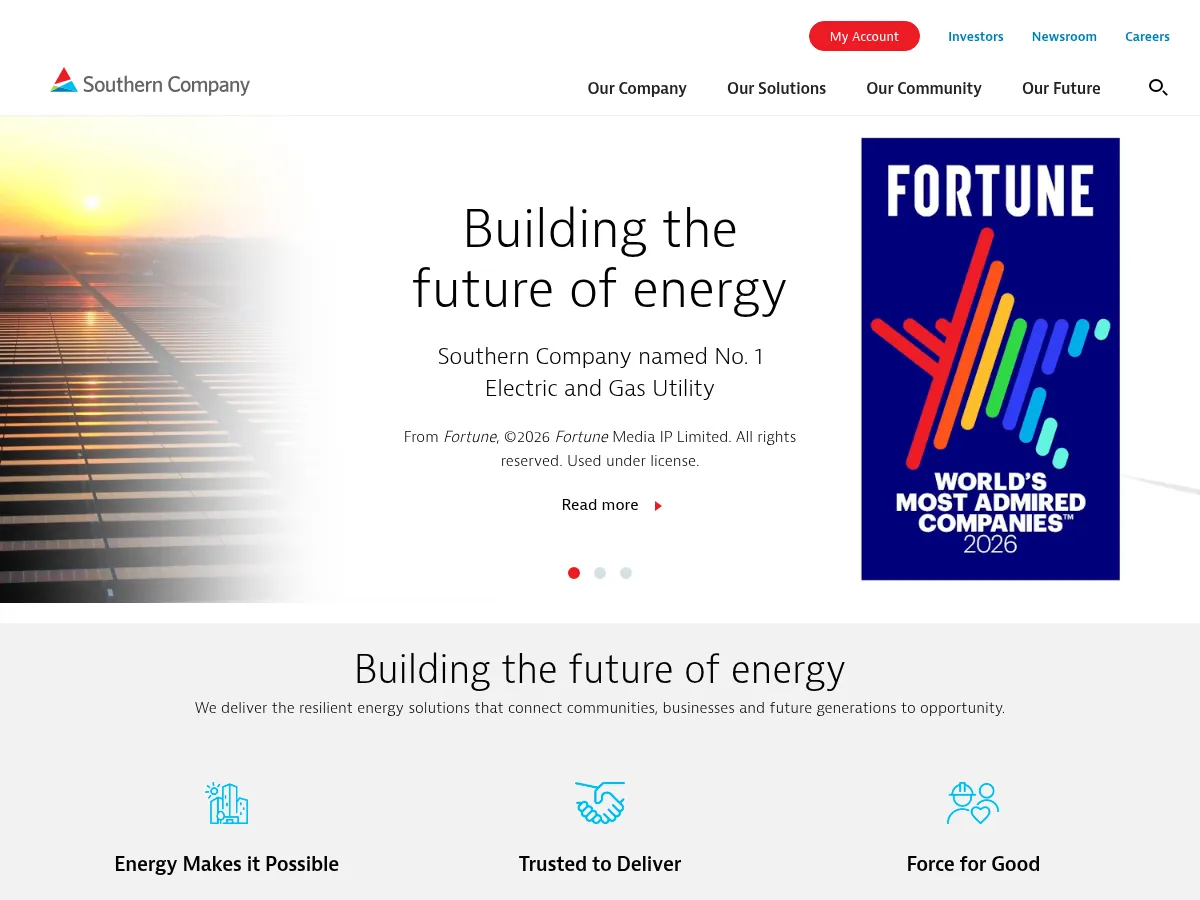
Southern Company Screenshot

Added: Feb 10, 2026

southerncompany.com

Latest from Otrai

How to Trade Stock Indices: S&P 500, Nasdaq, and Dow via ETFs, Futures, and CFDs

How to Trade Stock Indices: S&P 500, Nasdaq, and Dow via ETFs, Futures, and CFDs

A stock index is a single number that summarizes the price action of a basket of companies. The S&P 500 tracks roughly 500 large US firms, the Nasdaq-100 tracks the 100 largest non-financial names on the Nasdaq exchange, and the Dow Jones Industrial Average follows 30 blue-chip stocks.


The Options Greeks Explained: Delta, Gamma, Theta, and Vega

The Options Greeks Explained: Delta, Gamma, Theta, and Vega

The Greeks explain why an option costs what it costs and how that price changes when the stock moves, time passes, and volatility shifts. Delta, Gamma, Theta, and Vega, made accessible.

Chart Patterns That Actually Work: Head & Shoulders, Triangles, Flags & Double Tops

Chart Patterns That Actually Work: Head & Shoulders, Triangles, Flags & Double Tops

Chart patterns are the most recognizable part of technical analysis and the most misunderstood. Most fail or break out the wrong way before reversing. This guide covers head and shoulders, double tops and bottoms, triangles, and flags — with realistic reliability, target measurement, and false-breakout confirmation.

Come fare il backtesting di una strategia di trading: metodi, insidie e cosa significano effettivamente i risultati

Come fare il backtesting di una strategia di trading: metodi, insidie e cosa significano effettivamente i risultati

Ogni trader ha una strategia che sembra fantastica nella sua testa. Il backtesting è il modo per scoprire se effettivamente funziona. Ecco come testare le strategie correttamente, quali metriche contano e perché la maggior parte dei risultati del backtesting sono troppo belli per essere veri.