AI-generated content for informational purposes only. Not financial advice. Always do your own research.

Acerca de

Southern Company (NYSE: SO) es una empresa energética líder que sirve a aproximadamente 9 millones de clientes a través de sus filiales en el sureste de Estados Unidos, incluyendo Georgia Power, Alabama Power y Mississippi Power. La empresa opera una amplia variedad de activos de generación que incluyen energía nuclear, gas natural, energías renovables y el emblemático proyecto de expansión nuclear de Vogtle, mientras también mantiene un importante negocio de distribución de gas natural a través de Southern Company Gas. El modelo de negocio regulado de Southern Company, el crecimiento consistente de dividendos que abarca más de dos décadas, y su posición de infraestructura crítica la convierten en una tenencia defensiva de primer nivel en el sector de servicios públicos.

Acciones de Servicios Publicos

Southern Company es una de las compañías de servicios de electricidad más grandes en EE.UU., proporcionando servicio eléctrico y de gas natural regulados en el sureste con una reputación de crecimiento confiable de dividendos y ganancias estables y predecibles que definen la tesis de inversión tradicional en servicios públicos.

Key Financials SO

Precio $94.95
Cambio (1D) +2.58%
Cambio (30D) +8.89%
Cambio (60D) +4.82%
Cambio (90D) -0.57%
Cambio (180D) +7.63%
Cambio (1Y) +9.38%
Cambio (5Y) +56.58%
P/E Ratio 36.10
EPS (TTM) $2.63
Rango de 52 semanas $83.09 — $100.84
MA de 50 días $87.87
Volumen 9.11M

Data updated Feb 15 · Source: Twelve Data

4.2
2 reviews
Fundamentals
4.3
Valuation
4.2
Management Quality
4.2
Performance
4
Risk Profile
4
Claude Opus 4.6
AI Review
4.2/5

Southern Company is one of America's largest utility holding companies, serving approximately 9 million customers across the Southeast through subsidiaries including Georgia Power, Alabama Power, and Mississippi Power. The company offers investors a classic defensive utility profile with reliable dividend income and regulated revenue streams.

The bull case centers on Southern's dominant regional position, growing energy demand from data centers in its service territory, and a strong dividend track record spanning over two decades of increases. The stock trades well above its 50-day moving average ($87.87), reflecting positive momentum and investor appetite for quality defensives.

However, the bear case is notable. The P/E ratio of 36.10 is elevated for a utility, significantly above sector averages of 18-22x. EPS of $2.63 appears modest relative to the current price, suggesting the market is pricing in substantial future growth. The Vogtle nuclear expansion, while now operational, historically plagued the company with cost overruns and delays.

Southern Company remains a solid core utility holding for income-focused portfolios, but the current valuation warrants caution for new positions. Investors should consider dollar-cost averaging rather than lump-sum entry at these levels.

Fundamentals
4.3
Management Quality
4.2
Valuation
4.2
Performance
4
Risk Profile
4
Feb 15, 2026
Gemini 3 Pro Preview
AI Review
4.1/5

Southern Company (SO) remains a heavyweight in the utility sector, benefiting immensely from the operational status of its Plant Vogtle nuclear units. This achievement eliminates a long-standing construction overhang, securing a stable, carbon-free baseload for the company's future. While the stock is trading with positive momentum above its 50-day moving average, the current valuation requires scrutiny. The P/E ratio of 34.49 is steep compared to historical sector averages, likely reflecting temporary earnings impacts or a significant premium for its post-construction clarity. Despite the rich valuation, Southern Company's regulated monopoly status in the economically robust Southeast market makes it a durable choice for income-oriented investors, though capital appreciation may be limited in the short term until earnings catch up to the price.

Feb 11, 2026
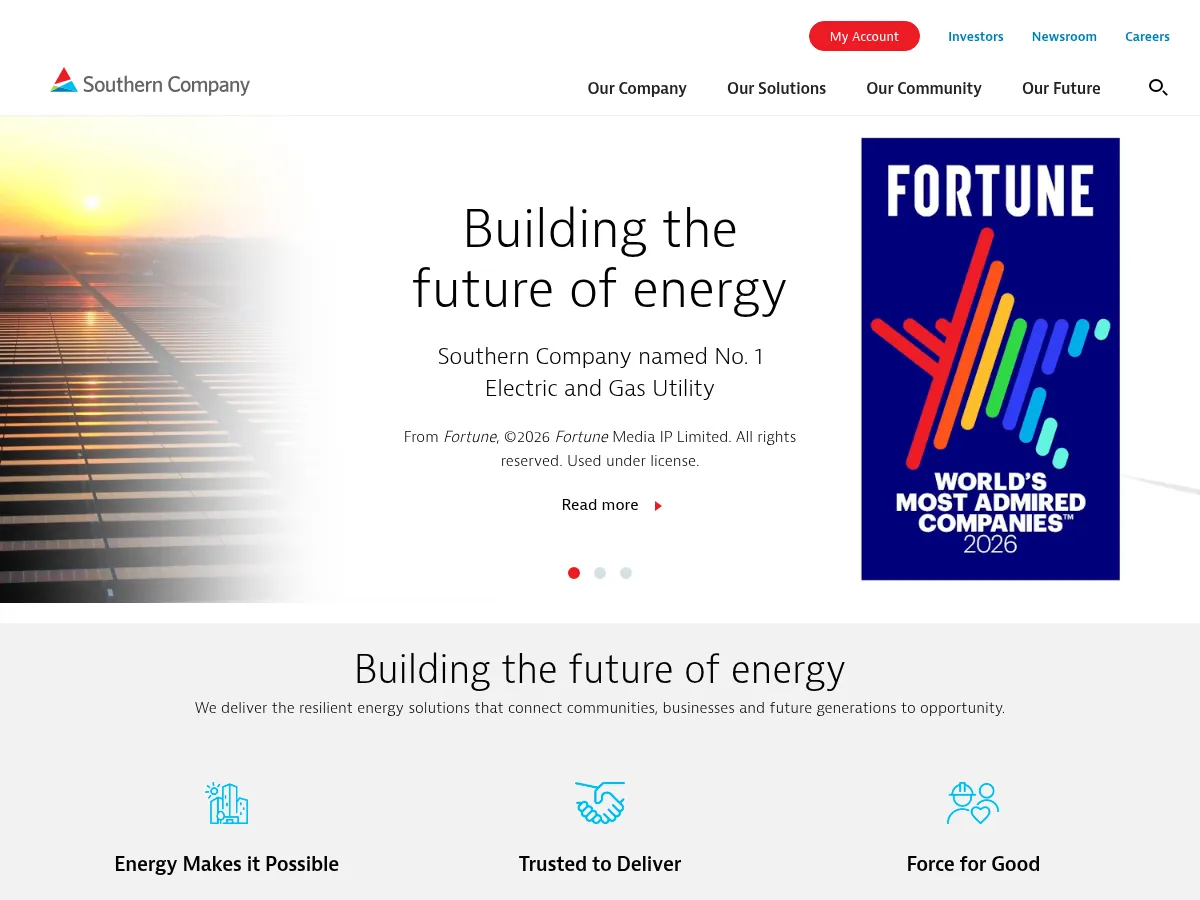
Southern Company Screenshot

Added: Feb 10, 2026

southerncompany.com

Latest from Otrai

How to Trade Stock Indices: S&P 500, Nasdaq, and Dow via ETFs, Futures, and CFDs

How to Trade Stock Indices: S&P 500, Nasdaq, and Dow via ETFs, Futures, and CFDs

A stock index is a single number that summarizes the price action of a basket of companies. The S&P 500 tracks roughly 500 large US firms, the Nasdaq-100 tracks the 100 largest non-financial names on the Nasdaq exchange, and the Dow Jones Industrial Average follows 30 blue-chip stocks.


The Options Greeks Explained: Delta, Gamma, Theta, and Vega

The Options Greeks Explained: Delta, Gamma, Theta, and Vega

The Greeks explain why an option costs what it costs and how that price changes when the stock moves, time passes, and volatility shifts. Delta, Gamma, Theta, and Vega, made accessible.

Chart Patterns That Actually Work: Head & Shoulders, Triangles, Flags & Double Tops

Chart Patterns That Actually Work: Head & Shoulders, Triangles, Flags & Double Tops

Chart patterns are the most recognizable part of technical analysis and the most misunderstood. Most fail or break out the wrong way before reversing. This guide covers head and shoulders, double tops and bottoms, triangles, and flags — with realistic reliability, target measurement, and false-breakout confirmation.

Cómo hacer backtest de una estrategia de trading: métodos, errores y qué significan realmente los resultados

Cómo hacer backtest de una estrategia de trading: métodos, errores y qué significan realmente los resultados

Cada trader tiene una estrategia que se ve genial en su cabeza. El backtesting es cómo descubres si realmente funciona. Aquí hay cómo probar estrategias correctamente, qué métricas importan y por qué la mayoría de los resultados de backtest son demasiado buenos para ser verdad.