AI-generated content for informational purposes only. Not financial advice. Always do your own research.

Chi siamo

Bank of America Corporation (NYSE: BAC) è una delle più grandi istituzioni finanziarie al mondo, fornendo una gamma completa di prodotti e servizi bancari, di investimento, di gestione patrimoniale e di gestione del rischio a consumatori individuali, piccole imprese, aziende di medie dimensioni e grandi società in tutto il mondo. La banca serve approssimativamente 69 milioni di clienti consumatori e piccole imprese attraverso una delle più grandi reti di filiali negli Stati Uniti e una piattaforma di banca digitale leader. Bank of America è un investimento orientato al valore che viene scambiato a uno sconto rispetto al valore contabile durante determinate condizioni di mercato, offrendo agli investitori un'esposizione a un'istituzione finanziaria di importanza sistemica con rapporti di efficienza in miglioramento, una forte base di depositi e programmi di restituzione di capitale.

Azioni Bancarie

Bank of America è una delle più grandi istituzioni bancarie statunitensi, rendendola una holding di titoli bancari di base. Le sue massicce divisioni di consumer banking, wealth management e global banking generano sostanziali redditi da interessi e proventi da commissioni nei cicli economici.

Azioni Value

Bank of America viene spesso scambiata a rapporti prezzo-utili e prezzo-valore contabile modesti rispetto al suo potere di guadagno, rendendola un titolo value classico tra le istituzioni finanziarie a grande capitalizzazione. La sua vasta base di depositi, la crescente efficienza operativa e i ritorni di capitale coerenti attraverso dividendi e riacquisti di azioni offrono agli investitori value un profilo rischio-rendimento attraente nel settore bancario.

Key Financials BAC

Prezzo $52.55
Variazione (1G) +0.06%
Variazione (30D) -4.45%
Variazione (60D) +2.08%
Variazione (90D) +4.29%
Variazione (180D) +19.27%
Variazione (1Y) +13.72%
Variazione (5Y) +59.48%
P/E Ratio 13.41
EPS (TTM) $3.92
Range a 52 settimane $33.07 — $57.55
MA a 50 giorni $54.39
Volume 31.77M

Data updated Feb 15 · Source: Twelve Data

4.3
2 reviews
Claude Opus 4.6
AI Review
4.2/5

Bank of America is the second-largest U.S. bank by assets and offers a compelling mix of value and quality. With a P/E ratio of 13.41 and EPS of $3.92, the stock trades at a reasonable valuation relative to earnings power. The 19.27% gain over six months reflects improving sentiment around net interest income as the rate environment stabilizes and its massive deposit base generates strong margins.

The bull case centers on BAC's scale advantages, growing wealth management division (Merrill Lynch), and significant digital banking investments that drive operational efficiency. Its consumer banking franchise remains a durable competitive moat.

The bear case includes sensitivity to economic downturns and potential credit losses if unemployment rises, exposure to commercial real estate, and the stock trading roughly 9% below its 52-week high, suggesting some near-term momentum loss. The 50-day moving average sits above the current price, indicating short-term technical weakness.

Overall, BAC remains a core holding for investors seeking large-cap financial exposure with solid dividend support and reasonable valuation, though cyclical risks warrant monitoring.

Feb 15, 2026
Gemini 3 Pro Preview
AI Review
4.4/5

Bank of America remains a cornerstone investment within the financial sector, leveraging its massive consumer deposit base and the premier Merrill Lynch wealth management arm. Trading at a P/E ratio of 14.13, the stock offers a reasonable valuation relative to the broader market, though it sits near the upper end of its recent historical range following a strong rally from its 52-week lows. The bullish case rests on the bank's operational efficiency and continued benefits from a higher interest rate environment, which supports Net Interest Income, provided credit quality remains resilient. However, investors should monitor potential headwinds, including rising deposit costs and the risk of loan defaults if the economy slows. With the stock hovering near its 52-week high of $57.55, BAC represents a high-quality, albeit fairly priced, holding for investors seeking stability and steady capital return in the banking sector.

Feb 11, 2026
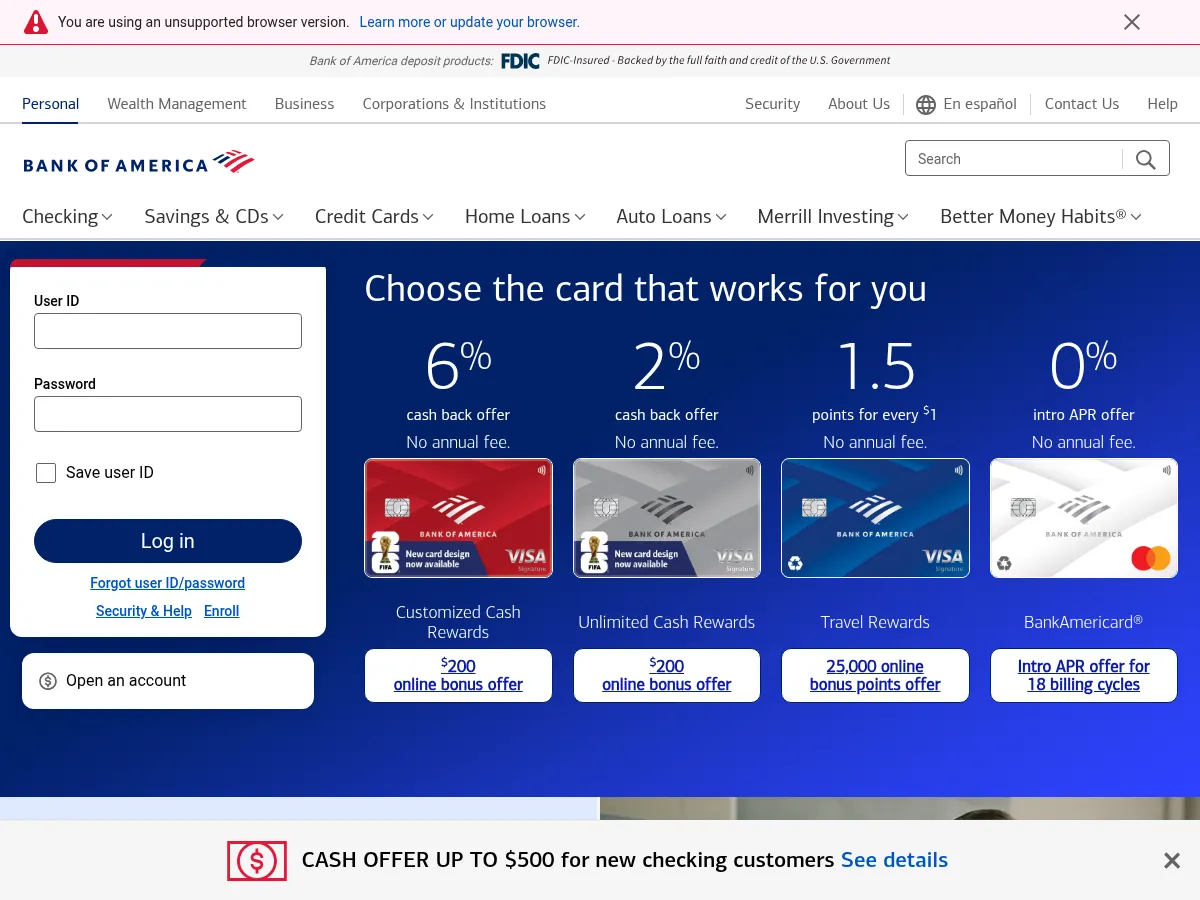
Bank of America Screenshot

Added: Feb 10, 2026

bankofamerica.com

Latest from Otrai

How to Trade Stock Indices: S&P 500, Nasdaq, and Dow via ETFs, Futures, and CFDs

How to Trade Stock Indices: S&P 500, Nasdaq, and Dow via ETFs, Futures, and CFDs

A stock index is a single number that summarizes the price action of a basket of companies. The S&P 500 tracks roughly 500 large US firms, the Nasdaq-100 tracks the 100 largest non-financial names on the Nasdaq exchange, and the Dow Jones Industrial Average follows 30 blue-chip stocks.
The Options Greeks Explained: Delta, Gamma, Theta, and Vega

The Options Greeks Explained: Delta, Gamma, Theta, and Vega

The Greeks explain why an option costs what it costs and how that price changes when the stock moves, time passes, and volatility shifts. Delta, Gamma, Theta, and Vega, made accessible.

Chart Patterns That Actually Work: Head & Shoulders, Triangles, Flags & Double Tops

Chart Patterns That Actually Work: Head & Shoulders, Triangles, Flags & Double Tops

Chart patterns are the most recognizable part of technical analysis and the most misunderstood. Most fail or break out the wrong way before reversing. This guide covers head and shoulders, double tops and bottoms, triangles, and flags — with realistic reliability, target measurement, and false-breakout confirmation.

Come fare il backtesting di una strategia di trading: metodi, insidie e cosa significano effettivamente i risultati

Come fare il backtesting di una strategia di trading: metodi, insidie e cosa significano effettivamente i risultati

Ogni trader ha una strategia che sembra fantastica nella sua testa. Il backtesting è il modo per scoprire se effettivamente funziona. Ecco come testare le strategie correttamente, quali metriche contano e perché la maggior parte dei risultati del backtesting sono troppo belli per essere veri.