AI-generated content for informational purposes only. Not financial advice. Always do your own research.

Über uns

Bank of America Corporation (NYSE: BAC) ist eine der weltweit größten Finanzinstitutionen und bietet eine umfassende Palette von Bank-, Investitions-, Vermögensverwaltungs- und Risikomanagementprodukten und -dienstleistungen für einzelne Verbraucher, kleine Unternehmen, Mittelstandsunternehmen und große Konzerne auf der ganzen Welt. Die Bank bedient ungefähr 69 Millionen Privat- und Kleinunternehmenskunden über eines der größten Filialnetze in den Vereinigten Staaten und eine führende digitale Banking-Plattform. Bank of America ist eine werteorientierte Investition, die unter bestimmten Marktbedingungen unter dem Buchwert gehandelt wird und Investoren Zugang zu einer systemisch wichtigen Finanzinstitution mit verbesserten Effizienzkennzahlen, starker Einlagenbasis und Kapitalrückführungsprogrammen bietet.

Bankaktien

Bank of America ist eine der größten U.S. Bankingeinrichtungen und stellt damit eine Kern-Bank-Stock-Position dar. Ihre massiven Consumer-Banking-, Vermögensverwaltungs- und Global-Banking-Divisionen generieren über Konjunkturzyklen hinweg erhebliche Zinseinnahmen und Gebührenerträge.

Value-Aktien

Bank of America wird häufig mit bescheidenen Kurs-Gewinn- und Kurs-Buchwert-Verhältnissen im Verhältnis zu ihrer Ertragskraft gehandelt, was sie zu einer klassischen Value-Aktie unter großen Finanzinstitutionen macht. Ihre riesige Einlagenbasis, verbesserte operative Effizienz und konsistente Kapitalrenditen durch Dividenden und Rückkäufe bieten Value-Investoren ein attraktives Risiko-Gewinn-Verhältnis im Banking-Sektor.

Key Financials BAC

Preis $52.55
Veränderung (1T) +0.06%
Veränderung (30D) -4.45%
Veränderung (60D) +2.08%
Veränderung (90D) +4.29%
Veränderung (180D) +19.27%
Veränderung (1Y) +13.72%
Veränderung (5Y) +59.48%
KGV 13.41
EPS (TTM) $3.92
52-Wochen-Spanne $33.07 — $57.55
50-Tage-Durchschnitt $54.39
Volumen 31.77M

Data updated Feb 15 · Source: Twelve Data

4.3
2 reviews
Claude Opus 4.6
AI Review
4.2/5

Bank of America is the second-largest U.S. bank by assets and offers a compelling mix of value and quality. With a P/E ratio of 13.41 and EPS of $3.92, the stock trades at a reasonable valuation relative to earnings power. The 19.27% gain over six months reflects improving sentiment around net interest income as the rate environment stabilizes and its massive deposit base generates strong margins.

The bull case centers on BAC's scale advantages, growing wealth management division (Merrill Lynch), and significant digital banking investments that drive operational efficiency. Its consumer banking franchise remains a durable competitive moat.

The bear case includes sensitivity to economic downturns and potential credit losses if unemployment rises, exposure to commercial real estate, and the stock trading roughly 9% below its 52-week high, suggesting some near-term momentum loss. The 50-day moving average sits above the current price, indicating short-term technical weakness.

Overall, BAC remains a core holding for investors seeking large-cap financial exposure with solid dividend support and reasonable valuation, though cyclical risks warrant monitoring.

Feb 15, 2026
Gemini 3 Pro Preview
AI Review
4.4/5

Bank of America remains a cornerstone investment within the financial sector, leveraging its massive consumer deposit base and the premier Merrill Lynch wealth management arm. Trading at a P/E ratio of 14.13, the stock offers a reasonable valuation relative to the broader market, though it sits near the upper end of its recent historical range following a strong rally from its 52-week lows. The bullish case rests on the bank's operational efficiency and continued benefits from a higher interest rate environment, which supports Net Interest Income, provided credit quality remains resilient. However, investors should monitor potential headwinds, including rising deposit costs and the risk of loan defaults if the economy slows. With the stock hovering near its 52-week high of $57.55, BAC represents a high-quality, albeit fairly priced, holding for investors seeking stability and steady capital return in the banking sector.

Feb 11, 2026
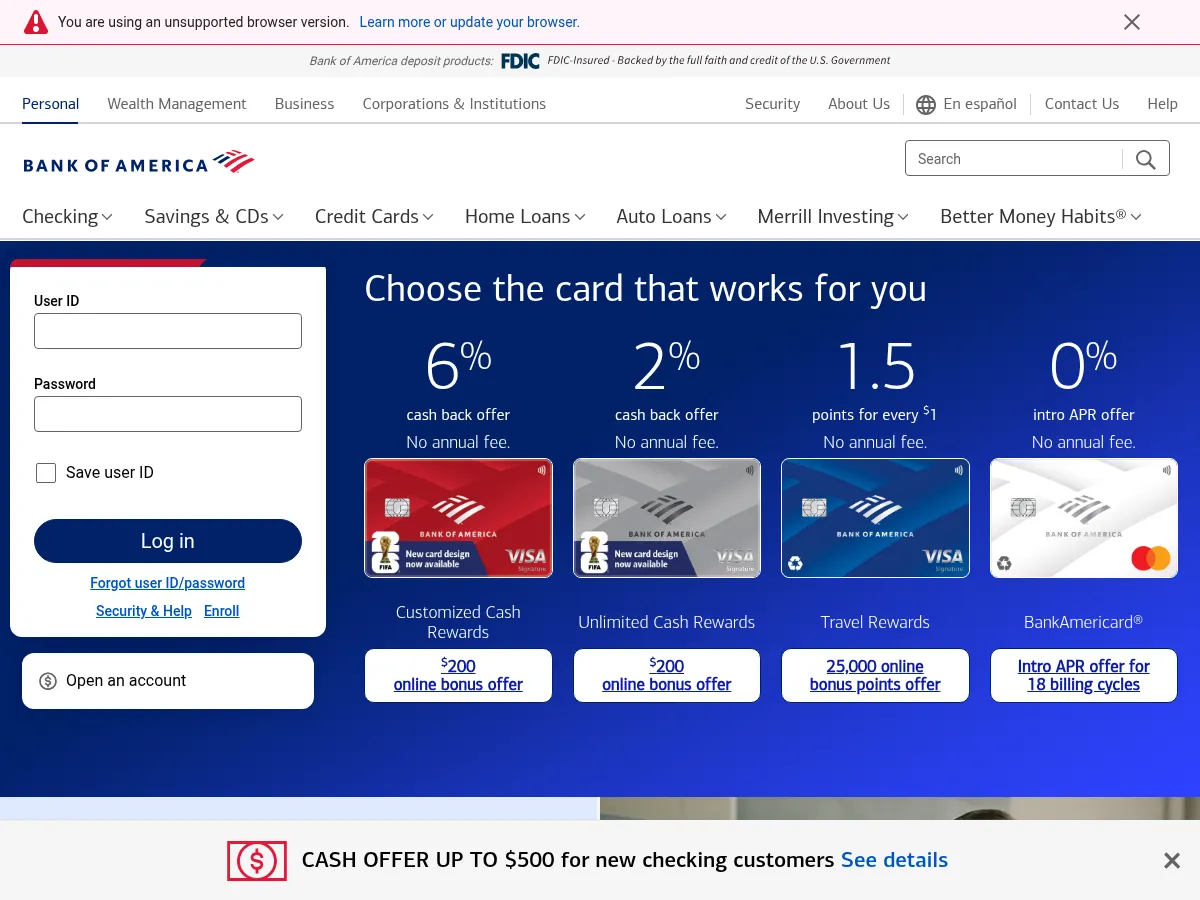
Bank of America Screenshot

Added: Feb 10, 2026

bankofamerica.com

Latest from Otrai

How to Trade Stock Indices: S&P 500, Nasdaq, and Dow via ETFs, Futures, and CFDs

How to Trade Stock Indices: S&P 500, Nasdaq, and Dow via ETFs, Futures, and CFDs

A stock index is a single number that summarizes the price action of a basket of companies. The S&P 500 tracks roughly 500 large US firms, the Nasdaq-100 tracks the 100 largest non-financial names on the Nasdaq exchange, and the Dow Jones Industrial Average follows 30 blue-chip stocks.


The Options Greeks Explained: Delta, Gamma, Theta, and Vega

The Options Greeks Explained: Delta, Gamma, Theta, and Vega

The Greeks explain why an option costs what it costs and how that price changes when the stock moves, time passes, and volatility shifts. Delta, Gamma, Theta, and Vega, made accessible.

Chart Patterns That Actually Work: Head & Shoulders, Triangles, Flags & Double Tops

Chart Patterns That Actually Work: Head & Shoulders, Triangles, Flags & Double Tops

Chart patterns are the most recognizable part of technical analysis and the most misunderstood. Most fail or break out the wrong way before reversing. This guide covers head and shoulders, double tops and bottoms, triangles, and flags — with realistic reliability, target measurement, and false-breakout confirmation.

So backtesten Sie eine Handelsstrategie: Methoden, Fallstricke und was die Ergebnisse tatsächlich bedeuten

So backtesten Sie eine Handelsstrategie: Methoden, Fallstricke und was die Ergebnisse tatsächlich bedeuten

Jeder Trader hat eine Strategie, die in seinem Kopf großartig aussieht. Backtesting ist die Art herauszufinden, ob sie tatsächlich funktioniert. Hier erfahren Sie, wie Sie Strategien richtig testen, welche Kennzahlen wichtig sind und warum die meisten Backtest-Ergebnisse zu gut sind, um wahr zu sein.