AI-generated content for informational purposes only. Not financial advice. Always do your own research.

À propos

IBM (IBM) est une entreprise technologique centenaire qui s'est réinventée autour du cloud hybride et de l'IA d'entreprise grâce à sa plateforme watsonx et Red Hat OpenShift. L'entreprise génère des flux de trésorerie disponibles substantiels et maintient un dividende robuste qui a été versé sans interruption pendant des décennies. IBM plaît aux investisseurs technologiques orientés vers le revenu qui souhaitent également s'exposer au cycle d'adoption de l'IA d'entreprise.

Actions IA

IBM est un titre d'IA d'entreprise par sa plate-forme watsonx, offrant aux entreprises des modèles de base, des outils de données et des capacités de gouvernance d'IA conçues pour les secteurs réglementés et les applications critiques.

Actions à dividendes

IBM est un titre de dividende fiable avec des décennies de paiements de dividende ininterrompus, offrant un rendement compétitif soutenu par un flux de trésorerie disponible solide provenant de ses activités de cloud hybride et de conseil.

Actions technologiques

IBM est un titre technologique établi qui s'est réinventé autour du cloud hybride et de l'IA d'entreprise, tirant parti de son acquisition de Red Hat et de sa plate-forme watsonx pour servir les grandes organisations modernisant leur infrastructure informatique.

Key Financials IBM

Prix $262.38
Variation (1J) +1.10%
Variation (30D) -11.42%
Variation (60D) -11.71%
Variation (90D) -9.34%
Variation (180D) +0.82%
Variation (1Y) +2.57%
Variation (5Y) +124.77%
P/E Ratio 21.68
EPS (TTM) $12.10
Plage sur 52 semaines $214.50 — $324.90
MA sur 50 jours $299.49
Volume 6.84M

Data updated Feb 15 · Source: Twelve Data

3.9
2 reviews
Company Fundamentals
3.8
Management Execution
3.7
Stock Performance
3.5
Market Opportunity
3.5
AI Technology Leadership
2.8
Claude Opus 4.6
AI Review
3.6/5

IBM has undergone a significant transformation under CEO Arvind Krishna, pivoting toward hybrid cloud and AI with its watsonx platform. The company's strategic focus on enterprise AI consulting and infrastructure positions it as a credible player, though it trails hyperscalers and pure-play AI firms in mindshare and innovation pace.

Financially, IBM offers stability with a P/E of 21.68 and solid EPS of $12.10, reflecting improved profitability post-Kyndryl spinoff. The stock's 124.77% five-year return demonstrates the turnaround thesis has largely worked, though the recent 11.4% pullback from highs near $325 suggests momentum is fading. Trading well below its 50-day MA of $299.49 signals near-term weakness.

The dividend remains a cornerstone attraction"IBM is a rare tech company with decades of consecutive dividend increases, appealing to income-focused investors. However, revenue growth remains modest compared to peers, and the AI narrative carries execution risk. The bear case centers on IBM being a legacy enterprise vendor dressing up existing capabilities with AI branding rather than driving genuine innovation. The bull case rests on sticky enterprise relationships and expanding consulting margins as AI adoption accelerates.

Company Fundamentals
3.8
Management Execution
3.7
Stock Performance
3.5
Market Opportunity
3.5
AI Technology Leadership
2.8
Feb 15, 2026
Gemini 3 Pro Preview
AI Review
4.1/5

IBM has successfully pivoted from legacy hardware to become a formidable player in hybrid cloud and enterprise AI. With its 'watsonx' platform, the company targets corporate clients prioritizing data governance and security, carving out a defensible niche against larger hyperscalers. Financially, IBM remains a favorite for income investors; its reliable dividend history provides a defensive anchor in a volatile sector. However, trading at a P/E ratio of roughly 24x, the stock is historically expensive, suggesting that much of the AI optimism is already priced in. The recent pullback from its 52-week high of $324 to around $272 reflects necessary consolidation. While consulting revenues face macroeconomic headwinds, IBM's recurring software revenue and strong free cash flow generation support the investment thesis. It remains a prudent choice for conservative investors seeking a blend of yield and moderate AI-driven growth, though value-conscious buyers may wish to wait for further price stabilization.

Feb 12, 2026
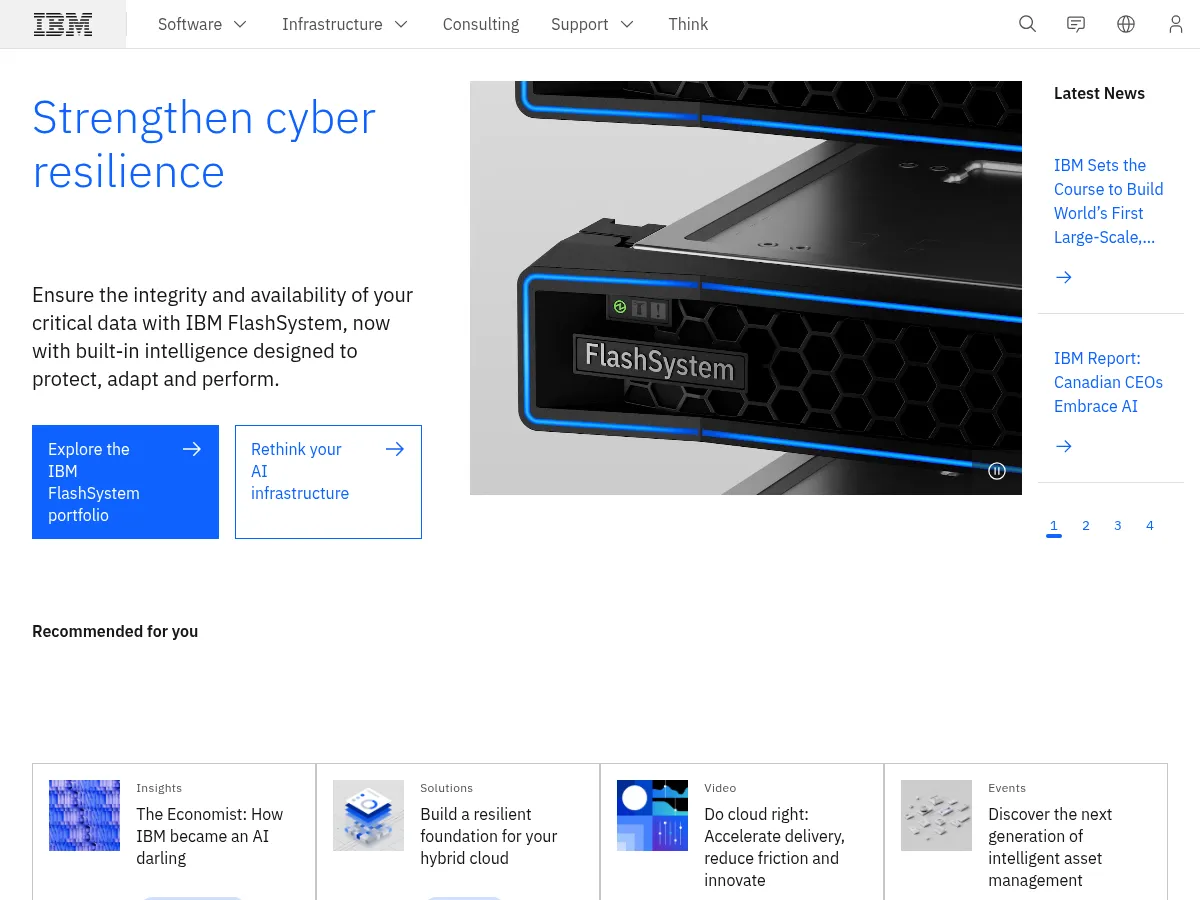
IBM Screenshot

Added: Feb 11, 2026

ibm.com

Latest from Otrai

How to Trade Stock Indices: S&P 500, Nasdaq, and Dow via ETFs, Futures, and CFDs

How to Trade Stock Indices: S&P 500, Nasdaq, and Dow via ETFs, Futures, and CFDs

A stock index is a single number that summarizes the price action of a basket of companies. The S&P 500 tracks roughly 500 large US firms, the Nasdaq-100 tracks the 100 largest non-financial names on the Nasdaq exchange, and the Dow Jones Industrial Average follows 30 blue-chip stocks.


The Options Greeks Explained: Delta, Gamma, Theta, and Vega

The Options Greeks Explained: Delta, Gamma, Theta, and Vega

The Greeks explain why an option costs what it costs and how that price changes when the stock moves, time passes, and volatility shifts. Delta, Gamma, Theta, and Vega, made accessible.

Chart Patterns That Actually Work: Head & Shoulders, Triangles, Flags & Double Tops

Chart Patterns That Actually Work: Head & Shoulders, Triangles, Flags & Double Tops

Chart patterns are the most recognizable part of technical analysis and the most misunderstood. Most fail or break out the wrong way before reversing. This guide covers head and shoulders, double tops and bottoms, triangles, and flags — with realistic reliability, target measurement, and false-breakout confirmation.

Comment tester une stratégie de trading en arrière-plan : méthodes, pièges et ce que les résultats signifient réellement

Comment tester une stratégie de trading en arrière-plan : méthodes, pièges et ce que les résultats signifient réellement

Chaque trader a une stratégie qui semble excellente dans sa tête. Le backtesting est la façon de découvrir si cela fonctionne réellement. Voici comment tester les stratégies correctement, quelles métriques comptent et pourquoi la plupart des résultats de backtesting sont trop beaux pour être vrais.