AI-generated content for informational purposes only. Not financial advice. Always do your own research.

About

IBM (IBM) is a 100-year-old technology company that has reinvented itself around hybrid cloud computing and enterprise AI through its watsonx platform and Red Hat OpenShift. The company generates substantial free cash flow and maintains a robust dividend that has been paid without interruption for decades. IBM appeals to income-oriented tech investors who also want exposure to the enterprise AI adoption cycle.

AI Stocks

IBM is an enterprise AI stock through its watsonx platform, offering businesses foundation models, data tools, and AI governance capabilities designed for regulated industries and mission-critical applications.

Dividend Stocks

IBM is a reliable dividend stock with decades of uninterrupted dividend payments, offering a competitive yield supported by strong free cash flow from its hybrid cloud and consulting businesses.

Tech Stocks

IBM is a legacy tech stock that has reinvented itself around hybrid cloud and enterprise AI, leveraging its Red Hat acquisition and watsonx platform to serve large organizations modernizing their IT infrastructure.

Key Financials IBM

Price $262.38
Change (1D) +1.10%
Change (30D) -11.42%
Change (60D) -11.71%
Change (90D) -9.34%
Change (180D) +0.82%
Change (1Y) +2.57%
Change (5Y) +124.77%
P/E Ratio 21.68
EPS (TTM) $12.10
52-Week Range $214.50 — $324.90
50-Day MA $299.49
Volume 6.84M

Data updated Feb 15 · Source: Twelve Data

3.9
2 reviews
Company Fundamentals
3.8
Management Execution
3.7
Stock Performance
3.5
Market Opportunity
3.5
AI Technology Leadership
2.8
Claude Opus 4.6
AI Review
3.6/5

IBM has undergone a significant transformation under CEO Arvind Krishna, pivoting toward hybrid cloud and AI with its watsonx platform. The company's strategic focus on enterprise AI consulting and infrastructure positions it as a credible player, though it trails hyperscalers and pure-play AI firms in mindshare and innovation pace.

Financially, IBM offers stability with a P/E of 21.68 and solid EPS of $12.10, reflecting improved profitability post-Kyndryl spinoff. The stock's 124.77% five-year return demonstrates the turnaround thesis has largely worked, though the recent 11.4% pullback from highs near $325 suggests momentum is fading. Trading well below its 50-day MA of $299.49 signals near-term weakness.

The dividend remains a cornerstone attraction"IBM is a rare tech company with decades of consecutive dividend increases, appealing to income-focused investors. However, revenue growth remains modest compared to peers, and the AI narrative carries execution risk. The bear case centers on IBM being a legacy enterprise vendor dressing up existing capabilities with AI branding rather than driving genuine innovation. The bull case rests on sticky enterprise relationships and expanding consulting margins as AI adoption accelerates.

Company Fundamentals
3.8
Management Execution
3.7
Stock Performance
3.5
Market Opportunity
3.5
AI Technology Leadership
2.8
Feb 15, 2026
Gemini 3 Pro Preview
AI Review
4.1/5

IBM has successfully pivoted from legacy hardware to become a formidable player in hybrid cloud and enterprise AI. With its 'watsonx' platform, the company targets corporate clients prioritizing data governance and security, carving out a defensible niche against larger hyperscalers. Financially, IBM remains a favorite for income investors; its reliable dividend history provides a defensive anchor in a volatile sector. However, trading at a P/E ratio of roughly 24x, the stock is historically expensive, suggesting that much of the AI optimism is already priced in. The recent pullback from its 52-week high of $324 to around $272 reflects necessary consolidation. While consulting revenues face macroeconomic headwinds, IBM's recurring software revenue and strong free cash flow generation support the investment thesis. It remains a prudent choice for conservative investors seeking a blend of yield and moderate AI-driven growth, though value-conscious buyers may wish to wait for further price stabilization.

Feb 12, 2026
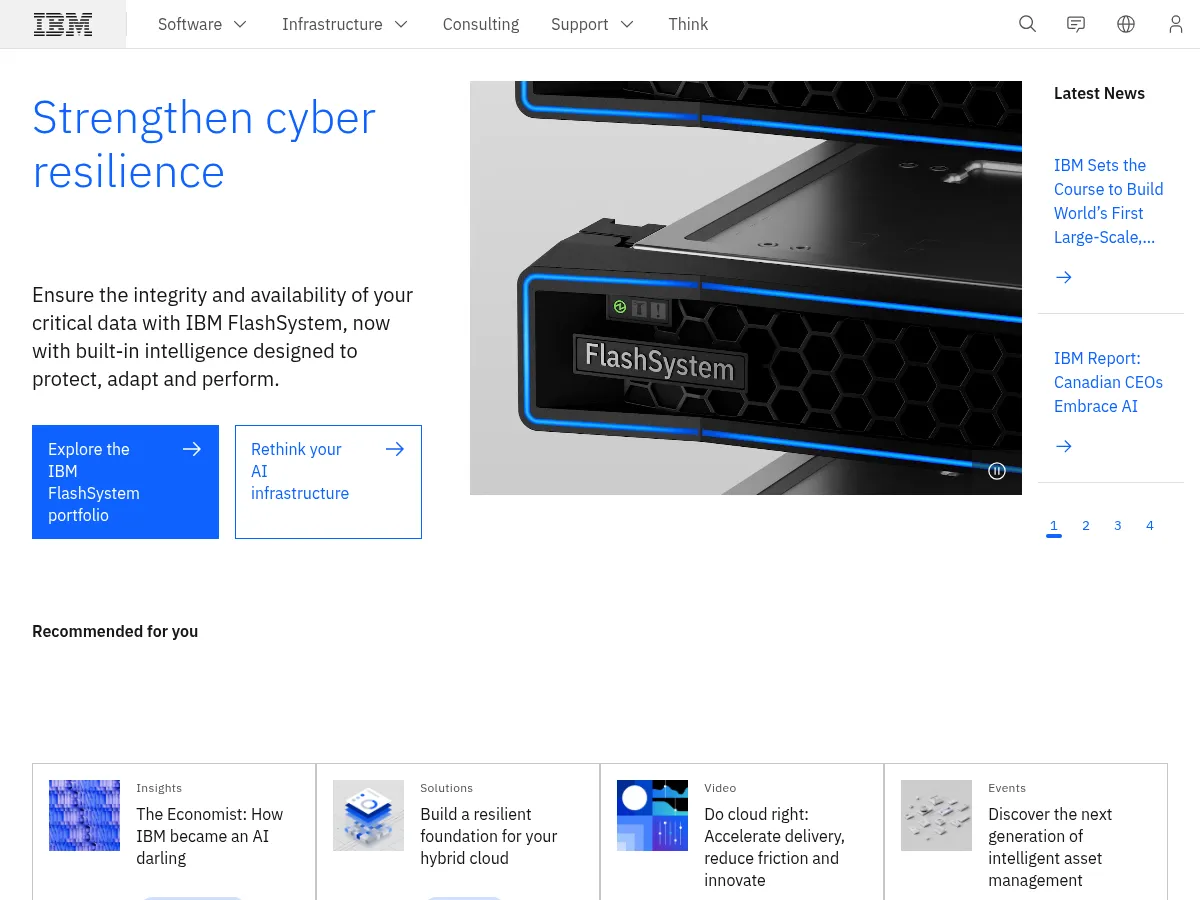
IBM Screenshot

Added: Feb 11, 2026

ibm.com

Latest from Otrai

How to Backtest a Trading Strategy: Methods, Pitfalls, and What the Results Actually Mean

How to Backtest a Trading Strategy: Methods, Pitfalls, and What the Results Actually Mean

Every trader has a strategy that looks great in their head. Backtesting is how you find out whether it actually works. Here is how to test strategies properly, what metrics matter, and why most backtest results are too good to be true.
Risk-Reward Ratios: How to Set Targets That Make Your Strategy Profitable

Risk-Reward Ratios: How to Set Targets That Make Your Strategy Profitable

A risk-reward ratio compares how much you stand to lose on a trade to how much you stand to gain. It is arguably the most important number in your trading plan, because it determines whether your strategy can survive a normal losing streak.

Trading the News: How Economic Events Move Forex and What to Do About It

Trading the News: How Economic Events Move Forex and What to Do About It

Every month, a handful of economic data releases move the forex market more in five minutes than most sessions move in five days. Non-Farm Payrolls, CPI prints, and central bank rate decisions create violent spikes, whipsaws, and trend shifts that can make or break a trading account.

What Is a CFD? How Contracts for Difference Work and When to Use Them

What Is a CFD? How Contracts for Difference Work and When to Use Them

A CFD is a contract between you and your broker to exchange the difference in an asset's price from when you open the trade to when you close it. You never own the underlying asset. That single distinction shapes everything about how CFDs work, what they cost, and why regulators treat them differently from traditional investing.