AI-generated content for informational purposes only. Not financial advice. Always do your own research.

Acerca de

Zscaler es una empresa de ciberseguridad líder basada en la nube que proporciona soluciones de arquitectura de confianza cero. Su plataforma Security Service Edge (SSE) asegura el acceso a internet, aplicaciones privadas y SaaS para empresas, reemplazando firewalls y VPNs heredados con un enfoque nativo de la nube.

Acciones de Ciberseguridad

Zscaler es una empresa de ciberseguridad líder nativa en la nube que proporciona arquitectura de seguridad de confianza cero que reemplaza los perímetros de red tradicionales con controles de acceso seguros basados en identidad.

Acciones de computación en el borde

Zscaler opera una nube de seguridad global en el borde de la red, proporcionando acceso de confianza cero, seguridad web y servicios de protección de datos que procesan miles de millones de transacciones diarias.

Key Financials ZS

Precio $177.72
Cambio (1D) +3.99%
Cambio (30D) -20.99%
Cambio (60D) -39.74%
Cambio (90D) -41.78%
Cambio (180D) -29.93%
Cambio (1Y) -15.83%
Cambio (5Y) -19.22%
P/E Ratio 111.08
EPS (TTM) $1.60
Rango de 52 semanas $162.87 — $336.99
MA de 50 días $215.11
Volumen 2.43M

Data updated Feb 15 · Source: Twelve Data

3.9
1 reviews
Performance
4.2
Management Quality
4
Fundamentals
4
Risk Profile
2.8
Valuation
2.5
Claude Opus 4.6
AI Review
3.9/5

Zscaler is a leading cloud-native cybersecurity company pioneering the zero-trust architecture space through its Zero Trust Exchange platform. The company enjoys strong competitive positioning as enterprises increasingly shift from legacy perimeter-based security to cloud-delivered models. Revenue growth has been robust, and Zscaler benefits from high switching costs and expanding use cases across its platform.

However, the stock has experienced severe downward pressure, trading nearly 47% below its 52-week high and well below its 50-day moving average of $215. The P/E ratio of 111x on modest EPS of $1.60 still reflects premium growth expectations despite the selloff, leaving the valuation vulnerable if growth decelerates. The sharp 5-year decline of -19% despite strong business fundamentals suggests persistent multiple compression as the market reprices high-growth software names.

Bull case: dominant zero-trust platform with expanding TAM, strong net retention rates, and secular tailwinds from AI-driven security threats. Bear case: elevated valuation, increasing competition from CrowdStrike and Palo Alto Networks, and potential macro-driven IT spending slowdowns. The recent pullback may present an attractive entry point for patient, long-term investors willing to tolerate volatility.

Performance
4.2
Fundamentals
4
Management Quality
4
Risk Profile
2.8
Valuation
2.5
Feb 15, 2026
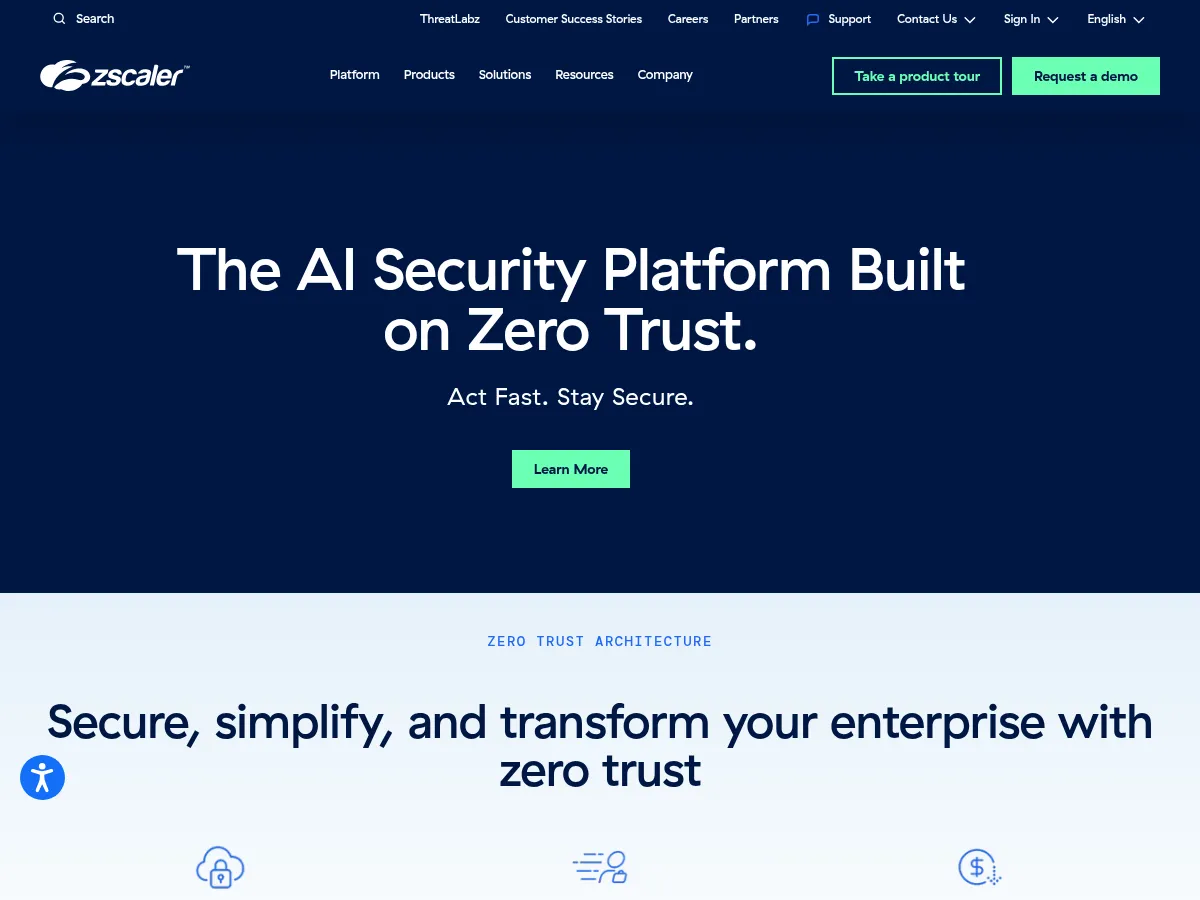
Zscaler Screenshot

Added: Feb 15, 2026

zscaler.com

Latest from Otrai

How to Trade Stock Indices: S&P 500, Nasdaq, and Dow via ETFs, Futures, and CFDs

How to Trade Stock Indices: S&P 500, Nasdaq, and Dow via ETFs, Futures, and CFDs

A stock index is a single number that summarizes the price action of a basket of companies. The S&P 500 tracks roughly 500 large US firms, the Nasdaq-100 tracks the 100 largest non-financial names on the Nasdaq exchange, and the Dow Jones Industrial Average follows 30 blue-chip stocks.


The Options Greeks Explained: Delta, Gamma, Theta, and Vega

The Options Greeks Explained: Delta, Gamma, Theta, and Vega

The Greeks explain why an option costs what it costs and how that price changes when the stock moves, time passes, and volatility shifts. Delta, Gamma, Theta, and Vega, made accessible.

Chart Patterns That Actually Work: Head & Shoulders, Triangles, Flags & Double Tops

Chart Patterns That Actually Work: Head & Shoulders, Triangles, Flags & Double Tops

Chart patterns are the most recognizable part of technical analysis and the most misunderstood. Most fail or break out the wrong way before reversing. This guide covers head and shoulders, double tops and bottoms, triangles, and flags — with realistic reliability, target measurement, and false-breakout confirmation.

Cómo hacer backtest de una estrategia de trading: métodos, errores y qué significan realmente los resultados

Cómo hacer backtest de una estrategia de trading: métodos, errores y qué significan realmente los resultados

Cada trader tiene una estrategia que se ve genial en su cabeza. El backtesting es cómo descubres si realmente funciona. Aquí hay cómo probar estrategias correctamente, qué métricas importan y por qué la mayoría de los resultados de backtest son demasiado buenos para ser verdad.