AI-generated content for informational purposes only. Not financial advice. Always do your own research.

Acerca de

FuelCell Energy Inc. (NASDAQ: FCEL) es un desarrollador y fabricante de plataformas de tecnología de celdas de combustible de carbonato fundido que producen electricidad limpia, hidrógeno y soluciones de captura de carbono para clientes de servicios públicos, instalaciones industriales y gobiernos. La línea de productos SureSource de la empresa puede operar en múltiples configuraciones incluyendo solo potencia, calor y potencia combinados, y modos de generación de hidrógeno, y su tecnología patentada de captura de carbono ofrece un enfoque único para la descarbonización industrial. Como una empresa de celdas de combustible e hidrógeno de juego puro con tecnología patentada y cartera de proyectos a largo plazo, FuelCell Energy representa una inversión especulativa en la economía de hidrógeno emergente y la generación de energía limpia distribuida.

Acciones de Hidrogeno

FuelCell Energy desarrolla plataformas de celdas de combustible de carbonato fundido capaces de producir hidrógeno junto con electricidad, ofreciendo una inversión pura en generación de hidrógeno con tecnología patentada que produce directamente hidrógeno limpio a partir de sus sistemas de celda de combustible.

Key Financials FCEL

Precio $7.22
Cambio (1D) +3.00%
Cambio (30D) -1.23%
Cambio (60D) +5.56%
Cambio (90D) -29.15%
Cambio (180D) +38.58%
Cambio (1Y) -7.44%
Cambio (5Y) -99.09%
P/E Ratio -1.40
EPS (TTM) $-5.14
Rango de 52 semanas $3.58 — $11.99
MA de 50 días $8.21
Volumen 1.37M

Data updated Feb 15 · Source: Twelve Data

2.7
2 reviews
Valuation
2.8
Management Quality
2.2
Fundamentals
2
Performance
1.8
Risk Profile
1.5
Claude Opus 4.6
AI Review
2.3/5

FuelCell Energy is a pioneer in stationary fuel cell technology, offering carbonate fuel cell platforms for distributed power generation and hydrogen production. However, the investment case remains deeply challenged. The company has never achieved sustained profitability, reflected in a deeply negative P/E ratio of -1.40 and EPS of -$5.14. The 5-year decline of -99.09% represents catastrophic value destruction for long-term shareholders, driven by persistent cash burn, repeated dilutive offerings, and a reverse stock split. Trading well below its 50-day moving average of $8.21, technical momentum is bearish. On the bull side, FuelCell has real technology, government support for clean energy, and growing interest in hydrogen infrastructure. The 180-day gain of 38.58% suggests periodic speculative rallies. However, revenue growth has been inconsistent, the path to profitability remains unclear, and competition from Bloom Energy and Plug Power is intensifying. The balance sheet requires ongoing capital raises, diluting existing shareholders. This remains a speculative play on hydrogen adoption rather than a fundamentals-driven investment. Only suitable for high-risk-tolerance investors with a very long time horizon.

Valuation
2.8
Management Quality
2.2
Fundamentals
2
Performance
1.8
Risk Profile
1.5
Feb 15, 2026
Gemini 3 Pro Preview
AI Review
3.1/5

FuelCell Energy (FCEL) operates as a key player in the stationary fuel cell market, leveraging its proprietary carbonate fuel cell technology for power generation and carbon capture. The investment thesis relies heavily on the broader adoption of hydrogen infrastructure and decarbonization mandates. However, the company's financial health presents a significant hurdle for conservative investors. With a trailing EPS of -$5.14 and a negative P/E ratio of -1.44, FCEL continues to burn cash without generating profit, highlighting the speculative nature of the stock. Technically, the stock is trading at $7.42, below its 50-day moving average of $8.19, indicating recent cooling after volatility that saw prices range from $3.58 to $11.99 over the last year. While the technology holds promise for industrial applications, the lack of near-term profitability makes FCEL a high-risk holding suitable only for investors with a high tolerance for volatility within the hydrogen sector.

Feb 11, 2026
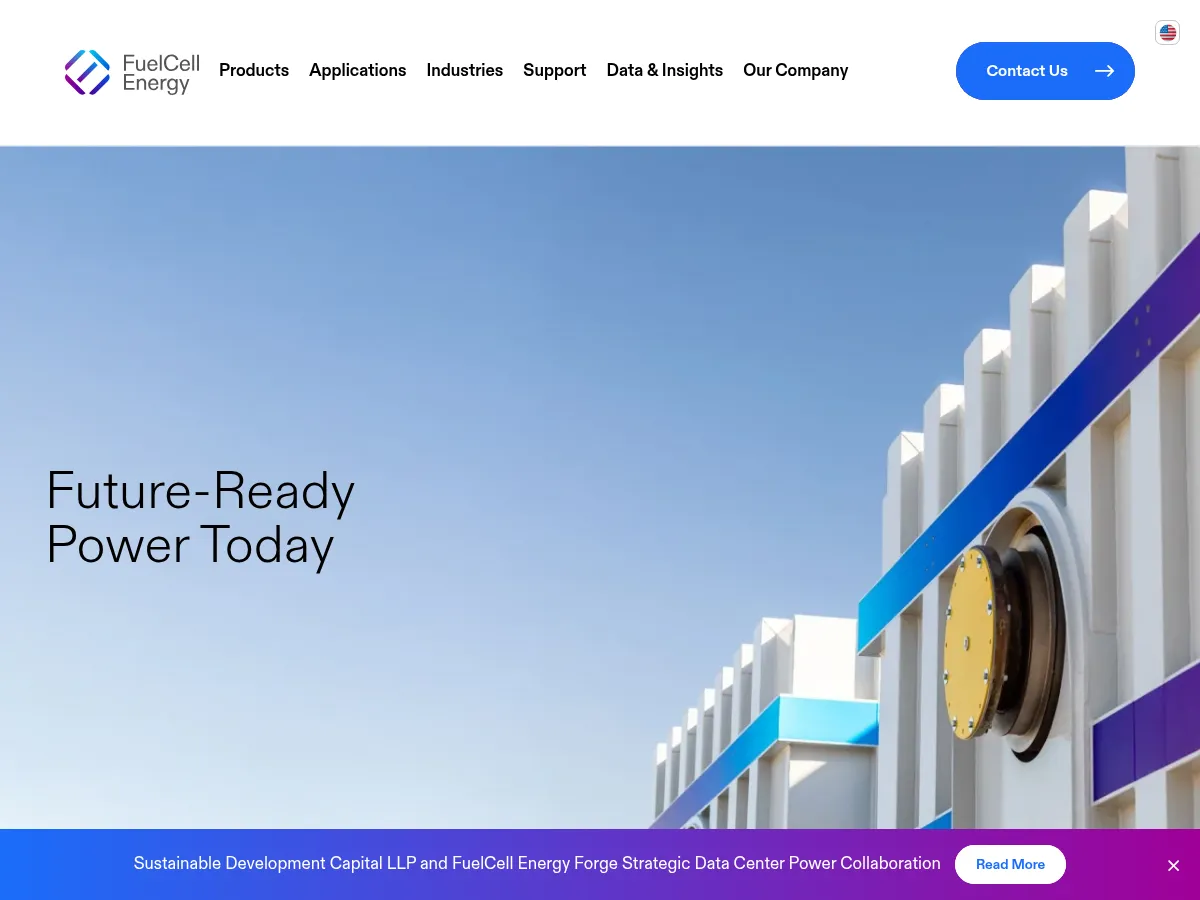
FuelCell Energy Screenshot

Added: Feb 10, 2026

fuelcellenergy.com

Latest from Otrai

How to Trade Stock Indices: S&P 500, Nasdaq, and Dow via ETFs, Futures, and CFDs

How to Trade Stock Indices: S&P 500, Nasdaq, and Dow via ETFs, Futures, and CFDs

A stock index is a single number that summarizes the price action of a basket of companies. The S&P 500 tracks roughly 500 large US firms, the Nasdaq-100 tracks the 100 largest non-financial names on the Nasdaq exchange, and the Dow Jones Industrial Average follows 30 blue-chip stocks.

The Options Greeks Explained: Delta, Gamma, Theta, and Vega

The Options Greeks Explained: Delta, Gamma, Theta, and Vega

The Greeks explain why an option costs what it costs and how that price changes when the stock moves, time passes, and volatility shifts. Delta, Gamma, Theta, and Vega, made accessible.

Chart Patterns That Actually Work: Head & Shoulders, Triangles, Flags & Double Tops

Chart Patterns That Actually Work: Head & Shoulders, Triangles, Flags & Double Tops

Chart patterns are the most recognizable part of technical analysis and the most misunderstood. Most fail or break out the wrong way before reversing. This guide covers head and shoulders, double tops and bottoms, triangles, and flags — with realistic reliability, target measurement, and false-breakout confirmation.

Cómo hacer backtest de una estrategia de trading: métodos, errores y qué significan realmente los resultados

Cómo hacer backtest de una estrategia de trading: métodos, errores y qué significan realmente los resultados

Cada trader tiene una estrategia que se ve genial en su cabeza. El backtesting es cómo descubres si realmente funciona. Aquí hay cómo probar estrategias correctamente, qué métricas importan y por qué la mayoría de los resultados de backtest son demasiado buenos para ser verdad.