AI-generated content for informational purposes only. Not financial advice. Always do your own research.

Über uns

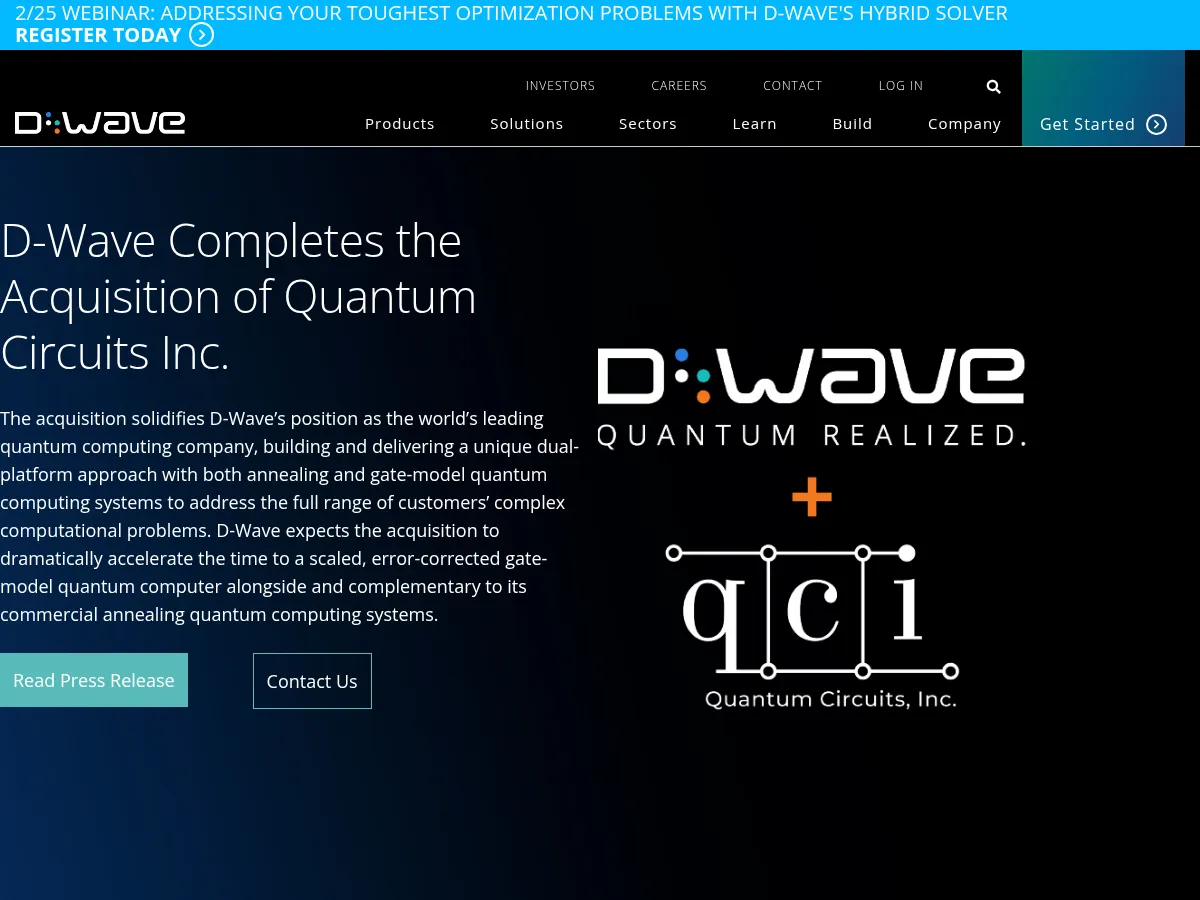
D-Wave Quantum Inc. (NYSE: QBTS) ist ein Pionier im Quantencomputing und das erste Unternehmen, das kommerzielle Quantencomputer verkauft, und spezialisiert sich auf Quantum-Annealing-Technologie, die zur Lösung komplexer Optimierungsprobleme entwickelt wurde. Das Unternehmen bietet auch Cloud-basierten Zugang zu seinen Quantensystemen über den Leap Quantum Cloud Service an und hat sich in das Gate-Model-Quantencomputing ausgeweitet. D-Wave ist eine charakteristische Quantencomputing-Aktie für Investoren, die eine Exposition gegenüber einem Unternehmen mit kommerziell eingesetzten Quantensystemen und einem Fokus auf nahe Zukunftanwendungen in der Optimierung über verschiedene Branchen hinweg anstreben.

Quantencomputer-Aktien

D-Wave Quantum ist das am längsten betriebene kommerzielle Quantencomputer-Unternehmen mit dem Schwerpunkt auf Quantum Annealing für Optimierungsprobleme. Die etablierte Kundenbasis, kommerziell eingesetzte Quantensysteme und erweiterte Gate-Model-Funktionen bieten Investoren Zugang sowohl zu kurzfristigen Quantenanwendungen als auch zu langfristiger Technologieentwicklung.

Key Financials QBTS

Preis $19.67
Veränderung (1T) +4.52%
Veränderung (30D) -24.78%
Veränderung (60D) -13.84%
Veränderung (90D) -43.83%
Veränderung (180D) +12.08%
Veränderung (1Y) +225.66%
Veränderung (5Y) +73.15%
KGV 89.41
EPS (TTM) $0.22
52-Wochen-Spanne $4.45 — $46.75
50-Tage-Durchschnitt $25.66
Volumen 23.80M

Data updated Feb 15 · Source: Twelve Data

3.7
2 reviews
Performance
4
Management Quality
3.4
Fundamentals
2.8
Valuation
2.6
Risk Profile
2.2
Claude Opus 4.6
AI Review
3.6/5

D-Wave Quantum stands as the most commercially advanced pure-play quantum computing company, uniquely positioned with its quantum annealing technology already generating revenue from enterprise customers. The stock has delivered an extraordinary 225% gain over the past year, though a brutal 44% pullback from its 90-day high suggests significant speculative froth is unwinding. Currently trading at $19.67"well below its 52-week high of $46.75 and its 50-day moving average of $25.66"the technical picture signals bearish momentum.

The bull case centers on D-Wave's first-mover advantage in commercial quantum computing, its hybrid solver platform, and growing enterprise adoption. The P/E of 89.41 with positive EPS of $0.22 is notable"few quantum peers show any profitability. However, revenue remains modest relative to valuation, and competition from IBM, Google, and IonQ is intensifying.

The bear case highlights persistent cash burn concerns, dilution risk, and the reality that fault-tolerant quantum computing remains years away. D-Wave's annealing approach, while commercially viable today, may face architectural limitations against gate-based competitors long-term. This remains a high-conviction, high-risk speculation suitable only for investors with strong risk tolerance and a multi-year horizon.

Performance
4
Management Quality
3.4
Fundamentals
2.8
Valuation
2.6
Risk Profile
2.2
Feb 15, 2026
Gemini 3 Pro Preview
AI Review
3.7/5

D-Wave Quantum (QBTS) distinguishes itself in the emerging quantum sector as the first company to offer commercially accessible quantum computers. By focusing on quantum annealing technology, D-Wave targets immediate enterprise optimization problems via its Leapâ„¢ cloud platform, rather than solely waiting for the maturity of universal gate-based systems. However, the investment profile is high-risk; the company operates with a negative P/E of -56.78 and negative earnings, typical for deep-tech firms prioritizing R&D over near-term profitability. The stock exhibits extreme volatility, currently trading at $20.44, which is a significant correction from its 52-week high of $46.75 and below its 50-day moving average. For investors, QBTS represents a speculative bet on the practical, near-term application of quantum technology, balanced against the risks of cash burn and intense competition.

Feb 11, 2026
D-Wave Quantum Screenshot

Added: Feb 10, 2026

dwavequantum.com

Latest from Otrai

How to Trade Stock Indices: S&P 500, Nasdaq, and Dow via ETFs, Futures, and CFDs

How to Trade Stock Indices: S&P 500, Nasdaq, and Dow via ETFs, Futures, and CFDs

A stock index is a single number that summarizes the price action of a basket of companies. The S&P 500 tracks roughly 500 large US firms, the Nasdaq-100 tracks the 100 largest non-financial names on the Nasdaq exchange, and the Dow Jones Industrial Average follows 30 blue-chip stocks.

The Options Greeks Explained: Delta, Gamma, Theta, and Vega

The Options Greeks Explained: Delta, Gamma, Theta, and Vega

The Greeks explain why an option costs what it costs and how that price changes when the stock moves, time passes, and volatility shifts. Delta, Gamma, Theta, and Vega, made accessible.

Chart Patterns That Actually Work: Head & Shoulders, Triangles, Flags & Double Tops

Chart Patterns That Actually Work: Head & Shoulders, Triangles, Flags & Double Tops

Chart patterns are the most recognizable part of technical analysis and the most misunderstood. Most fail or break out the wrong way before reversing. This guide covers head and shoulders, double tops and bottoms, triangles, and flags — with realistic reliability, target measurement, and false-breakout confirmation.

So backtesten Sie eine Handelsstrategie: Methoden, Fallstricke und was die Ergebnisse tatsächlich bedeuten

So backtesten Sie eine Handelsstrategie: Methoden, Fallstricke und was die Ergebnisse tatsächlich bedeuten

Jeder Trader hat eine Strategie, die in seinem Kopf großartig aussieht. Backtesting ist die Art herauszufinden, ob sie tatsächlich funktioniert. Hier erfahren Sie, wie Sie Strategien richtig testen, welche Kennzahlen wichtig sind und warum die meisten Backtest-Ergebnisse zu gut sind, um wahr zu sein.