AI-generated content for informational purposes only. Not financial advice. Always do your own research.

About

D-Wave Quantum Inc. (NYSE: QBTS) is a pioneer in quantum computing and the first company to sell commercial quantum computers, specializing in quantum annealing technology designed to solve complex optimization problems. The company also offers cloud-based access to its quantum systems through the Leap quantum cloud service and has expanded into gate-model quantum computing. D-Wave is a distinctive quantum computing stock for investors seeking exposure to a company with commercially deployed quantum systems and a focus on near-term practical applications in optimization across industries.

Quantum Computing Stocks

D-Wave Quantum is the longest-operating commercial quantum computing stock, with a unique focus on quantum annealing for optimization problems. Its established customer base, commercially deployed quantum systems, and expanding gate-model capabilities offer investors exposure to both near-term quantum applications and long-term technology development.

Key Financials QBTS

Price $19.67
Change (1D) +4.52%
Change (30D) -24.78%
Change (60D) -13.84%
Change (90D) -43.83%
Change (180D) +12.08%
Change (1Y) +225.66%
Change (5Y) +73.15%
P/E Ratio 89.41
EPS (TTM) $0.22
52-Week Range $4.45 — $46.75
50-Day MA $25.66
Volume 23.80M

Data updated Feb 15 · Source: Twelve Data

3.7
2 reviews
Performance
4
Management Quality
3.4
Fundamentals
2.8
Valuation
2.6
Risk Profile
2.2
Claude Opus 4.6
AI Review
3.6/5

D-Wave Quantum stands as the most commercially advanced pure-play quantum computing company, uniquely positioned with its quantum annealing technology already generating revenue from enterprise customers. The stock has delivered an extraordinary 225% gain over the past year, though a brutal 44% pullback from its 90-day high suggests significant speculative froth is unwinding. Currently trading at $19.67"well below its 52-week high of $46.75 and its 50-day moving average of $25.66"the technical picture signals bearish momentum.

The bull case centers on D-Wave's first-mover advantage in commercial quantum computing, its hybrid solver platform, and growing enterprise adoption. The P/E of 89.41 with positive EPS of $0.22 is notable"few quantum peers show any profitability. However, revenue remains modest relative to valuation, and competition from IBM, Google, and IonQ is intensifying.

The bear case highlights persistent cash burn concerns, dilution risk, and the reality that fault-tolerant quantum computing remains years away. D-Wave's annealing approach, while commercially viable today, may face architectural limitations against gate-based competitors long-term. This remains a high-conviction, high-risk speculation suitable only for investors with strong risk tolerance and a multi-year horizon.

Performance
4
Management Quality
3.4
Fundamentals
2.8
Valuation
2.6
Risk Profile
2.2
Feb 15, 2026
Gemini 3 Pro Preview
AI Review
3.7/5

D-Wave Quantum (QBTS) distinguishes itself in the emerging quantum sector as the first company to offer commercially accessible quantum computers. By focusing on quantum annealing technology, D-Wave targets immediate enterprise optimization problems via its Leapâ„¢ cloud platform, rather than solely waiting for the maturity of universal gate-based systems. However, the investment profile is high-risk; the company operates with a negative P/E of -56.78 and negative earnings, typical for deep-tech firms prioritizing R&D over near-term profitability. The stock exhibits extreme volatility, currently trading at $20.44, which is a significant correction from its 52-week high of $46.75 and below its 50-day moving average. For investors, QBTS represents a speculative bet on the practical, near-term application of quantum technology, balanced against the risks of cash burn and intense competition.

Feb 11, 2026
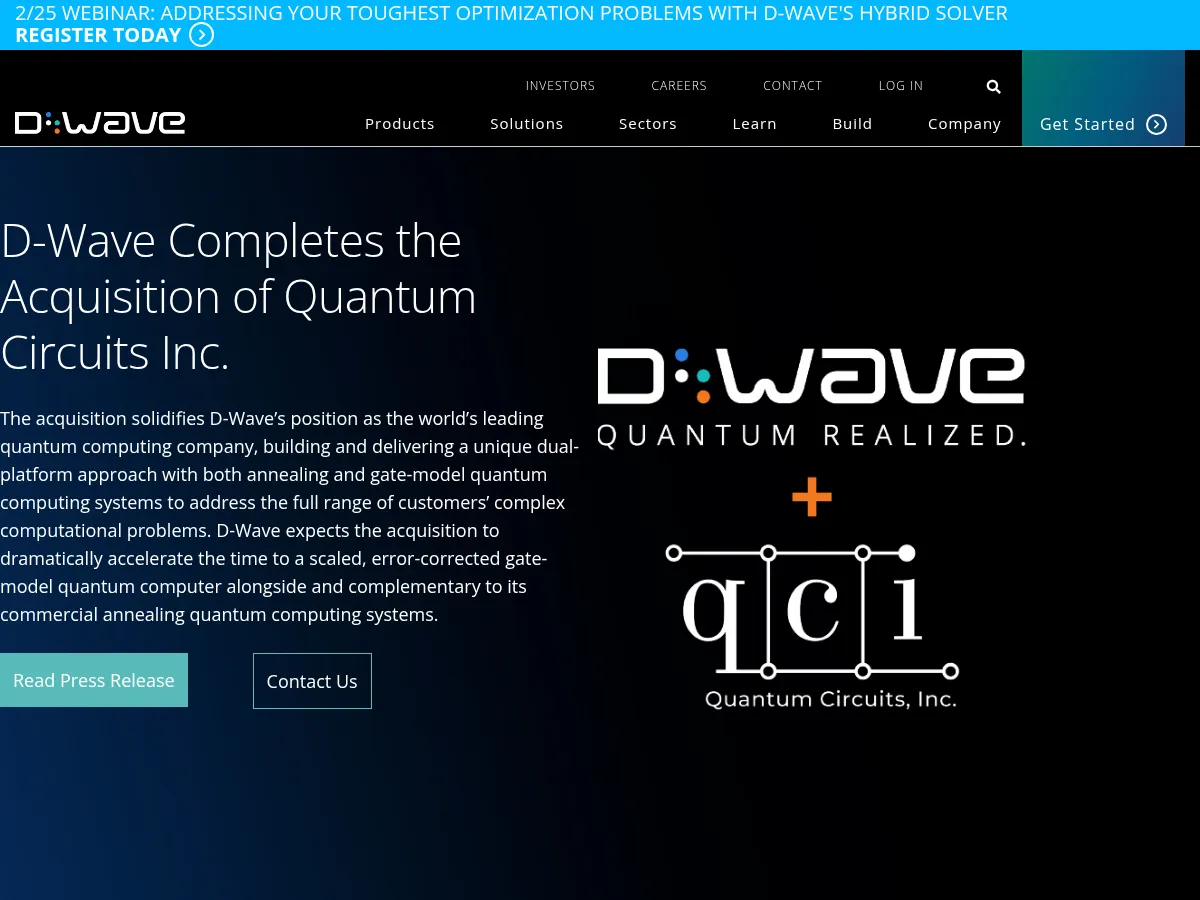
D-Wave Quantum Screenshot

Added: Feb 10, 2026

dwavequantum.com

Latest from Otrai

How to Backtest a Trading Strategy: Methods, Pitfalls, and What the Results Actually Mean

How to Backtest a Trading Strategy: Methods, Pitfalls, and What the Results Actually Mean

Every trader has a strategy that looks great in their head. Backtesting is how you find out whether it actually works. Here is how to test strategies properly, what metrics matter, and why most backtest results are too good to be true.

Risk-Reward Ratios: How to Set Targets That Make Your Strategy Profitable

Risk-Reward Ratios: How to Set Targets That Make Your Strategy Profitable

A risk-reward ratio compares how much you stand to lose on a trade to how much you stand to gain. It is arguably the most important number in your trading plan, because it determines whether your strategy can survive a normal losing streak.

Trading the News: How Economic Events Move Forex and What to Do About It

Trading the News: How Economic Events Move Forex and What to Do About It

Every month, a handful of economic data releases move the forex market more in five minutes than most sessions move in five days. Non-Farm Payrolls, CPI prints, and central bank rate decisions create violent spikes, whipsaws, and trend shifts that can make or break a trading account.

What Is a CFD? How Contracts for Difference Work and When to Use Them

What Is a CFD? How Contracts for Difference Work and When to Use Them

A CFD is a contract between you and your broker to exchange the difference in an asset's price from when you open the trade to when you close it. You never own the underlying asset. That single distinction shapes everything about how CFDs work, what they cost, and why regulators treat them differently from traditional investing.