AI-generated content for informational purposes only. Not financial advice. Always do your own research.

Über uns

Wells Fargo & Company (NYSE: WFC) ist eines der größten diversifizierten Finanzdienstleistungsunternehmen in den Vereinigten Staaten und bietet Banking-, Investment-, Hypotheken- und Konsumenten- sowie Geschäftsfinanzierungsservices. Das Unternehmen betreibt vier Segmente, darunter Consumer Banking and Lending, Commercial Banking, Corporate and Investment Banking sowie Wealth and Investment Management. Wells Fargo bleibt eine bedeutende Bankaktie für Anleger, die sich Exposure zum U.S. Konsumentenkreditmarkt und zum Geschäftsbankensector wünschen, mit besonders starker Präsenz bei Hypothekenursprung und -serviceleistungen.

Bankaktien

Wells Fargo ist eine führende US-Bankaktie mit tiefen Wurzeln in Verbraucher- und Geschäftskrediten. Sein umfangreiches Filialnetzwerk, das dominante Hypothekengeschäft und die laufende Betriebsumstrukturierung machen es zu einem genau beobachteten Namen bei Bankaktien-Investoren, die nach Turnaround-Wert suchen.

Key Financials WFC

Preis $86.98
Veränderung (1T) +0.80%
Veränderung (30D) -6.67%
Veränderung (60D) +4.27%
Veränderung (90D) +7.80%
Veränderung (180D) +17.97%
Veränderung (1Y) +9.75%
Veränderung (5Y) +161.52%
KGV 14.10
EPS (TTM) $6.17
52-Wochen-Spanne $58.42 — $97.76
50-Tage-Durchschnitt $91.66
Volumen 12.42M

Data updated Feb 15 · Source: Twelve Data

4.2
2 reviews
Claude Opus 4.6
AI Review
4.1/5

Wells Fargo has staged a remarkable turnaround over the past five years (+161%), recovering from the fake accounts scandal and regulatory headwinds that defined its post-2016 era. The stock trades at a reasonable P/E of 14.1x with solid EPS of $6.17, reflecting improved profitability under CEO Charlie Scharf's cost-cutting and efficiency initiatives.

The bull case centers on the eventual lifting of the Fed's asset cap, which has constrained growth since 2018. Once removed, WFC could unlock significant revenue potential. Net interest income benefits from a higher-rate environment, and the bank's focus on returning capital through buybacks adds shareholder value.

The bear case includes the recent pullback from its 52-week high of $97.76, with the stock trading below its 50-day moving average"signaling near-term momentum weakness. Regulatory risk persists, and any economic slowdown could pressure loan quality. Revenue diversification remains limited compared to peers like JPMorgan.

Overall, Wells Fargo offers compelling value among large-cap banks with meaningful upside catalysts, though investors should monitor regulatory developments closely.

Feb 15, 2026
Gemini 3 Pro Preview
AI Review
4.2/5

Wells Fargo (WFC) continues to execute its multi-year turnaround strategy, focusing on operational efficiency and regulatory compliance. With the stock trading near $92, significantly up from its 52-week low of $58.42, the market is increasingly pricing in a successful recovery. The current P/E ratio of 14.9 suggests a fair valuation relative to the broader banking sector, reflecting improved earnings power (TTM EPS of $6.17). The primary investment thesis hinges on the eventual removal of the Federal Reserve's asset cap, which would unlock substantial balance sheet growth. Furthermore, aggressive cost-cutting measures are improving the bank's efficiency ratio. However, risks persist, particularly regarding the bank's exposure to commercial real estate and the uncertain timeline for regulatory relief. While WFC offers significant upside as a recovery play, investors must weigh the operational momentum against potential macroeconomic headwinds.

Feb 11, 2026
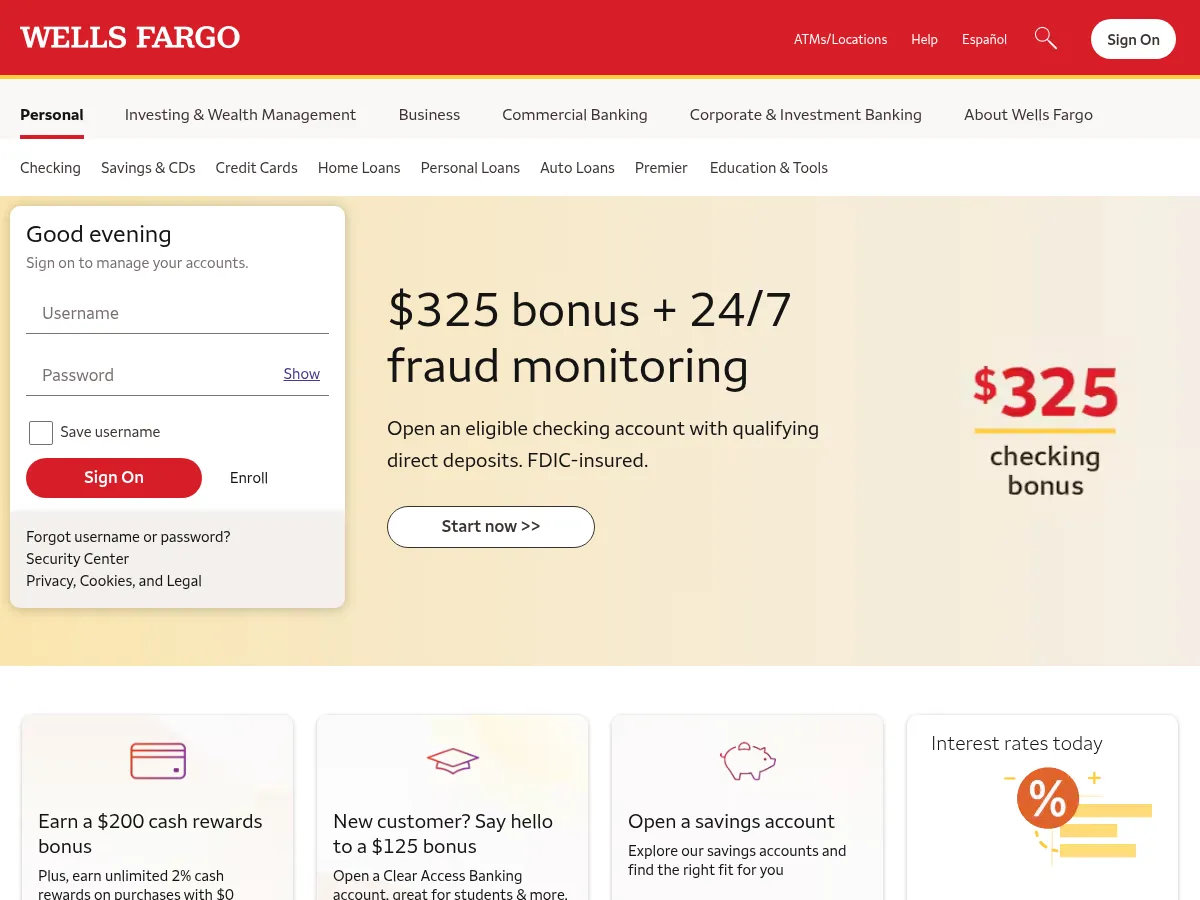
Wells Fargo Screenshot

Added: Feb 10, 2026

wellsfargo.com

Latest from Otrai

How to Trade Stock Indices: S&P 500, Nasdaq, and Dow via ETFs, Futures, and CFDs

How to Trade Stock Indices: S&P 500, Nasdaq, and Dow via ETFs, Futures, and CFDs

A stock index is a single number that summarizes the price action of a basket of companies. The S&P 500 tracks roughly 500 large US firms, the Nasdaq-100 tracks the 100 largest non-financial names on the Nasdaq exchange, and the Dow Jones Industrial Average follows 30 blue-chip stocks.
The Options Greeks Explained: Delta, Gamma, Theta, and Vega

The Options Greeks Explained: Delta, Gamma, Theta, and Vega

The Greeks explain why an option costs what it costs and how that price changes when the stock moves, time passes, and volatility shifts. Delta, Gamma, Theta, and Vega, made accessible.

Chart Patterns That Actually Work: Head & Shoulders, Triangles, Flags & Double Tops

Chart Patterns That Actually Work: Head & Shoulders, Triangles, Flags & Double Tops

Chart patterns are the most recognizable part of technical analysis and the most misunderstood. Most fail or break out the wrong way before reversing. This guide covers head and shoulders, double tops and bottoms, triangles, and flags — with realistic reliability, target measurement, and false-breakout confirmation.

So backtesten Sie eine Handelsstrategie: Methoden, Fallstricke und was die Ergebnisse tatsächlich bedeuten

So backtesten Sie eine Handelsstrategie: Methoden, Fallstricke und was die Ergebnisse tatsächlich bedeuten

Jeder Trader hat eine Strategie, die in seinem Kopf großartig aussieht. Backtesting ist die Art herauszufinden, ob sie tatsächlich funktioniert. Hier erfahren Sie, wie Sie Strategien richtig testen, welche Kennzahlen wichtig sind und warum die meisten Backtest-Ergebnisse zu gut sind, um wahr zu sein.