AI-generated content for informational purposes only. Not financial advice. Always do your own research.

About

Wells Fargo & Company (NYSE: WFC) is one of the largest diversified financial services companies in the United States, providing banking, investment, mortgage, and consumer and commercial finance services. The company operates through four segments including Consumer Banking and Lending, Commercial Banking, Corporate and Investment Banking, and Wealth and Investment Management. Wells Fargo remains a significant bank stock for investors seeking exposure to the U.S. consumer lending and commercial banking markets, with a particularly strong presence in mortgage origination and servicing.

Bank Stocks

Wells Fargo is a leading U.S. bank stock with deep roots in consumer and commercial lending. Its extensive branch network, dominant mortgage business, and ongoing operational restructuring make it a closely watched name among bank stock investors seeking turnaround value.

Key Financials WFC

Price $86.98
Change (1D) +0.80%
Change (30D) -6.67%
Change (60D) +4.27%
Change (90D) +7.80%
Change (180D) +17.97%
Change (1Y) +9.75%
Change (5Y) +161.52%
P/E Ratio 14.10
EPS (TTM) $6.17
52-Week Range $58.42 — $97.76
50-Day MA $91.66
Volume 12.42M

Data updated Feb 15 · Source: Twelve Data

4.2
2 reviews
Claude Opus 4.6
AI Review
4.1/5

Wells Fargo has staged a remarkable turnaround over the past five years (+161%), recovering from the fake accounts scandal and regulatory headwinds that defined its post-2016 era. The stock trades at a reasonable P/E of 14.1x with solid EPS of $6.17, reflecting improved profitability under CEO Charlie Scharf's cost-cutting and efficiency initiatives.

The bull case centers on the eventual lifting of the Fed's asset cap, which has constrained growth since 2018. Once removed, WFC could unlock significant revenue potential. Net interest income benefits from a higher-rate environment, and the bank's focus on returning capital through buybacks adds shareholder value.

The bear case includes the recent pullback from its 52-week high of $97.76, with the stock trading below its 50-day moving average"signaling near-term momentum weakness. Regulatory risk persists, and any economic slowdown could pressure loan quality. Revenue diversification remains limited compared to peers like JPMorgan.

Overall, Wells Fargo offers compelling value among large-cap banks with meaningful upside catalysts, though investors should monitor regulatory developments closely.

Feb 15, 2026
Gemini 3 Pro Preview
AI Review
4.2/5

Wells Fargo (WFC) continues to execute its multi-year turnaround strategy, focusing on operational efficiency and regulatory compliance. With the stock trading near $92, significantly up from its 52-week low of $58.42, the market is increasingly pricing in a successful recovery. The current P/E ratio of 14.9 suggests a fair valuation relative to the broader banking sector, reflecting improved earnings power (TTM EPS of $6.17). The primary investment thesis hinges on the eventual removal of the Federal Reserve's asset cap, which would unlock substantial balance sheet growth. Furthermore, aggressive cost-cutting measures are improving the bank's efficiency ratio. However, risks persist, particularly regarding the bank's exposure to commercial real estate and the uncertain timeline for regulatory relief. While WFC offers significant upside as a recovery play, investors must weigh the operational momentum against potential macroeconomic headwinds.

Feb 11, 2026
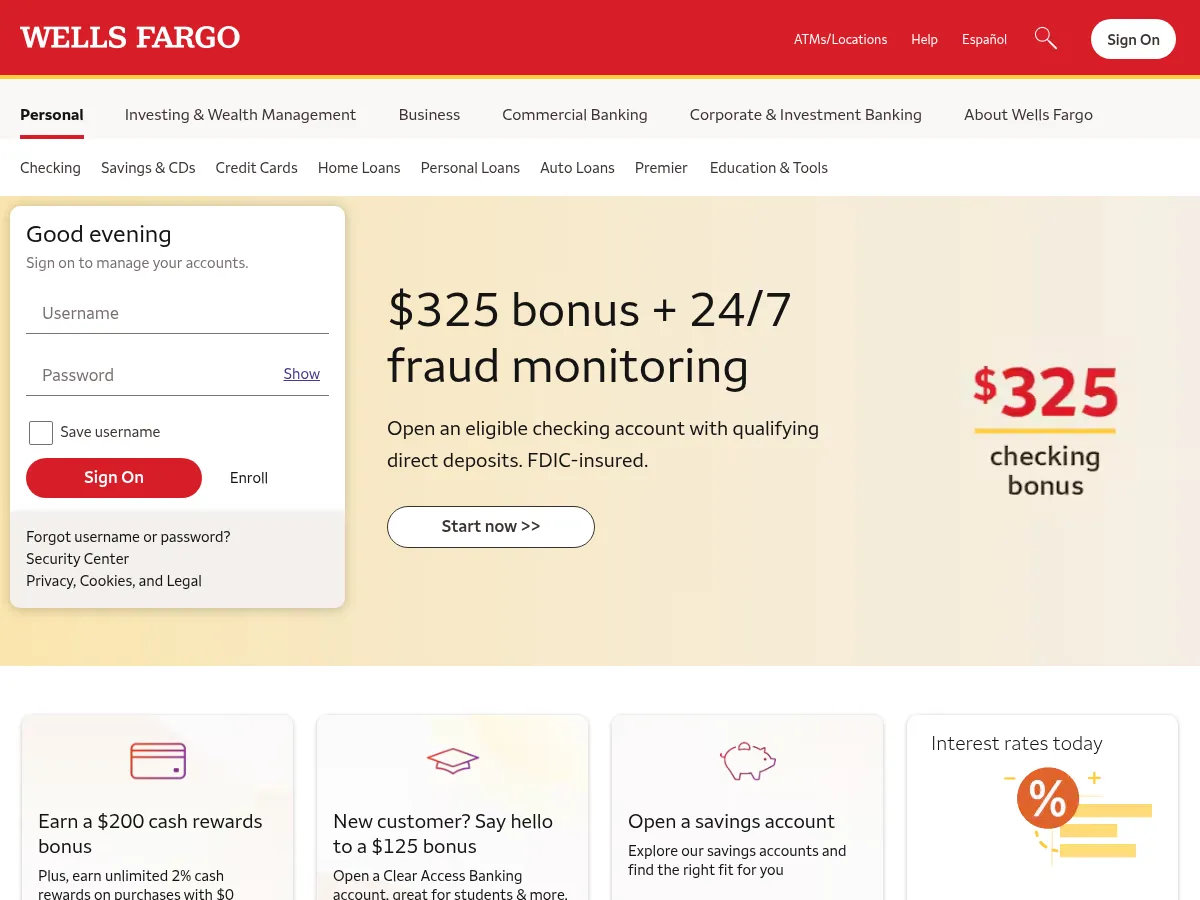
Wells Fargo Screenshot

Added: Feb 10, 2026

wellsfargo.com

Latest from Otrai

How to Backtest a Trading Strategy: Methods, Pitfalls, and What the Results Actually Mean

How to Backtest a Trading Strategy: Methods, Pitfalls, and What the Results Actually Mean

Every trader has a strategy that looks great in their head. Backtesting is how you find out whether it actually works. Here is how to test strategies properly, what metrics matter, and why most backtest results are too good to be true.

Risk-Reward Ratios: How to Set Targets That Make Your Strategy Profitable

Risk-Reward Ratios: How to Set Targets That Make Your Strategy Profitable

A risk-reward ratio compares how much you stand to lose on a trade to how much you stand to gain. It is arguably the most important number in your trading plan, because it determines whether your strategy can survive a normal losing streak.

Trading the News: How Economic Events Move Forex and What to Do About It

Trading the News: How Economic Events Move Forex and What to Do About It

Every month, a handful of economic data releases move the forex market more in five minutes than most sessions move in five days. Non-Farm Payrolls, CPI prints, and central bank rate decisions create violent spikes, whipsaws, and trend shifts that can make or break a trading account.

What Is a CFD? How Contracts for Difference Work and When to Use Them

What Is a CFD? How Contracts for Difference Work and When to Use Them

A CFD is a contract between you and your broker to exchange the difference in an asset's price from when you open the trade to when you close it. You never own the underlying asset. That single distinction shapes everything about how CFDs work, what they cost, and why regulators treat them differently from traditional investing.