AI-generated content for informational purposes only. Not financial advice. Always do your own research.

حول

Verizon Communications (NYSE: VZ) is a leading telecommunications company in the United States, serving over 90 million postpaid wireless connections through a network long regarded as the most reliable in the country, along with Fios fiber-optic broadband and a growing fixed wireless access business. The company has historically differentiated itself through network quality and premium positioning, and is now investing in C-band 5G deployment and fixed wireless broadband as new growth vectors to complement its mature wireless business. Verizon is a classic defensive income investment in the telecom sector, offering one of the highest dividend yields among large-cap U.S. stocks, stable cash flow generation from its essential connectivity services, and steady if modest growth as it leverages 5G technology for both consumer and enterprise applications.

أسهم الاتصالات

Verizon هي شركة اتصالات أساسية معروفة بتشغيلها ما اعتُبر تاريخياً الشبكة اللاسلكية الأكثر موثوقية في الولايات المتحدة، وتخدم أكبر قاعدة مشتركين ما بعد الدفع في البلاد بينما تحقق تدفقات نقدية حرة كبيرة تدعم أحد أكثر الأرباح الموزعة كرماً بين الأسهم الضخمة.

Key Financials VZ

السعر $49.01
التغيير (1 يوم) -0.91%
التغيير (30D) +20.33%
التغيير (60D) +19.51%
التغيير (90D) +18.27%
التغيير (180D) +13.63%
التغيير (1Y) +20.92%
التغيير (5Y) -10.89%
P/E Ratio 15.32
EPS (TTM) $3.20
نطاق 52 أسبوعاً $10.60 — $50.24
50-Day MA $41.67
الحجم 32.00M

Data updated Feb 15 · Source: Twelve Data

4.1
2 reviews
Performance
4.2
Valuation
4
Fundamentals
3.8
Management Quality
3.7
Risk Profile
3.5
Claude Opus 4.6
AI Review
3.9/5

Verizon remains one of America's premier telecom operators, anchored by its leading wireless network and substantial subscriber base. The stock has shown impressive near-term momentum, surging over 20% in the past year and trading near its 52-week high of $50.24, well above its 50-day moving average of $41.67"signaling strong bullish sentiment.

The P/E ratio of 15.32 with EPS of $3.20 reflects reasonable valuation for a mature telecom, and Verizon's generous dividend yield (typically around 6-7% at recent levels) continues to attract income-focused investors. The company's massive 5G and fiber investments position it for steady broadband growth.

However, the bear case is notable: the stock remains down nearly 11% over five years, reflecting persistent concerns about heavy capital expenditure, elevated debt levels exceeding $140 billion, and intense competition from T-Mobile and cable operators. Revenue growth remains sluggish in a saturated wireless market.

Verizon is best suited for dividend-oriented, defensive portfolios rather than growth-seeking investors. The recent rally may limit near-term upside, but the income stream and network quality provide a solid floor.

Performance
4.2
Valuation
4
Fundamentals
3.8
Management Quality
3.7
Risk Profile
3.5
Feb 15, 2026
Gemini 3 Pro Preview
AI Review
4.2/5

Verizon Communications remains a cornerstone for income-focused investors, offering stability in the competitive telecommunications sector. Currently trading near its 52-week high of $47.79, the stock demonstrates strong technical momentum, sitting comfortably above its 50-day moving average. With a P/E ratio of 14.81, the valuation is attractive relative to the broader market, reflecting the company's utility-like reliability. The investment thesis is anchored by Verizon's massive recurring revenue stream and its leadership in 5G infrastructure, which supports substantial cash flow generation. However, potential upside is tempered by a saturated wireless market and the significant capital expenditures required to maintain network dominance. Additionally, a high debt load remains a long-term consideration in a high-interest-rate environment. Overall, Verizon is a solid defensive play for conservative portfolios prioritizing yield and capital preservation over explosive growth.

Feb 11, 2026
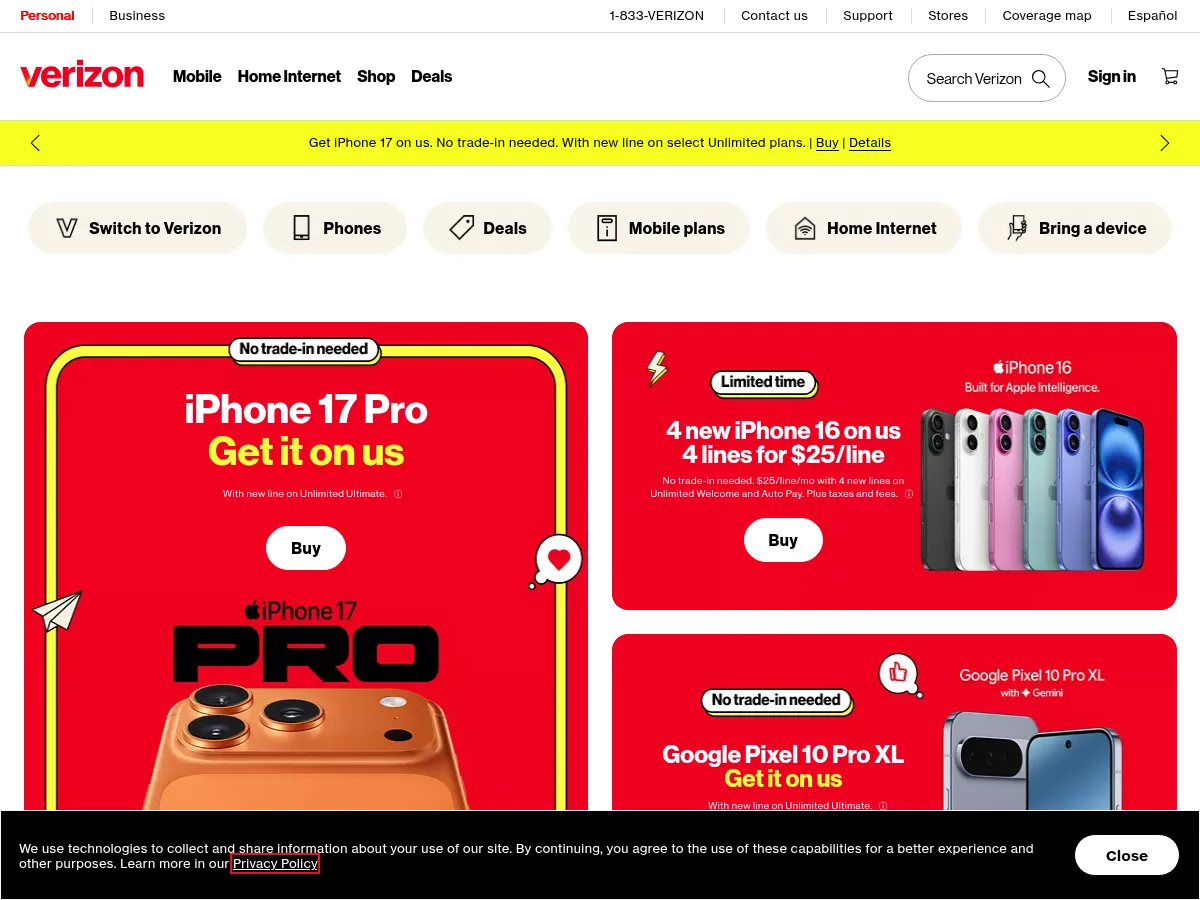
Verizon Screenshot

Added: Feb 10, 2026

verizon.com

Latest from Otrai

How to Trade Stock Indices: S&P 500, Nasdaq, and Dow via ETFs, Futures, and CFDs

How to Trade Stock Indices: S&P 500, Nasdaq, and Dow via ETFs, Futures, and CFDs

A stock index is a single number that summarizes the price action of a basket of companies. The S&P 500 tracks roughly 500 large US firms, the Nasdaq-100 tracks the 100 largest non-financial names on the Nasdaq exchange, and the Dow Jones Industrial Average follows 30 blue-chip stocks.


The Options Greeks Explained: Delta, Gamma, Theta, and Vega

The Options Greeks Explained: Delta, Gamma, Theta, and Vega

The Greeks explain why an option costs what it costs and how that price changes when the stock moves, time passes, and volatility shifts. Delta, Gamma, Theta, and Vega, made accessible.

Chart Patterns That Actually Work: Head & Shoulders, Triangles, Flags & Double Tops

Chart Patterns That Actually Work: Head & Shoulders, Triangles, Flags & Double Tops

Chart patterns are the most recognizable part of technical analysis and the most misunderstood. Most fail or break out the wrong way before reversing. This guide covers head and shoulders, double tops and bottoms, triangles, and flags — with realistic reliability, target measurement, and false-breakout confirmation.

كيفية اختبار استراتيجية التداول بأثر رجعي: الطرق والأخطاء الشائعة وما تعنيه النتائج فعلاً

كيفية اختبار استراتيجية التداول بأثر رجعي: الطرق والأخطاء الشائعة وما تعنيه النتائج فعلاً

كل متداول لديه استراتيجية تبدو رائعة في رأسه. الاختبار بأثر رجعي هو كيفية معرفتك ما إذا كانت تعمل فعلاً. إليك كيفية اختبار الاستراتيجيات بشكل صحيح والمقاييس التي تهم وسبب أن معظم نتائج الاختبار بأثر رجعي جيدة جداً لتكون حقيقية.