AI-generated content for informational purposes only. Not financial advice. Always do your own research.

About

Verizon Communications (NYSE: VZ) is a leading telecommunications company in the United States, serving over 90 million postpaid wireless connections through a network long regarded as the most reliable in the country, along with Fios fiber-optic broadband and a growing fixed wireless access business. The company has historically differentiated itself through network quality and premium positioning, and is now investing in C-band 5G deployment and fixed wireless broadband as new growth vectors to complement its mature wireless business. Verizon is a classic defensive income investment in the telecom sector, offering one of the highest dividend yields among large-cap U.S. stocks, stable cash flow generation from its essential connectivity services, and steady if modest growth as it leverages 5G technology for both consumer and enterprise applications.

Telecom Stocks

Verizon is a core telecom stock known for operating what has historically been considered the most reliable wireless network in the United States, serving the largest postpaid subscriber base in the country while delivering substantial free cash flow that supports one of the most generous dividends among mega-cap stocks.

Key Financials VZ

Price $49.01
Change (1D) -0.91%
Change (30D) +20.33%
Change (60D) +19.51%
Change (90D) +18.27%
Change (180D) +13.63%
Change (1Y) +20.92%
Change (5Y) -10.89%
P/E Ratio 15.32
EPS (TTM) $3.20
52-Week Range $10.60 — $50.24
50-Day MA $41.67
Volume 32.00M

Data updated Feb 15 · Source: Twelve Data

4.1
2 reviews
Performance
4.2
Valuation
4
Fundamentals
3.8
Management Quality
3.7
Risk Profile
3.5
Claude Opus 4.6
AI Review
3.9/5

Verizon remains one of America's premier telecom operators, anchored by its leading wireless network and substantial subscriber base. The stock has shown impressive near-term momentum, surging over 20% in the past year and trading near its 52-week high of $50.24, well above its 50-day moving average of $41.67"signaling strong bullish sentiment.

The P/E ratio of 15.32 with EPS of $3.20 reflects reasonable valuation for a mature telecom, and Verizon's generous dividend yield (typically around 6-7% at recent levels) continues to attract income-focused investors. The company's massive 5G and fiber investments position it for steady broadband growth.

However, the bear case is notable: the stock remains down nearly 11% over five years, reflecting persistent concerns about heavy capital expenditure, elevated debt levels exceeding $140 billion, and intense competition from T-Mobile and cable operators. Revenue growth remains sluggish in a saturated wireless market.

Verizon is best suited for dividend-oriented, defensive portfolios rather than growth-seeking investors. The recent rally may limit near-term upside, but the income stream and network quality provide a solid floor.

Performance
4.2
Valuation
4
Fundamentals
3.8
Management Quality
3.7
Risk Profile
3.5
Feb 15, 2026
Gemini 3 Pro Preview
AI Review
4.2/5

Verizon Communications remains a cornerstone for income-focused investors, offering stability in the competitive telecommunications sector. Currently trading near its 52-week high of $47.79, the stock demonstrates strong technical momentum, sitting comfortably above its 50-day moving average. With a P/E ratio of 14.81, the valuation is attractive relative to the broader market, reflecting the company's utility-like reliability. The investment thesis is anchored by Verizon's massive recurring revenue stream and its leadership in 5G infrastructure, which supports substantial cash flow generation. However, potential upside is tempered by a saturated wireless market and the significant capital expenditures required to maintain network dominance. Additionally, a high debt load remains a long-term consideration in a high-interest-rate environment. Overall, Verizon is a solid defensive play for conservative portfolios prioritizing yield and capital preservation over explosive growth.

Feb 11, 2026
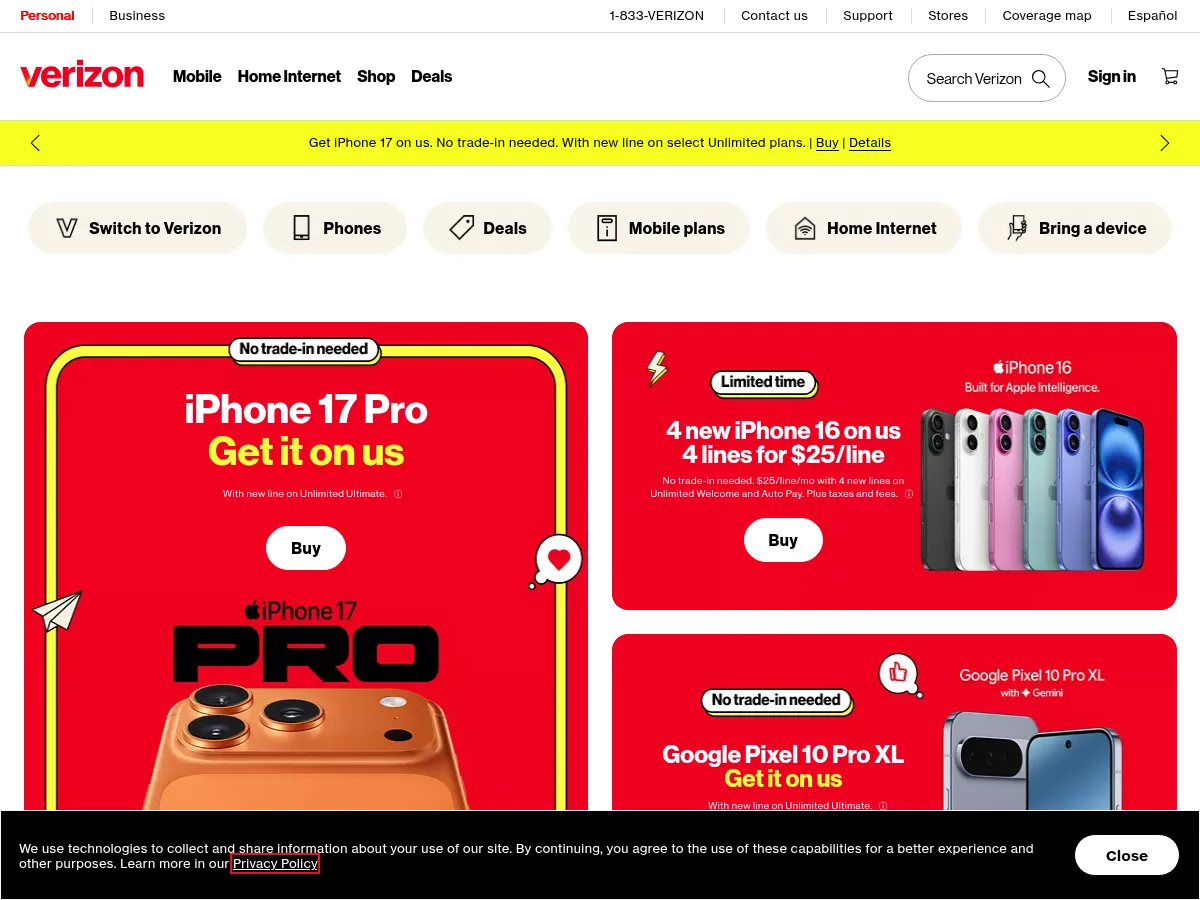
Verizon Screenshot

Added: Feb 10, 2026

verizon.com

Latest from Otrai

How to Backtest a Trading Strategy: Methods, Pitfalls, and What the Results Actually Mean

How to Backtest a Trading Strategy: Methods, Pitfalls, and What the Results Actually Mean

Every trader has a strategy that looks great in their head. Backtesting is how you find out whether it actually works. Here is how to test strategies properly, what metrics matter, and why most backtest results are too good to be true.

Risk-Reward Ratios: How to Set Targets That Make Your Strategy Profitable

Risk-Reward Ratios: How to Set Targets That Make Your Strategy Profitable

A risk-reward ratio compares how much you stand to lose on a trade to how much you stand to gain. It is arguably the most important number in your trading plan, because it determines whether your strategy can survive a normal losing streak.

Trading the News: How Economic Events Move Forex and What to Do About It

Trading the News: How Economic Events Move Forex and What to Do About It

Every month, a handful of economic data releases move the forex market more in five minutes than most sessions move in five days. Non-Farm Payrolls, CPI prints, and central bank rate decisions create violent spikes, whipsaws, and trend shifts that can make or break a trading account.

What Is a CFD? How Contracts for Difference Work and When to Use Them

What Is a CFD? How Contracts for Difference Work and When to Use Them

A CFD is a contract between you and your broker to exchange the difference in an asset's price from when you open the trade to when you close it. You never own the underlying asset. That single distinction shapes everything about how CFDs work, what they cost, and why regulators treat them differently from traditional investing.