AI-generated content for informational purposes only. Not financial advice. Always do your own research.

About

SoFi Technologies Inc. (NASDAQ: SOFI) is a digital-first financial services company offering a comprehensive suite of products including student loan refinancing, personal loans, home loans, investing, banking, and credit cards, all integrated within a single mobile app designed to serve as a one-stop financial platform for its growing member base. The company also operates Galileo, a technology platform providing banking-as-a-service infrastructure to other fintech companies, and Technisys, a cloud-native core banking platform serving financial institutions globally. As an investment, SoFi represents an emerging challenger to traditional banks with its full-stack digital approach, bank charter advantages enabling lower cost of capital, and a Lending + Technology Platform model that provides both consumer-facing growth and scalable B2B infrastructure revenue.

Fintech Stocks

SoFi Technologies is an emerging fintech stock building a comprehensive digital banking platform that directly challenges traditional financial institutions, with its bank charter, diversified lending products, and Galileo technology infrastructure offering investors exposure to the next generation of digital-first financial services.

Payment Stocks

SoFi Technologies is a digital-first financial services company offering lending, investing, banking, and payment solutions through a comprehensive member-centric platform.

Key Financials SOFI

Price $19.61
Change (1D) +1.61%
Change (30D) -25.10%
Change (60D) -27.48%
Change (90D) -25.61%
Change (180D) +47.22%
Change (1Y) +32.77%
Change (5Y) -15.18%
P/E Ratio 3.00
EPS (TTM) $6.54
52-Week Range $8.60 — $32.73
50-Day MA $25.48
Volume 43.00M

Data updated Feb 15 · Source: Twelve Data

3.9
2 reviews
Revenue Growth
4.2
Innovation Pipeline
4
Regulatory Compliance
3.8
Market Position
3.8
Profit Margins
3
Claude Opus 4.6
AI Review
3.6/5

SoFi Technologies has evolved from a student loan refinancing platform into a comprehensive digital financial services ecosystem, bolstered by its bank charter obtained in 2022. The company offers lending, investing, banking, and payment solutions through a single app, driving impressive member growth. The current P/E of 3.0 appears remarkably low, though EPS figures may reflect one-time items and warrant closer scrutiny. The stock has experienced a sharp 25% pullback over the past 90 days from its 52-week high of $32.73, now trading well below its 50-day moving average " a bearish technical signal. However, the 47% gain over six months reflects the market's recognition of SoFi's improving profitability trajectory. Bull case: growing member base, diversified revenue streams, and the Galileo technology platform providing B2B fintech infrastructure. Bear case: sensitivity to interest rate movements, heavy competition from established banks and fintechs, and the stock's historical volatility (down 15% over five years). SoFi is stronger as a pure fintech play than a payments-specific investment, as payments represent just one component of its broader platform.

Revenue Growth
4.2
Innovation Pipeline
4
Market Position
3.8
Regulatory Compliance
3.8
Profit Margins
3
Feb 15, 2026
Gemini 3 Pro Preview
AI Review
4.2/5

SoFi Technologies continues to disrupt traditional banking with its aggressive 'super app' strategy, leveraging its bank charter to drive net interest margin expansion and cross-sell financial products. The company's investment thesis hinges on its ability to monetize its growing member base through the Financial Services Productivity Loop. Based on the provided data, the stock appears exceptionally undervalued, trading at a P/E ratio of just 3.24 with a reported EPS of $6.54, metrics that suggest robust profitability rarely seen in high-growth fintechs. However, technical indicators show weakness, with the current price of $21.18 sitting below the 50-day moving average of $26.06. While the valuation is attractive, investors must weigh the potential for regulatory headwinds and interest rate volatility against the company's strong fundamental data.

Feb 11, 2026
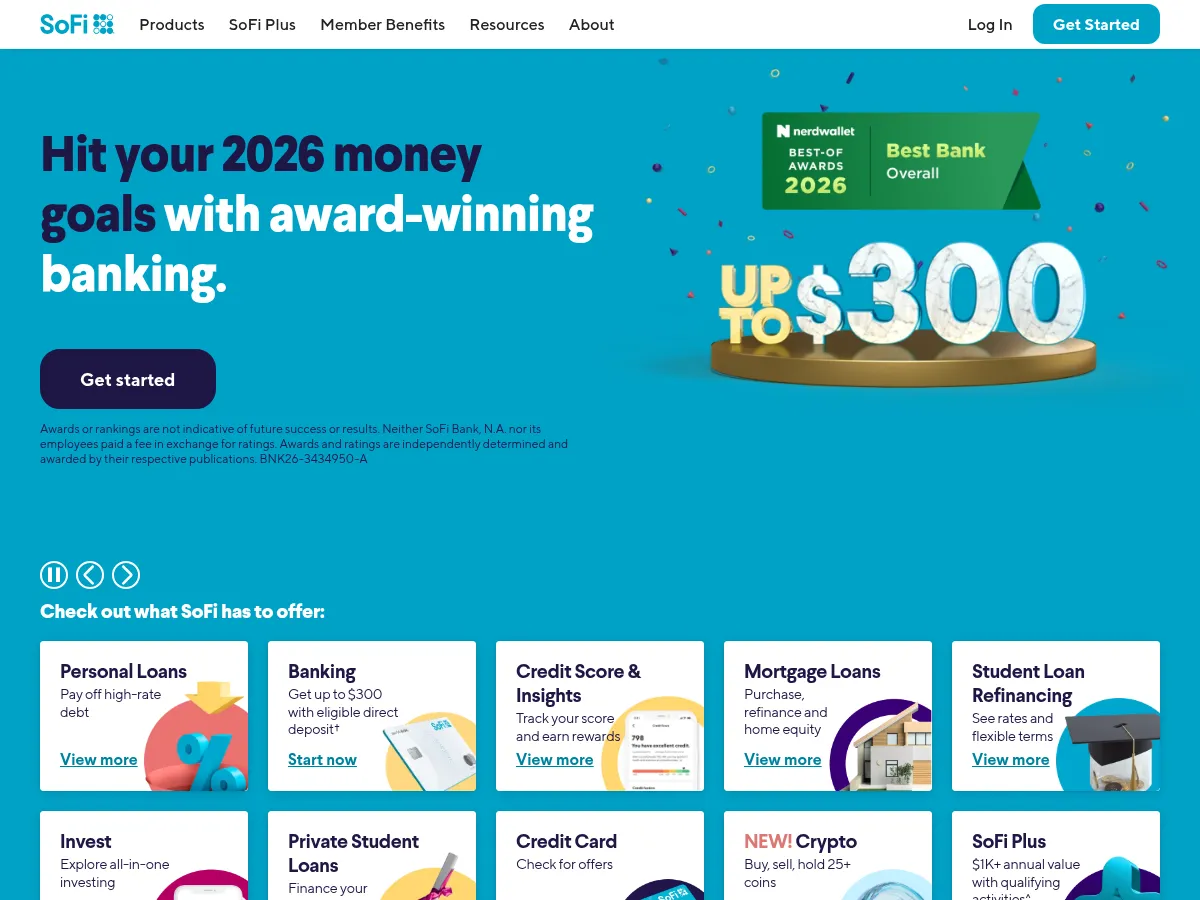
SoFi Technologies Screenshot

Added: Feb 10, 2026

sofi.com

Latest from Otrai

How to Backtest a Trading Strategy: Methods, Pitfalls, and What the Results Actually Mean

How to Backtest a Trading Strategy: Methods, Pitfalls, and What the Results Actually Mean

Every trader has a strategy that looks great in their head. Backtesting is how you find out whether it actually works. Here is how to test strategies properly, what metrics matter, and why most backtest results are too good to be true.

Risk-Reward Ratios: How to Set Targets That Make Your Strategy Profitable

Risk-Reward Ratios: How to Set Targets That Make Your Strategy Profitable

A risk-reward ratio compares how much you stand to lose on a trade to how much you stand to gain. It is arguably the most important number in your trading plan, because it determines whether your strategy can survive a normal losing streak.

Trading the News: How Economic Events Move Forex and What to Do About It

Trading the News: How Economic Events Move Forex and What to Do About It

Every month, a handful of economic data releases move the forex market more in five minutes than most sessions move in five days. Non-Farm Payrolls, CPI prints, and central bank rate decisions create violent spikes, whipsaws, and trend shifts that can make or break a trading account.

What Is a CFD? How Contracts for Difference Work and When to Use Them

What Is a CFD? How Contracts for Difference Work and When to Use Them

A CFD is a contract between you and your broker to exchange the difference in an asset's price from when you open the trade to when you close it. You never own the underlying asset. That single distinction shapes everything about how CFDs work, what they cost, and why regulators treat them differently from traditional investing.