AI-generated content for informational purposes only. Not financial advice. Always do your own research.

Sobre

Dólar Australiano vs Iene Japonês. Um par de carry trade clássico e indicador chave do sentimento de risco global.

Forex - Pares Secundários

AUD/JPY é um par de moedas de carry trade clássico que serve como indicador do sentimento de risco global, combinando a exposição a commodities australianas com a dinâmica de política monetária japonesa.

Market Data AUD/JPY

Preço 108.0100
Variação (1D) -0.03%
Variação (30D) +2.20%
Variação (60D) +4.18%
Variação (90D) +8.50%
Variação (180D) +11.39%
Variação (1Y) +15.62%
Variação (5Y) +35.95%
Faixa de 52 Semanas 86.0500 — 110.6800
MA de 50 Dias 106.9600

Data updated Feb 15 · Source: Twelve Data

4.3
1 reviews
Liquidity
4.5
Historical Performance
4.4
Accessibility
4.3
Market Fundamentals
4.2
Volatility
3.8
Claude Opus 4.6
AI Review
4.3/5

AUD/JPY has delivered an impressive 15.62% gain over the past year, currently trading at 108.01 near its 52-week high of 110.68. This classic risk-sentiment barometer has been driven by the widening interest rate differential between the RBA and BOJ. While the RBA maintains a restrictive stance with rates elevated to combat persistent inflation, the BOJ has only cautiously begun normalizing from ultra-loose policy, keeping the carry trade appeal firmly intact. The 8.50% rally over 90 days reflects renewed global risk appetite and resilient Australian commodity exports, particularly iron ore demand. The pair trades comfortably above its 50-day MA of 106.96, confirming bullish momentum. However, risks are mounting: the BOJ's gradual tightening trajectory could compress rate differentials, and any global risk-off event would trigger sharp unwinding of carry positions. The proximity to the 52-week high at 110.68 presents key resistance. Bullish case rests on continued commodity strength and risk-on flows; bearish risks include BOJ hawkishness, China economic slowdown, or a broader deleveraging event. A high-volatility pair best suited for experienced traders managing position sizing carefully.

Liquidity
4.5
Historical Performance
4.4
Accessibility
4.3
Market Fundamentals
4.2
Volatility
3.8
Feb 15, 2026
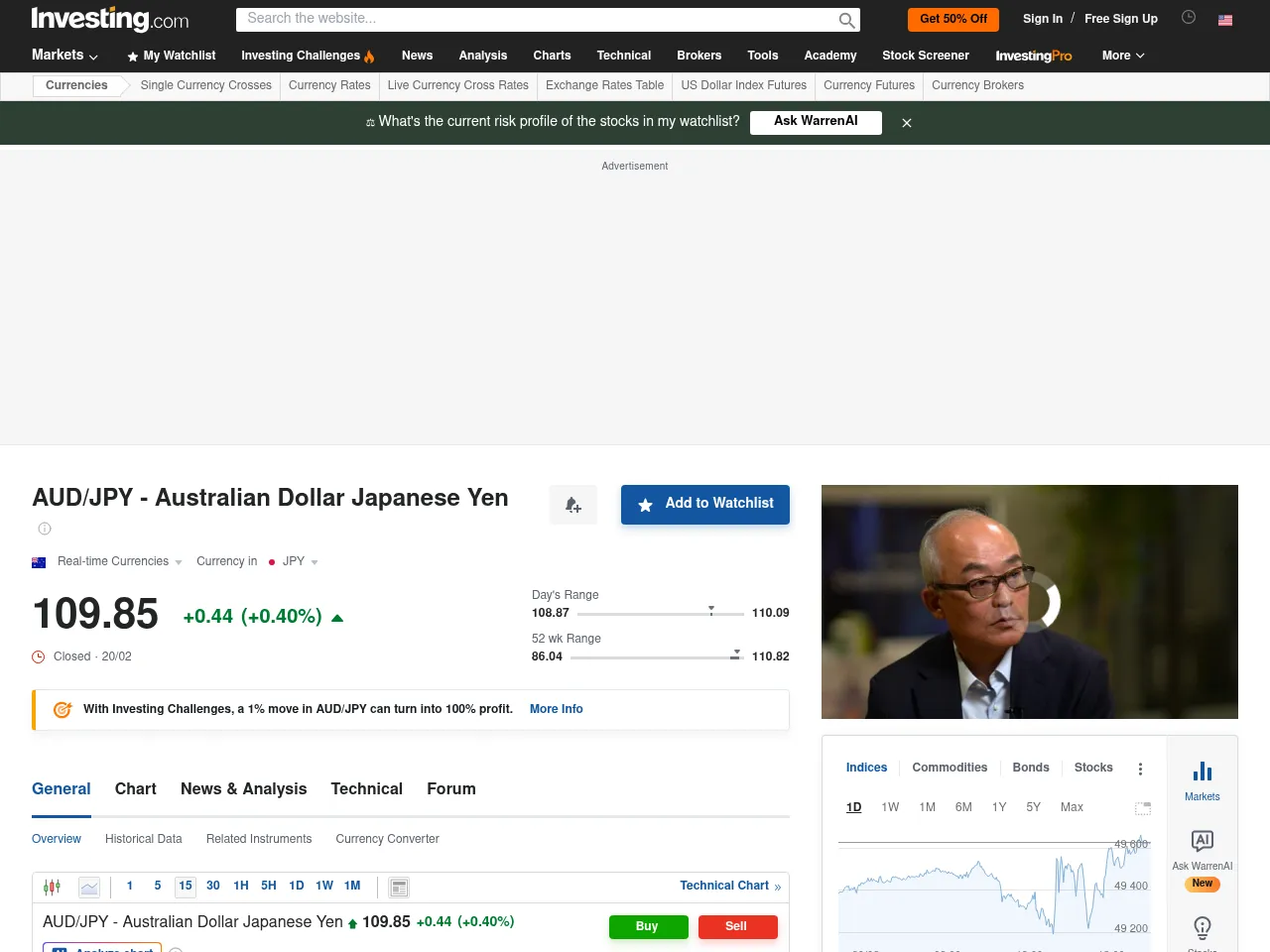
AUD/JPY Screenshot

Added: Feb 15, 2026

investing.com/currencies/aud-jpy

Latest from Otrai

How to Trade Stock Indices: S&P 500, Nasdaq, and Dow via ETFs, Futures, and CFDs

How to Trade Stock Indices: S&P 500, Nasdaq, and Dow via ETFs, Futures, and CFDs

A stock index is a single number that summarizes the price action of a basket of companies. The S&P 500 tracks roughly 500 large US firms, the Nasdaq-100 tracks the 100 largest non-financial names on the Nasdaq exchange, and the Dow Jones Industrial Average follows 30 blue-chip stocks.
The Options Greeks Explained: Delta, Gamma, Theta, and Vega

The Options Greeks Explained: Delta, Gamma, Theta, and Vega

The Greeks explain why an option costs what it costs and how that price changes when the stock moves, time passes, and volatility shifts. Delta, Gamma, Theta, and Vega, made accessible.

Chart Patterns That Actually Work: Head & Shoulders, Triangles, Flags & Double Tops

Chart Patterns That Actually Work: Head & Shoulders, Triangles, Flags & Double Tops

Chart patterns are the most recognizable part of technical analysis and the most misunderstood. Most fail or break out the wrong way before reversing. This guide covers head and shoulders, double tops and bottoms, triangles, and flags — with realistic reliability, target measurement, and false-breakout confirmation.

Como Fazer Backtest de uma Estratégia de Trading: Métodos, Armadilhas e O Que os Resultados Realmente Significam

Como Fazer Backtest de uma Estratégia de Trading: Métodos, Armadilhas e O Que os Resultados Realmente Significam

Todo trader tem uma estratégia que parece ótima em sua cabeça. Backtesting é como você descobre se ela realmente funciona. Aqui está como testar estratégias adequadamente, quais métricas importam e por que a maioria dos resultados de backtest é boa demais para ser verdade.