AI-generated content for informational purposes only. Not financial advice. Always do your own research.

Sobre

Um dos maiores produtores de cartão para caixas e produtos de embalagem ondulada nos Estados Unidos, servindo mercados industriais e de consumo.

Ações de Embalagens

Packaging Corporation of America é um dos maiores produtores de caixa de papelão e embalagens onduladas dos EUA, atendendo à demanda essencial de embalagem industrial e para consumidores.

Key Financials PKG

Preço $246.31
Variação (1D) +0.50%
Variação (30D) +19.43%
Variação (60D) +25.24%
Variação (90D) +15.68%
Variação (180D) +28.14%
Variação (1Y) +20.33%
Variação (5Y) +86.68%
P/E Ratio 25.50
EPS (TTM) $9.66
Faixa de 52 Semanas $172.72 — $249.51
MA de 50 Dias $215.89
Volume 1.07M

Data updated Feb 15 · Source: Twelve Data

4.3
1 reviews
Fundamentals
4.4
Performance
4.3
Management Quality
4.3
Valuation
4
Risk Profile
3.8
Claude Opus 4.6
AI Review
4.3/5

Packaging Corporation of America is the third-largest producer of containerboard and corrugated packaging in the U.S., with a well-integrated business model spanning from linerboard production to converting operations. The company's strong vertical integration provides cost advantages and margin stability.

Financially, PKG trades near its 52-week high at $246.31 with a P/E of 25.50, which is elevated relative to its historical average but reflects strong recent momentum " up 28% over six months and 20% year-over-year. EPS of $9.66 demonstrates solid profitability, and the company has a reliable track record of returning capital through dividends and buybacks.

The bull case centers on e-commerce-driven packaging demand, disciplined capacity management, and PKG's operational efficiency. The company consistently generates robust free cash flow with below-average leverage for the industry.

The bear case includes cyclical exposure to industrial production, potential input cost inflation (fiber, energy), and the current premium valuation leaving limited margin of safety. Trading well above its 50-day moving average ($215.89) suggests near-term pullback risk. Overall, PKG remains a high-quality operator in the packaging space, though investors should be mindful of entry price at current levels.

Fundamentals
4.4
Performance
4.3
Management Quality
4.3
Valuation
4
Risk Profile
3.8
Feb 15, 2026
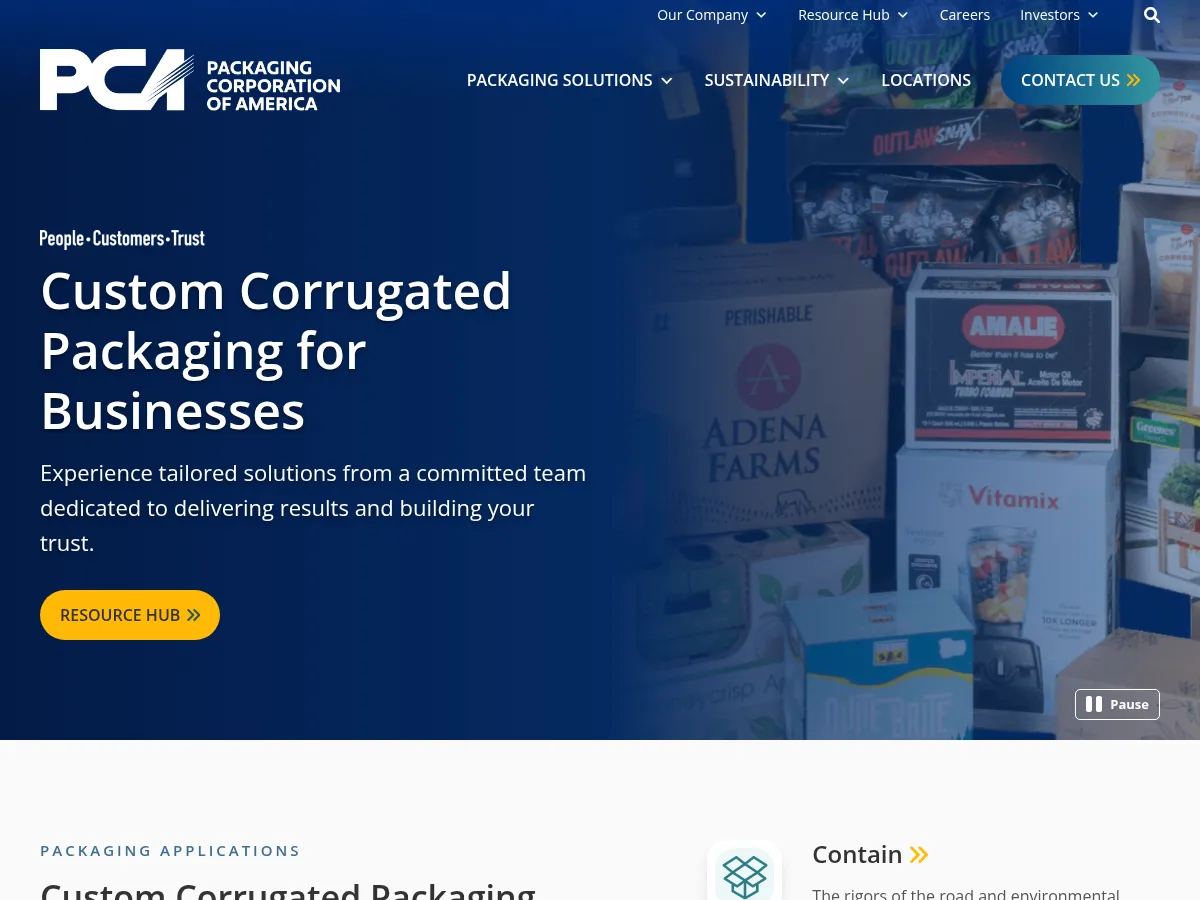
Packaging Corp of America Screenshot

Added: Feb 15, 2026

packagingcorp.com

Latest from Otrai

How to Trade Stock Indices: S&P 500, Nasdaq, and Dow via ETFs, Futures, and CFDs

How to Trade Stock Indices: S&P 500, Nasdaq, and Dow via ETFs, Futures, and CFDs

A stock index is a single number that summarizes the price action of a basket of companies. The S&P 500 tracks roughly 500 large US firms, the Nasdaq-100 tracks the 100 largest non-financial names on the Nasdaq exchange, and the Dow Jones Industrial Average follows 30 blue-chip stocks.
The Options Greeks Explained: Delta, Gamma, Theta, and Vega

The Options Greeks Explained: Delta, Gamma, Theta, and Vega

The Greeks explain why an option costs what it costs and how that price changes when the stock moves, time passes, and volatility shifts. Delta, Gamma, Theta, and Vega, made accessible.

Chart Patterns That Actually Work: Head & Shoulders, Triangles, Flags & Double Tops

Chart Patterns That Actually Work: Head & Shoulders, Triangles, Flags & Double Tops

Chart patterns are the most recognizable part of technical analysis and the most misunderstood. Most fail or break out the wrong way before reversing. This guide covers head and shoulders, double tops and bottoms, triangles, and flags — with realistic reliability, target measurement, and false-breakout confirmation.

Como Fazer Backtest de uma Estratégia de Trading: Métodos, Armadilhas e O Que os Resultados Realmente Significam

Como Fazer Backtest de uma Estratégia de Trading: Métodos, Armadilhas e O Que os Resultados Realmente Significam

Todo trader tem uma estratégia que parece ótima em sua cabeça. Backtesting é como você descobre se ela realmente funciona. Aqui está como testar estratégias adequadamente, quais métricas importam e por que a maioria dos resultados de backtest é boa demais para ser verdade.