AI-generated content for informational purposes only. Not financial advice. Always do your own research.

소개

일본 주식에 광범위한 노출을 제공하는 iShares MSCI Japan ETF입니다. 대형 및 중형 일본 기업을 포괄하며 Nikkei 225와 밀접하게 상관관계가 있습니다.

시장 지수 - 글로벌

EWJ는 일본의 3위 경제에서 대형 및 중형 상장사를 포함한 일본 주식에 광범위한 노출을 제공하며, 일본 기업 부문의 성과를 밀접하게 추적합니다.

Market Data EWJ

가격 $93.85
변동 (1일) +0.51%
변동 (30D) +16.24%
변동 (60D) +16.18%
변동 (90D) +14.51%
변동 (180D) +26.77%
변동 (1Y) +35.50%
변동 (5Y) +32.67%
52주 범위 $59.84 — $94.28
50일 MA $84.59
거래량 11.22M

Data updated Feb 15 · Source: Twelve Data

4.3
1 reviews
Performance
4.5
Management Quality
4.3
Fundamentals
4.3
Valuation
4.2
Risk Profile
3.8
Claude Opus 4.6
AI Review
4.3/5

The iShares MSCI Japan ETF (EWJ), closely tied to the Nikkei 225, has delivered exceptional performance with a 35.5% one-year return, currently trading near its 52-week high of $94.28. Japan's equity market renaissance is driven by corporate governance reforms, Tokyo Stock Exchange pressure on companies to improve capital efficiency, and a weaker yen boosting export-heavy sectors like autos, electronics, and industrials. The Bank of Japan's cautious normalization of monetary policy, while raising rates modestly, has kept financial conditions relatively accommodative. The 16.24% surge over 30 days signals strong momentum, with price well above the 50-day MA of $84.59. Key risks include yen volatility"a sharp appreciation could reverse gains"slowing Chinese demand affecting Japanese exporters, and elevated valuations after the substantial rally. Japan's aging demographics remain a long-term structural headwind. However, robust shareholder return policies, increased buybacks, and foreign investor inflows provide continued tailwinds. EWJ offers meaningful geographic diversification for US-centric portfolios with exposure to quality industrials and technology names. Solid liquidity at 11.2M daily volume supports efficient trading.

Performance
4.5
Fundamentals
4.3
Management Quality
4.3
Valuation
4.2
Risk Profile
3.8
Feb 15, 2026
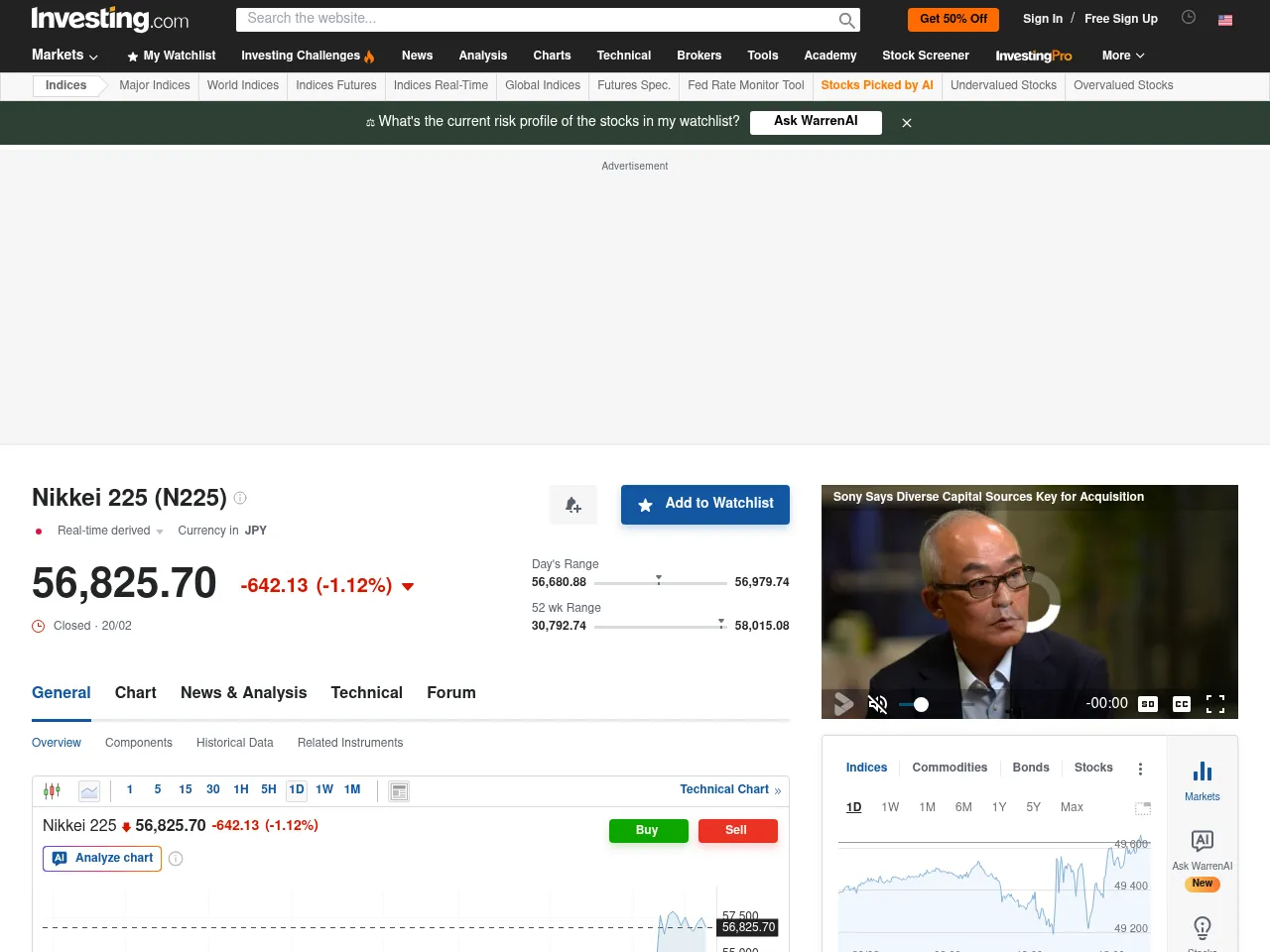
Nikkei 225 (EWJ) Screenshot

Added: Feb 15, 2026

investing.com/indices/japan-ni225

Latest from Otrai

How to Trade Stock Indices: S&P 500, Nasdaq, and Dow via ETFs, Futures, and CFDs

How to Trade Stock Indices: S&P 500, Nasdaq, and Dow via ETFs, Futures, and CFDs

A stock index is a single number that summarizes the price action of a basket of companies. The S&P 500 tracks roughly 500 large US firms, the Nasdaq-100 tracks the 100 largest non-financial names on the Nasdaq exchange, and the Dow Jones Industrial Average follows 30 blue-chip stocks.


The Options Greeks Explained: Delta, Gamma, Theta, and Vega

The Options Greeks Explained: Delta, Gamma, Theta, and Vega

The Greeks explain why an option costs what it costs and how that price changes when the stock moves, time passes, and volatility shifts. Delta, Gamma, Theta, and Vega, made accessible.

Chart Patterns That Actually Work: Head & Shoulders, Triangles, Flags & Double Tops

Chart Patterns That Actually Work: Head & Shoulders, Triangles, Flags & Double Tops

Chart patterns are the most recognizable part of technical analysis and the most misunderstood. Most fail or break out the wrong way before reversing. This guide covers head and shoulders, double tops and bottoms, triangles, and flags — with realistic reliability, target measurement, and false-breakout confirmation.

트레이딩 전략을 백테스트하는 방법: 방법론, 함정, 그리고 결과가 실제로 의미하는 것

트레이딩 전략을 백테스트하는 방법: 방법론, 함정, 그리고 결과가 실제로 의미하는 것

모든 트레이더는 머릿속으로는 훌륭해 보이는 전략을 가지고 있습니다. 백테스팅은 실제로 작동하는지 알아내는 방법입니다. 여기서는 전략을 올바르게 테스트하는 방법, 어떤 지표가 중요한지, 그리고 대부분의 백테스트 결과가 사실이기에는 너무 좋은 이유를 보여줍니다.