AI-generated content for informational purposes only. Not financial advice. Always do your own research.

Chi siamo

Invesco DB Commodity Index Tracking Fund che fornisce un'esposizione ampia a 14 delle materie prime più scambiate tra cui energia, metalli preziosi, metalli industriali e agricoltura.

Materie prime - Energia

DBC fornisce un'ampia esposizione alle materie prime tracciando 14 delle materie prime più scambiate tra cui energia, metalli preziosi, metalli industriali e agricoltura attraverso un unico fondo diversificato.

Market Data DBC

Prezzo $23.88
Variazione (1G) +0.34%
Variazione (30D) +6.80%
Variazione (60D) +3.24%
Variazione (90D) +5.06%
Variazione (180D) +13.50%
Variazione (1Y) +6.46%
Variazione (5Y) +48.14%
Range a 52 settimane $19.84 — $25.69
MA a 50 giorni $23.35
Volume 250.7K

Data updated Feb 15 · Source: Twelve Data

3.7
1 reviews
Accessibility
3.8
Liquidity
3.8
Historical Performance
3.6
Market Fundamentals
3.6
Volatility
3.4
Claude Opus 4.6
AI Review
3.7/5

The Invesco DB Commodity Index Tracking Fund (DBC) offers broad-based commodity exposure across energy, agriculture, precious metals, industrial metals, and livestock " not purely an energy play, though energy contracts (WTI crude, Brent, heating oil, RBOB gasoline, natural gas) comprise its largest weighting. DBC trades above its 50-day MA ($23.35), signaling positive near-term momentum, with a solid 13.5% gain over six months. The fund sits roughly 7% below its 52-week high, suggesting room for upside if commodity tailwinds persist. Bullish factors include resilient global demand, OPEC+ supply discipline, and persistent inflationary pressures supporting real asset allocation. Bearish risks include potential demand destruction from economic slowdowns, a stronger U.S. dollar weighing on dollar-denominated commodities, and contango drag inherent in futures-based ETFs eroding long-term returns. The 48% five-year gain demonstrates commodities' role as an inflation hedge post-pandemic. As a diversified commodity vehicle, DBC provides reasonable energy exposure but dilutes pure energy sector conviction across multiple commodity classes. Suitable for investors seeking broad commodity diversification rather than concentrated energy bets.

Liquidity
3.8
Accessibility
3.8
Historical Performance
3.6
Market Fundamentals
3.6
Volatility
3.4
Feb 15, 2026
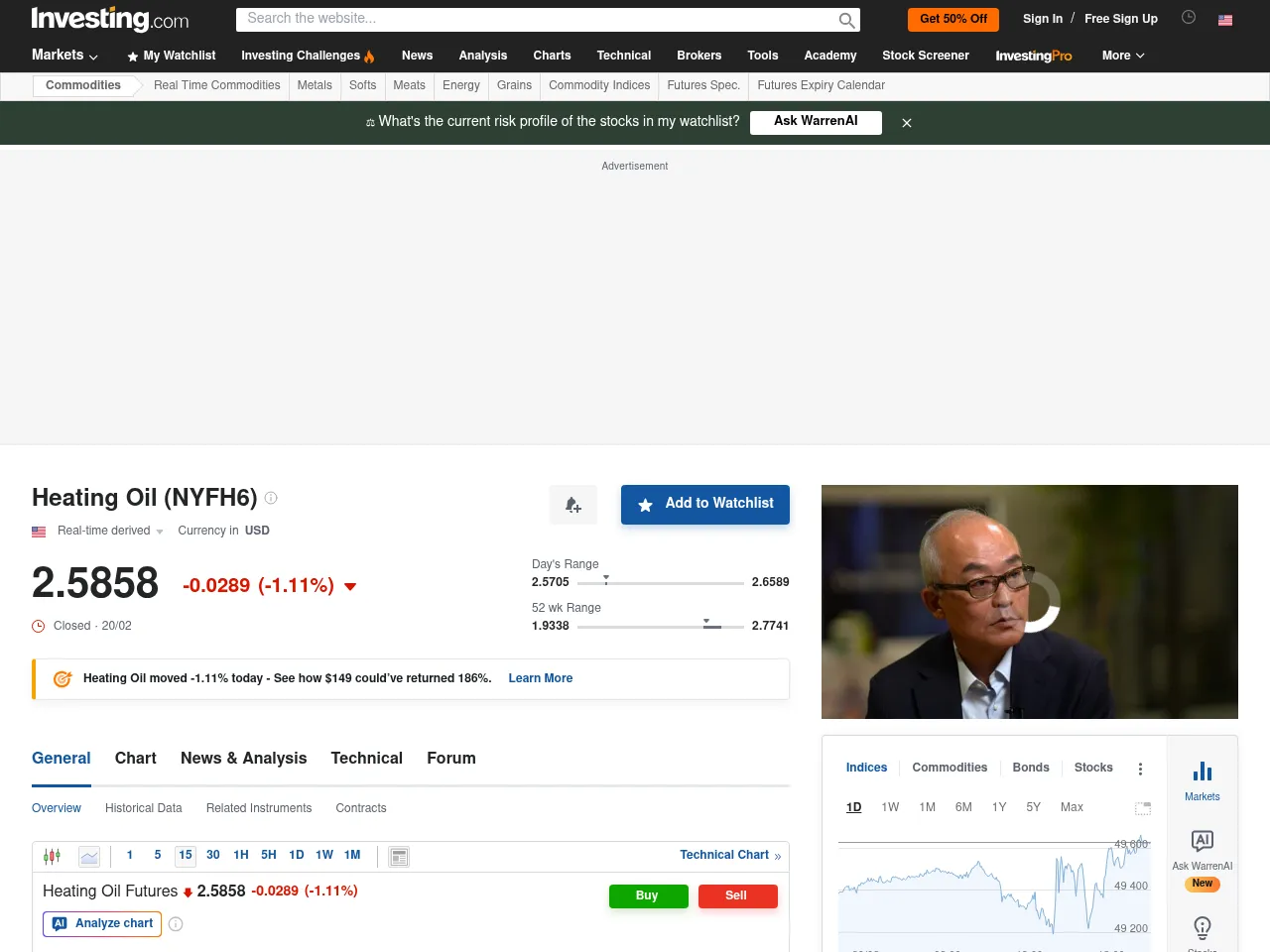
Commodities Index (DBC) Screenshot

Added: Feb 15, 2026

investing.com/commodities/heating-oil

Latest from Otrai

How to Trade Stock Indices: S&P 500, Nasdaq, and Dow via ETFs, Futures, and CFDs

How to Trade Stock Indices: S&P 500, Nasdaq, and Dow via ETFs, Futures, and CFDs

A stock index is a single number that summarizes the price action of a basket of companies. The S&P 500 tracks roughly 500 large US firms, the Nasdaq-100 tracks the 100 largest non-financial names on the Nasdaq exchange, and the Dow Jones Industrial Average follows 30 blue-chip stocks.
The Options Greeks Explained: Delta, Gamma, Theta, and Vega

The Options Greeks Explained: Delta, Gamma, Theta, and Vega

The Greeks explain why an option costs what it costs and how that price changes when the stock moves, time passes, and volatility shifts. Delta, Gamma, Theta, and Vega, made accessible.

Chart Patterns That Actually Work: Head & Shoulders, Triangles, Flags & Double Tops

Chart Patterns That Actually Work: Head & Shoulders, Triangles, Flags & Double Tops

Chart patterns are the most recognizable part of technical analysis and the most misunderstood. Most fail or break out the wrong way before reversing. This guide covers head and shoulders, double tops and bottoms, triangles, and flags — with realistic reliability, target measurement, and false-breakout confirmation.

Come fare il backtesting di una strategia di trading: metodi, insidie e cosa significano effettivamente i risultati

Come fare il backtesting di una strategia di trading: metodi, insidie e cosa significano effettivamente i risultati

Ogni trader ha una strategia che sembra fantastica nella sua testa. Il backtesting è il modo per scoprire se effettivamente funziona. Ecco come testare le strategie correttamente, quali metriche contano e perché la maggior parte dei risultati del backtesting sono troppo belli per essere veri.