AI-generated content for informational purposes only. Not financial advice. Always do your own research.

Chi siamo

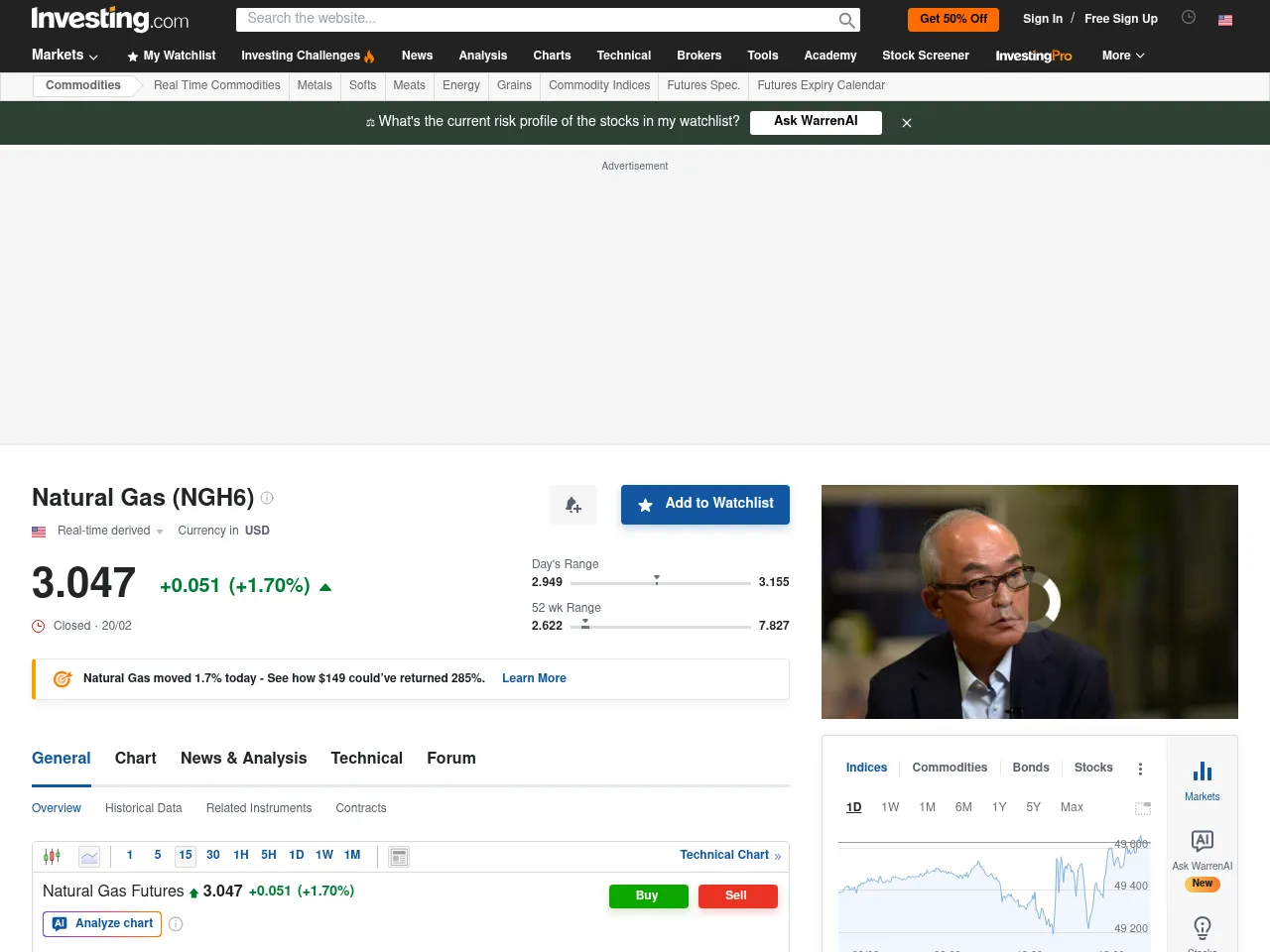
United States Natural Gas Fund che traccia i futures del gas naturale Henry Hub. Influenzato da condizioni meteorologiche, livelli di stoccaggio e dalla crescente domanda di esportazioni GNL.

Materie prime - Energia

UNG traccia i futures del gas naturale Henry Hub, fornendo esposizione ai prezzi del gas naturale negli Stati Uniti influenzati dai modelli meteorologici, dai livelli di stoccaggio e dal crescente mercato delle esportazioni di GNL.

Market Data UNG

Prezzo $12.44
Variazione (1G) +0.08%
Variazione (30D) +1.47%
Variazione (60D) -11.90%
Variazione (90D) -6.47%
Variazione (180D) -22.97%
Variazione (1Y) -33.79%
Variazione (5Y) -69.84%
Range a 52 settimane $9.95 — $24.33
MA a 50 giorni $12.90
Volume 8.87M

Data updated Feb 15 · Source: Twelve Data

2.4
1 reviews
Liquidity
3.5
Accessibility
3
Volatility
3
Market Fundamentals
2
Historical Performance
1.5
Claude Opus 4.6
AI Review
2.4/5

UNG, the United States Natural Gas Fund, tracks near-month natural gas futures contracts. However, it is a notoriously poor long-term vehicle due to severe contango-driven roll costs, evidenced by a staggering -69.84% decline over five years despite periodic price spikes in the underlying commodity. Currently trading at $12.44"roughly half its 52-week high of $24.33"the fund reflects persistently bearish natural gas fundamentals. U.S. production remains near record levels, driven by prolific Permian associated gas output, while mild weather patterns have kept storage levels comfortable. On the bullish side, growing LNG export capacity and potential summer cooling demand could provide support, and prices are already deeply discounted. The 50-day MA at $12.90 suggests near-term resistance. Macroeconomically, a weaker dollar could aid commodities broadly, but structural oversupply remains the dominant headwind. For tactical traders, UNG offers high-volume liquidity for short-term positioning, but the persistent decay from futures rolling makes it unsuitable as a buy-and-hold investment. Investors seeking natural gas exposure should consider alternatives or manage positions actively.

Liquidity
3.5
Volatility
3
Accessibility
3
Market Fundamentals
2
Historical Performance
1.5
Feb 15, 2026
Natural Gas (UNG) Screenshot

Added: Feb 15, 2026

investing.com/commodities/natural-gas

Latest from Otrai

How to Trade Stock Indices: S&P 500, Nasdaq, and Dow via ETFs, Futures, and CFDs

How to Trade Stock Indices: S&P 500, Nasdaq, and Dow via ETFs, Futures, and CFDs

A stock index is a single number that summarizes the price action of a basket of companies. The S&P 500 tracks roughly 500 large US firms, the Nasdaq-100 tracks the 100 largest non-financial names on the Nasdaq exchange, and the Dow Jones Industrial Average follows 30 blue-chip stocks.
The Options Greeks Explained: Delta, Gamma, Theta, and Vega

The Options Greeks Explained: Delta, Gamma, Theta, and Vega

The Greeks explain why an option costs what it costs and how that price changes when the stock moves, time passes, and volatility shifts. Delta, Gamma, Theta, and Vega, made accessible.

Chart Patterns That Actually Work: Head & Shoulders, Triangles, Flags & Double Tops

Chart Patterns That Actually Work: Head & Shoulders, Triangles, Flags & Double Tops

Chart patterns are the most recognizable part of technical analysis and the most misunderstood. Most fail or break out the wrong way before reversing. This guide covers head and shoulders, double tops and bottoms, triangles, and flags — with realistic reliability, target measurement, and false-breakout confirmation.

Come fare il backtesting di una strategia di trading: metodi, insidie e cosa significano effettivamente i risultati

Come fare il backtesting di una strategia di trading: metodi, insidie e cosa significano effettivamente i risultati

Ogni trader ha una strategia che sembra fantastica nella sua testa. Il backtesting è il modo per scoprire se effettivamente funziona. Ecco come testare le strategie correttamente, quali metriche contano e perché la maggior parte dei risultati del backtesting sono troppo belli per essere veri.