AI-generated content for informational purposes only. Not financial advice. Always do your own research.

Chi siamo

Prezzo spot del platino in dollari USA per oncia troy. Utilizzato ampiamente nei convertitori catalitici, gioielleria e applicazioni industriali.

Materie prime - Metalli preziosi

Il platino è un metallo sia prezioso che industriale utilizzato nei convertitori catalitici, nei gioielli e nelle applicazioni industriali, con prezzi guidati dalla domanda automobilistica e dalla dinamica dell'offerta sudafricana.

Market Data XPT/USD

Prezzo $2,068.49
Variazione (1G) +0.00%
Variazione (30D) -10.70%
Variazione (60D) +8.70%
Variazione (90D) +35.41%
Variazione (180D) +56.94%
Variazione (1Y) +90.63%
Variazione (5Y) +101.71%
Range a 52 settimane $892.30 — $2,921.28
MA a 50 giorni $2,295.10

Data updated Feb 15 · Source: Twelve Data

3.9
1 reviews
Market Fundamentals
4.2
Historical Performance
4
Volatility
4
Liquidity
3.8
Accessibility
3.5
Claude Opus 4.6
AI Review
3.9/5

Platinum has delivered an extraordinary rally over the past year, surging over 90% from its 52-week low of $892.30, driven by persistent supply deficits and renewed industrial demand. The metal benefits from structural supply constraints, particularly from South African mines facing energy shortages and rising production costs, while automotive demand for catalytic converters and growing hydrogen economy applications provide long-term tailwinds. However, the recent 10.7% pullback over 30 days signals potential exhaustion after the sharp run-up, with the current price sitting well below its 50-day moving average of $2,295"a bearish technical signal. Macroeconomic headwinds include dollar strength and uncertain global manufacturing activity, which could weigh on industrial demand. On the bullish side, platinum remains historically undervalued relative to gold, and investment demand has been increasing as investors seek diversification within precious metals. The wide spread between the 52-week high and current price suggests elevated volatility. Investors should monitor South African production data and automotive sector trends closely, as these remain the primary demand drivers for this dual-purpose metal.

Market Fundamentals
4.2
Volatility
4
Historical Performance
4
Liquidity
3.8
Accessibility
3.5
Feb 15, 2026
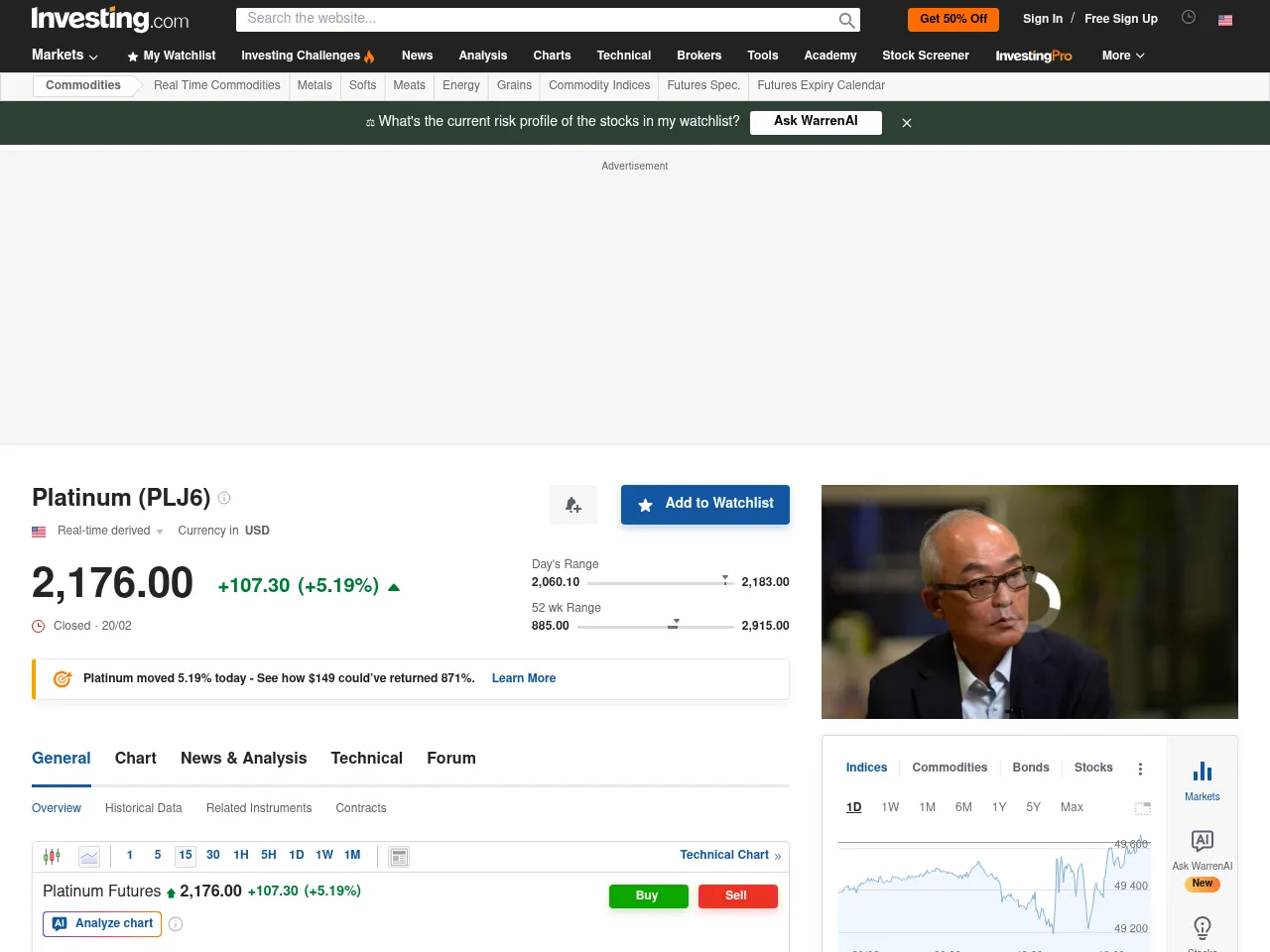
Platinum (XPT/USD) Screenshot

Added: Feb 15, 2026

investing.com/commodities/platinum

Latest from Otrai

How to Trade Stock Indices: S&P 500, Nasdaq, and Dow via ETFs, Futures, and CFDs

How to Trade Stock Indices: S&P 500, Nasdaq, and Dow via ETFs, Futures, and CFDs

A stock index is a single number that summarizes the price action of a basket of companies. The S&P 500 tracks roughly 500 large US firms, the Nasdaq-100 tracks the 100 largest non-financial names on the Nasdaq exchange, and the Dow Jones Industrial Average follows 30 blue-chip stocks.
The Options Greeks Explained: Delta, Gamma, Theta, and Vega

The Options Greeks Explained: Delta, Gamma, Theta, and Vega

The Greeks explain why an option costs what it costs and how that price changes when the stock moves, time passes, and volatility shifts. Delta, Gamma, Theta, and Vega, made accessible.

Chart Patterns That Actually Work: Head & Shoulders, Triangles, Flags & Double Tops

Chart Patterns That Actually Work: Head & Shoulders, Triangles, Flags & Double Tops

Chart patterns are the most recognizable part of technical analysis and the most misunderstood. Most fail or break out the wrong way before reversing. This guide covers head and shoulders, double tops and bottoms, triangles, and flags — with realistic reliability, target measurement, and false-breakout confirmation.

Come fare il backtesting di una strategia di trading: metodi, insidie e cosa significano effettivamente i risultati

Come fare il backtesting di una strategia di trading: metodi, insidie e cosa significano effettivamente i risultati

Ogni trader ha una strategia che sembra fantastica nella sua testa. Il backtesting è il modo per scoprire se effettivamente funziona. Ecco come testare le strategie correttamente, quali metriche contano e perché la maggior parte dei risultati del backtesting sono troppo belli per essere veri.