AI-generated content for informational purposes only. Not financial advice. Always do your own research.

Chi siamo

Euro vs Dollaro australiano. Influenzato dal contrasto tra le condizioni economiche europee e le esportazioni di materie prime australiane.

Forex - Coppie minori

EUR/AUD riflette il contrasto tra le condizioni economiche europee e la crescita guidata dalle materie prime australiane, offrendo esposizione alle politiche monetarie divergenti e alla dinamica della domanda di risorse.

Market Data EUR/AUD

Prezzo 1.6800
Variazione (1G) +0.18%
Variazione (30D) -3.27%
Variazione (60D) -4.89%
Variazione (90D) -5.68%
Variazione (180D) -6.11%
Variazione (1Y) -4.25%
Variazione (5Y) +3.96%
Range a 52 settimane 1.6400 — 1.8600
MA a 50 giorni 1.7200

Data updated Feb 15 · Source: Twelve Data

3.8
1 reviews
Liquidity
4.2
Accessibility
4
Volatility
3.8
Market Fundamentals
3.6
Historical Performance
3.2
Claude Opus 4.6
AI Review
3.8/5

EUR/AUD has been in a sustained downtrend, declining 5.68% over the past 90 days and currently trading at 1.6800, well below its 50-day moving average of 1.7200. The pair sits closer to its 52-week low of 1.6400 than its high of 1.8600, reflecting persistent bearish momentum. The Reserve Bank of Australia's relatively hawkish stance on inflation, combined with strong commodity demand supporting the Aussie dollar, has weighed heavily on this cross. Meanwhile, the ECB faces a more complex backdrop with slowing eurozone growth prompting expectations of further easing, widening the policy divergence. Australia's terms of trade remain favorable amid resilient Chinese demand for iron ore and energy exports. On the bearish side for AUD, any global risk-off event or China slowdown could reverse gains. For EUR/AUD bulls, the pair approaching multi-month lows near 1.6400 could trigger technical support and mean-reversion plays. The consistent negative momentum across all timeframes suggests traders should respect the trend, though oversold conditions may warrant caution on fresh shorts.

Liquidity
4.2
Accessibility
4
Volatility
3.8
Market Fundamentals
3.6
Historical Performance
3.2
Feb 15, 2026
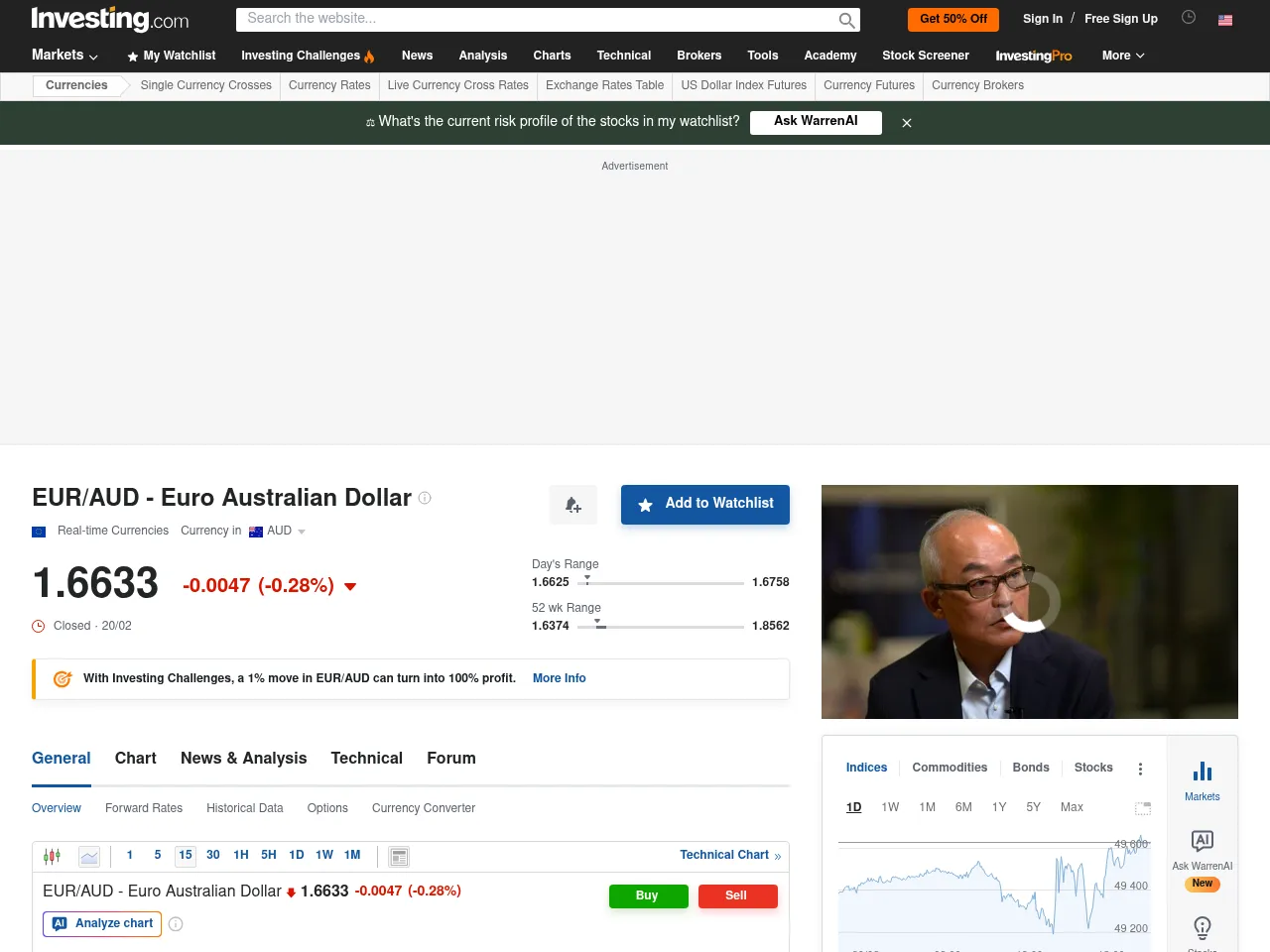
EUR/AUD Screenshot

Added: Feb 15, 2026

investing.com/currencies/eur-aud

Latest from Otrai

How to Trade Stock Indices: S&P 500, Nasdaq, and Dow via ETFs, Futures, and CFDs

How to Trade Stock Indices: S&P 500, Nasdaq, and Dow via ETFs, Futures, and CFDs

A stock index is a single number that summarizes the price action of a basket of companies. The S&P 500 tracks roughly 500 large US firms, the Nasdaq-100 tracks the 100 largest non-financial names on the Nasdaq exchange, and the Dow Jones Industrial Average follows 30 blue-chip stocks.
The Options Greeks Explained: Delta, Gamma, Theta, and Vega

The Options Greeks Explained: Delta, Gamma, Theta, and Vega

The Greeks explain why an option costs what it costs and how that price changes when the stock moves, time passes, and volatility shifts. Delta, Gamma, Theta, and Vega, made accessible.

Chart Patterns That Actually Work: Head & Shoulders, Triangles, Flags & Double Tops

Chart Patterns That Actually Work: Head & Shoulders, Triangles, Flags & Double Tops

Chart patterns are the most recognizable part of technical analysis and the most misunderstood. Most fail or break out the wrong way before reversing. This guide covers head and shoulders, double tops and bottoms, triangles, and flags — with realistic reliability, target measurement, and false-breakout confirmation.

Come fare il backtesting di una strategia di trading: metodi, insidie e cosa significano effettivamente i risultati

Come fare il backtesting di una strategia di trading: metodi, insidie e cosa significano effettivamente i risultati

Ogni trader ha una strategia che sembra fantastica nella sua testa. Il backtesting è il modo per scoprire se effettivamente funziona. Ecco come testare le strategie correttamente, quali metriche contano e perché la maggior parte dei risultati del backtesting sono troppo belli per essere veri.