AI-generated content for informational purposes only. Not financial advice. Always do your own research.

Chi siamo

Piattaforma di edge cloud che fornisce content delivery, web application firewall, mitigazione DDoS e serverless compute all'edge della rete per la consegna di applicazioni a bassa latenza.

Azioni di Edge Computing

Fastly fornisce una piattaforma edge cloud con CDN, web application firewall e capacità di serverless compute, rivolgendosi agli sviluppatori che necessitano di consegna di contenuti a bassa latenza al bordo della rete.

Key Financials FSLY

Prezzo $18.26
Variazione (1G) +13.84%
Variazione (30D) +79.37%
Variazione (60D) +75.24%
Variazione (90D) +110.85%
Variazione (180D) +149.79%
Variazione (1Y) +81.33%
Variazione (5Y) -84.51%
P/E Ratio 5.13
EPS (TTM) $3.56
Range a 52 settimane $4.65 — $19.14
MA a 50 giorni $10.12
Volume 55.31M

Data updated Feb 15 · Source: Twelve Data

3.7
1 reviews
Performance
4.2
Valuation
3.8
Fundamentals
3.8
Management Quality
3.4
Risk Profile
3
Claude Opus 4.6
AI Review
3.7/5

Fastly operates a global edge cloud platform delivering content delivery, security, and compute services at the network edge. The stock has staged a remarkable recovery, surging nearly 150% over six months and trading near its 52-week high, though it remains down over 84% from its 5-year peak " a reminder of the speculative excess during the pandemic era.

The current P/E of 5.13 with EPS of $3.56 suggests the company has finally achieved meaningful profitability, a significant milestone for a business that burned cash for years. This profitability inflection is likely driving the recent momentum. The 50-day MA of $10.12 versus the current price of $18.26 signals strong bullish momentum but also potential overextension.

Bull case: Edge computing demand is accelerating with AI workloads, and Fastly's developer-friendly platform positions it well. Profitability proves the business model works. Bear case: Fastly competes against giants like Cloudflare, Akamai, and hyperscalers with far greater resources. Customer concentration risk remains, and the rapid price appreciation may already discount near-term improvements. Investors should watch for revenue growth acceleration to sustain the valuation re-rating.

Performance
4.2
Fundamentals
3.8
Valuation
3.8
Management Quality
3.4
Risk Profile
3
Feb 15, 2026
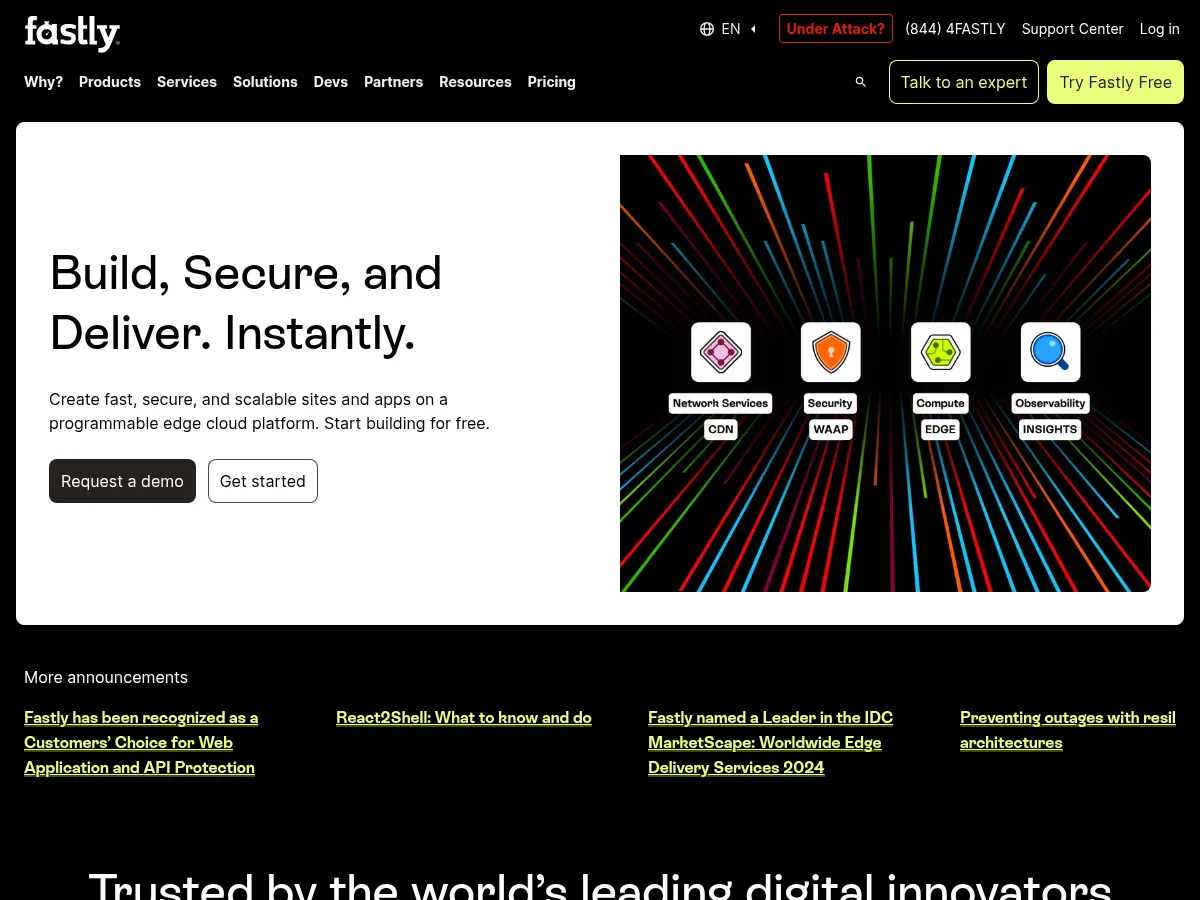
Fastly Screenshot

Added: Feb 15, 2026

fastly.com

Latest from Otrai

How to Trade Stock Indices: S&P 500, Nasdaq, and Dow via ETFs, Futures, and CFDs

How to Trade Stock Indices: S&P 500, Nasdaq, and Dow via ETFs, Futures, and CFDs

A stock index is a single number that summarizes the price action of a basket of companies. The S&P 500 tracks roughly 500 large US firms, the Nasdaq-100 tracks the 100 largest non-financial names on the Nasdaq exchange, and the Dow Jones Industrial Average follows 30 blue-chip stocks.

The Options Greeks Explained: Delta, Gamma, Theta, and Vega

The Options Greeks Explained: Delta, Gamma, Theta, and Vega

The Greeks explain why an option costs what it costs and how that price changes when the stock moves, time passes, and volatility shifts. Delta, Gamma, Theta, and Vega, made accessible.

Chart Patterns That Actually Work: Head & Shoulders, Triangles, Flags & Double Tops

Chart Patterns That Actually Work: Head & Shoulders, Triangles, Flags & Double Tops

Chart patterns are the most recognizable part of technical analysis and the most misunderstood. Most fail or break out the wrong way before reversing. This guide covers head and shoulders, double tops and bottoms, triangles, and flags — with realistic reliability, target measurement, and false-breakout confirmation.

Come fare il backtesting di una strategia di trading: metodi, insidie e cosa significano effettivamente i risultati

Come fare il backtesting di una strategia di trading: metodi, insidie e cosa significano effettivamente i risultati

Ogni trader ha una strategia che sembra fantastica nella sua testa. Il backtesting è il modo per scoprire se effettivamente funziona. Ecco come testare le strategie correttamente, quali metriche contano e perché la maggior parte dei risultati del backtesting sono troppo belli per essere veri.