AI-generated content for informational purposes only. Not financial advice. Always do your own research.

Chi siamo

Uno dei principali produttori mondiali di imballaggi a base di fibre rinnovabili e prodotti di pasta, operando nei mercati globali.

Azioni del Settore Imballaggi

International Paper è uno dei principali produttori mondiali di prodotti di imballaggio e polpa a base di fibre rinnovabili, servendo la domanda essenziale nei mercati dell'imballaggio consumer e industriale.

Key Financials IP

Prezzo $49.10
Variazione (1G) -0.14%
Variazione (30D) +24.65%
Variazione (60D) +33.82%
Variazione (90D) +7.02%
Variazione (180D) +2.89%
Variazione (1Y) -10.12%
Variazione (5Y) +7.80%
P/E Ratio 1.12
EPS (TTM) $43.90
Range a 52 settimane $35.56 — $57.55
MA a 50 giorni $41.56
Volume 3.96M

Data updated Feb 15 · Source: Twelve Data

3.7
1 reviews
Performance
3.8
Management Quality
3.7
Fundamentals
3.6
Valuation
3.5
Risk Profile
3.4
Claude Opus 4.6
AI Review
3.7/5

International Paper is one of the world's largest packaging and paper companies, with a dominant position in corrugated packaging and a global operational footprint. The company recently completed its transformative merger with DS Smith, significantly expanding its European presence and creating a packaging powerhouse.

The extremely low P/E ratio of 1.12 and unusually high EPS of $43.90 likely reflect one-time gains from the DS Smith acquisition rather than normalized earnings, making traditional valuation metrics misleading at present. Investors should focus on pro-forma earnings going forward. The stock has shown strong recent momentum, surging nearly 25% in 30 days, though it remains down roughly 10% year-over-year and trades below its 52-week high.

Bull case: The DS Smith integration offers significant synergy potential, e-commerce continues driving corrugated demand, and IP's scale provides pricing power. Bear case: Integration risks are substantial, the packaging sector is cyclical and tied to economic conditions, and debt levels post-acquisition warrant monitoring. The dividend history is attractive for income investors, but sustainability depends on successful integration execution. A solid legacy packaging name navigating a pivotal transformation.

Performance
3.8
Management Quality
3.7
Fundamentals
3.6
Valuation
3.5
Risk Profile
3.4
Feb 15, 2026
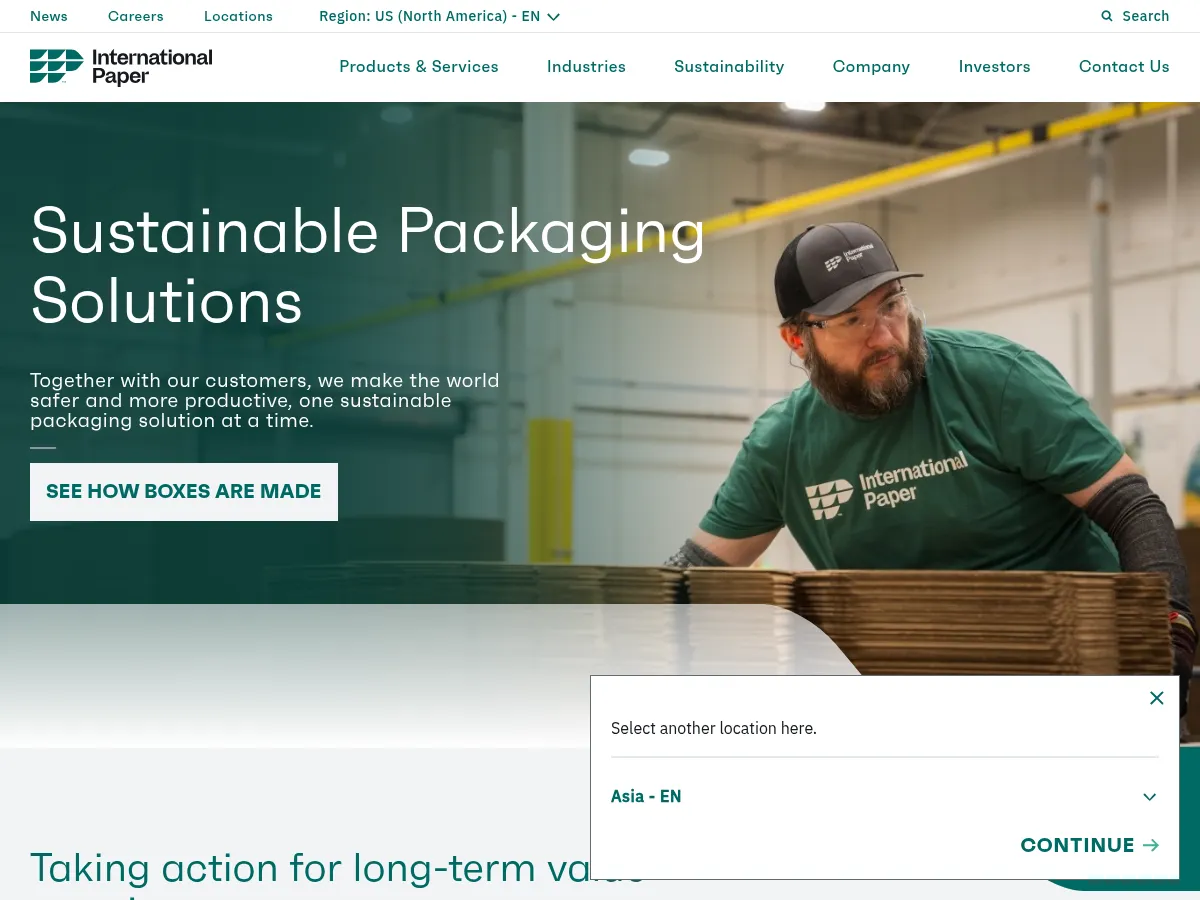
International Paper Screenshot

Added: Feb 15, 2026

internationalpaper.com

Latest from Otrai

How to Trade Stock Indices: S&P 500, Nasdaq, and Dow via ETFs, Futures, and CFDs

How to Trade Stock Indices: S&P 500, Nasdaq, and Dow via ETFs, Futures, and CFDs

A stock index is a single number that summarizes the price action of a basket of companies. The S&P 500 tracks roughly 500 large US firms, the Nasdaq-100 tracks the 100 largest non-financial names on the Nasdaq exchange, and the Dow Jones Industrial Average follows 30 blue-chip stocks.
The Options Greeks Explained: Delta, Gamma, Theta, and Vega

The Options Greeks Explained: Delta, Gamma, Theta, and Vega

The Greeks explain why an option costs what it costs and how that price changes when the stock moves, time passes, and volatility shifts. Delta, Gamma, Theta, and Vega, made accessible.

Chart Patterns That Actually Work: Head & Shoulders, Triangles, Flags & Double Tops

Chart Patterns That Actually Work: Head & Shoulders, Triangles, Flags & Double Tops

Chart patterns are the most recognizable part of technical analysis and the most misunderstood. Most fail or break out the wrong way before reversing. This guide covers head and shoulders, double tops and bottoms, triangles, and flags — with realistic reliability, target measurement, and false-breakout confirmation.

Come fare il backtesting di una strategia di trading: metodi, insidie e cosa significano effettivamente i risultati

Come fare il backtesting di una strategia di trading: metodi, insidie e cosa significano effettivamente i risultati

Ogni trader ha una strategia che sembra fantastica nella sua testa. Il backtesting è il modo per scoprire se effettivamente funziona. Ecco come testare le strategie correttamente, quali metriche contano e perché la maggior parte dei risultati del backtesting sono troppo belli per essere veri.