AI-generated content for informational purposes only. Not financial advice. Always do your own research.

Chi siamo

Uno dei più grandi fornitori di logistica di terze parti (3PL) al mondo, che collega spedizionieri e vettori attraverso la sua piattaforma tecnologica Navisphere.

Azioni di Trasporti e Logistica

C.H. Robinson è uno dei più grandi fornitori di logistica di terze parti al mondo, collegando spedizionieri e vettori attraverso la sua piattaforma tecnologica Navisphere in un'ampia rete di trasporto merci.

Key Financials CHRW

Prezzo $176.01
Variazione (1G) +4.91%
Variazione (30D) +9.49%
Variazione (60D) +15.31%
Variazione (90D) +31.00%
Variazione (180D) +84.15%
Variazione (1Y) +80.43%
Variazione (5Y) +91.59%
P/E Ratio 33.46
EPS (TTM) $5.26
Range a 52 settimane $84.68 — $203.34
MA a 50 giorni $173.08
Volume 6.40M

Data updated Feb 15 · Source: Twelve Data

4.2
1 reviews
Performance
4.4
Management Quality
4.2
Fundamentals
4
Valuation
3.6
Risk Profile
3.6
Claude Opus 4.6
AI Review
4.2/5

C.H. Robinson is one of the world's largest third-party logistics (3PL) providers, operating an asset-light brokerage model that connects shippers with carriers. The stock has staged a remarkable recovery, surging over 80% in the past year as freight market conditions have improved from cyclical lows and management's cost-cutting initiatives have gained traction.

The bull case centers on C.H. Robinson's dominant market position in truckload brokerage, its technology investments improving operational efficiency, and the potential for significant earnings leverage as freight rates recover. The asset-light model generates strong free cash flow and supports a consistent dividend.

However, the current P/E of 33.5x is elevated relative to historical norms, pricing in substantial earnings recovery. EPS of $5.26 remains well below peak levels, and the freight brokerage industry faces intense competition from digital disruptors. The stock trading 13% below its 52-week high may reflect some profit-taking after the sharp run-up.

Risks include freight rate volatility, margin compression from competition, and potential economic slowdown reducing shipping volumes. While fundamentals are improving, much of the recovery appears priced in at current levels.

Performance
4.4
Management Quality
4.2
Fundamentals
4
Risk Profile
3.6
Valuation
3.6
Feb 15, 2026
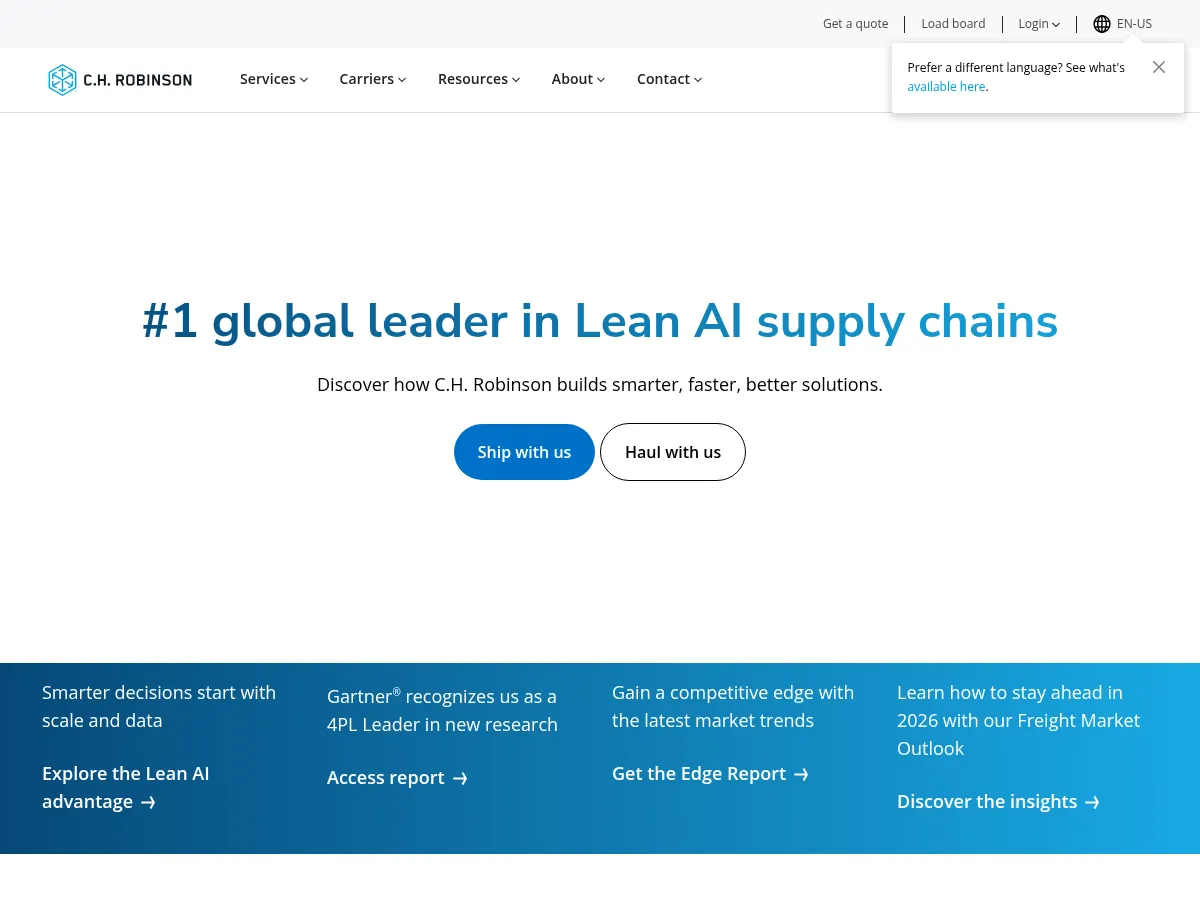
C.H. Robinson Screenshot

Added: Feb 15, 2026

chrobinson.com

Latest from Otrai

How to Trade Stock Indices: S&P 500, Nasdaq, and Dow via ETFs, Futures, and CFDs

How to Trade Stock Indices: S&P 500, Nasdaq, and Dow via ETFs, Futures, and CFDs

A stock index is a single number that summarizes the price action of a basket of companies. The S&P 500 tracks roughly 500 large US firms, the Nasdaq-100 tracks the 100 largest non-financial names on the Nasdaq exchange, and the Dow Jones Industrial Average follows 30 blue-chip stocks.


The Options Greeks Explained: Delta, Gamma, Theta, and Vega

The Options Greeks Explained: Delta, Gamma, Theta, and Vega

The Greeks explain why an option costs what it costs and how that price changes when the stock moves, time passes, and volatility shifts. Delta, Gamma, Theta, and Vega, made accessible.

Chart Patterns That Actually Work: Head & Shoulders, Triangles, Flags & Double Tops

Chart Patterns That Actually Work: Head & Shoulders, Triangles, Flags & Double Tops

Chart patterns are the most recognizable part of technical analysis and the most misunderstood. Most fail or break out the wrong way before reversing. This guide covers head and shoulders, double tops and bottoms, triangles, and flags — with realistic reliability, target measurement, and false-breakout confirmation.

Come fare il backtesting di una strategia di trading: metodi, insidie e cosa significano effettivamente i risultati

Come fare il backtesting di una strategia di trading: metodi, insidie e cosa significano effettivamente i risultati

Ogni trader ha una strategia che sembra fantastica nella sua testa. Il backtesting è il modo per scoprire se effettivamente funziona. Ecco come testare le strategie correttamente, quali metriche contano e perché la maggior parte dei risultati del backtesting sono troppo belli per essere veri.