AI-generated content for informational purposes only. Not financial advice. Always do your own research.

Chi siamo

AutoZone è il principale rivenditore di ricambi auto negli Stati Uniti, gestendo oltre 7.000 negozi che vendono pezzi di ricambio, accessori e articoli per la manutenzione sia a clienti fai-da-te che a meccanici professionisti. L'invecchiamento della flotta di veicoli statunitensi e l'aumento dei costi di riparazione creano un flusso di domanda durevole per l'industria dei ricambi auto del mercato secondario. Il titolo attrae gli investitori focalizzati sulla qualità che ammirano l'eccezionale allocazione di capitale di AutoZone, i riacquisti aggressivi di azioni e il modello di business resistente alle recessioni.

Azioni Blue Chip

AutoZone è ampiamente considerato come un compounding blue-chip con un modello di business a prova di recessione, poiché le riparazioni ai veicoli sono non discrezionali e la domanda effettivamente aumenta durante le flessioni economiche poiché i consumatori rimandano l'acquisto di auto nuove.

Azioni Growth

AutoZone ha composto gli utili per azione a tassi straordinari per decenni grazie a una combinazione di crescita organica e uno dei programmi di riacquisto di azioni più aggressivi ed efficaci di tutta l'America aziendale.

Azioni del commercio al dettaglio

AutoZone è il leader indiscusso nella vendita al dettaglio di ricambi auto negli Stati Uniti, con la più grande rete di negozi e l'inventario più profondo del settore, servendo sia i consumatori fai-da-te che il segmento professionale commerciale in rapida crescita.

Key Financials AZO

Prezzo $3,858.16
Variazione (1G) +1.83%
Variazione (30D) +13.76%
Variazione (60D) +0.08%
Variazione (90D) -7.58%
Variazione (180D) +3.04%
Variazione (1Y) +12.39%
Variazione (5Y) +215.13%
P/E Ratio 61.20
EPS (TTM) $63.04
Range a 52 settimane $3,210.72 — $4,388.11
MA a 50 giorni $3,561.10
Volume 106.3K

Data updated Feb 15 · Source: Twelve Data

4.3
2 reviews
Market Position
4.8
Management Quality
4.5
Long-Term Growth
4.2
Financial Stability
2.8
Valuation Attractiveness
2.5
Dividend Reliability
2
Claude Opus 4.6
AI Review
4.2/5

AutoZone remains a dominant force in the automotive aftermarket parts industry, benefiting from an aging U.S. vehicle fleet that drives consistent demand for replacement parts. The company's aggressive share buyback program has been a cornerstone of its capital allocation strategy, dramatically reducing share count over decades and driving per-share value creation. The 215% five-year return underscores this compounding machine.

However, the current P/E of 61.2x appears elevated relative to historical norms and the company's mid-single-digit revenue growth profile, suggesting the market is pricing in significant forward earnings expansion. EPS of $63.04 reflects solid profitability, but investors should note the company carries substantial debt partly to fund buybacks, resulting in negative book value.

Bull case: recession-resistant demand, pricing power, disciplined capital return, and international expansion in Mexico and Brazil. Bear case: stretched valuation, rising competition from e-commerce players, and potential deceleration in same-store sales. Trading roughly 12% below its 52-week high presents a more reasonable entry point, though patience for a deeper pullback may be warranted given the premium multiple.

Market Position
4.8
Management Quality
4.5
Long-Term Growth
4.2
Financial Stability
2.8
Valuation Attractiveness
2.5
Dividend Reliability
2
Feb 15, 2026
Gemini 3 Pro Preview
AI Review
4.4/5

AutoZone stands as a fortress in the consumer discretionary sector, benefiting from a counter-cyclical business model that thrives when consumers hold onto aging vehicles. The company's dominance in both DIY and commercial auto parts is reinforced by a best-in-class supply chain and elite capital allocation, specifically its aggressive share repurchase strategy which historically supports EPS stability.

However, investors must weigh the company's operational excellence against its current valuation. With a P/E ratio of 59.26, AZO is trading at a significant premium compared to historical retail averages, suggesting much of its near-term growth is already priced in. While the stock has pulled back from its 52-week high of $4,388, it remains expensive. Long-term risks include the slow transition to electric vehicles, which require less maintenance, but AutoZone remains a premier defensive pick for reliable, long-term compounding.

Feb 12, 2026
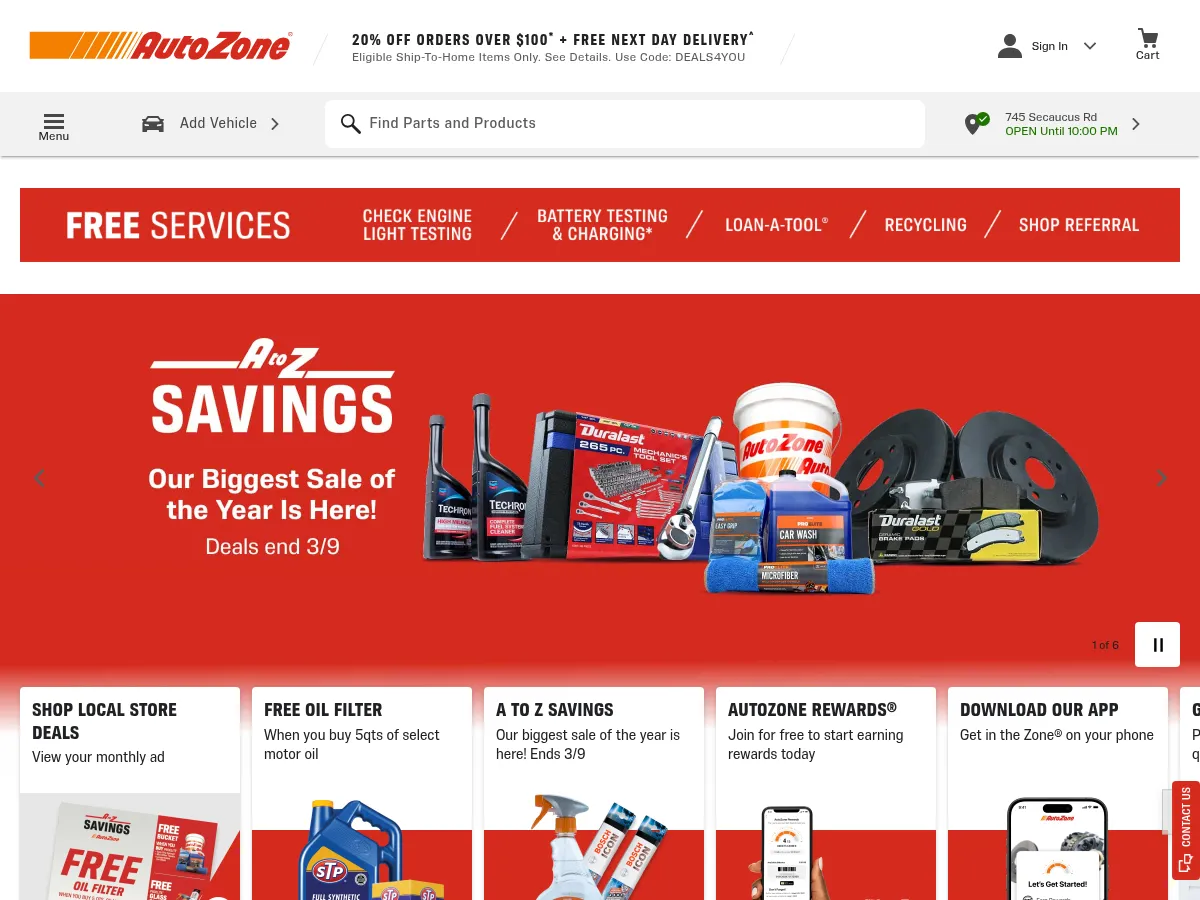
AutoZone Screenshot

Added: Feb 11, 2026

autozone.com

Latest from Otrai

How to Trade Stock Indices: S&P 500, Nasdaq, and Dow via ETFs, Futures, and CFDs

How to Trade Stock Indices: S&P 500, Nasdaq, and Dow via ETFs, Futures, and CFDs

A stock index is a single number that summarizes the price action of a basket of companies. The S&P 500 tracks roughly 500 large US firms, the Nasdaq-100 tracks the 100 largest non-financial names on the Nasdaq exchange, and the Dow Jones Industrial Average follows 30 blue-chip stocks.


The Options Greeks Explained: Delta, Gamma, Theta, and Vega

The Options Greeks Explained: Delta, Gamma, Theta, and Vega

The Greeks explain why an option costs what it costs and how that price changes when the stock moves, time passes, and volatility shifts. Delta, Gamma, Theta, and Vega, made accessible.

Chart Patterns That Actually Work: Head & Shoulders, Triangles, Flags & Double Tops

Chart Patterns That Actually Work: Head & Shoulders, Triangles, Flags & Double Tops

Chart patterns are the most recognizable part of technical analysis and the most misunderstood. Most fail or break out the wrong way before reversing. This guide covers head and shoulders, double tops and bottoms, triangles, and flags — with realistic reliability, target measurement, and false-breakout confirmation.

Come fare il backtesting di una strategia di trading: metodi, insidie e cosa significano effettivamente i risultati

Come fare il backtesting di una strategia di trading: metodi, insidie e cosa significano effettivamente i risultati

Ogni trader ha una strategia che sembra fantastica nella sua testa. Il backtesting è il modo per scoprire se effettivamente funziona. Ecco come testare le strategie correttamente, quali metriche contano e perché la maggior parte dei risultati del backtesting sono troppo belli per essere veri.