AI-generated content for informational purposes only. Not financial advice. Always do your own research.

Chi siamo

Qualcomm progetta e concede in licenza la tecnologia wireless e produce i chip Snapdragon che alimentano la stragrande maggioranza degli smartphone Android in tutto il mondo. L'azienda è una forza dominante nella tecnologia dei modem e dei processori 5G, rendendola una scelta interessante per gli investitori che cercano esposizione al boom della connettività mobile globale. Qualcomm attrae gli investitori orientati alla crescita e focalizzati sulla tecnologia che desiderano una quota nell'infrastruttura dietro le comunicazioni wireless.

Azioni Blue Chip

Con decenni di leadership nella tecnologia wireless, un enorme portafoglio di licenze brevettuali che genera royalty ad alto margine, e una quota dominante del mercato globale dei chip per smartphone, Qualcomm è un investimento in semiconduttori blue chip da manuale.

Azioni Growth

L'espansione di Qualcomm oltre gli smartphone verso la connettività automobilistica, l'IoT e l'edge computing AI sta aprendo nuovi mercati di crescita da miliardi di dollari che potrebbero aumentare significativamente il mercato totale indirizzabile dell'azienda nei prossimi anni.

Azioni Tecnologiche

Qualcomm è un gigante dei semiconduttori i cui processori Snapdragon e modem 5G alimentano la maggior parte dei dispositivi Android del mondo, rendendola uno dei titoli tecnologici più influenti nello spazio della connettività mobile e wireless.

Key Financials QCOM

Prezzo $140.70
Variazione (1G) +1.61%
Variazione (30D) -17.74%
Variazione (60D) -15.62%
Variazione (90D) -16.56%
Variazione (180D) -4.67%
Variazione (1Y) -17.38%
Variazione (5Y) -3.70%
P/E Ratio 21.13
EPS (TTM) $6.66
Range a 52 settimane $120.80 — $205.95
MA a 50 giorni $164.25
Volume 13.13M

Data updated Feb 15 · Source: Twelve Data

4.0
2 reviews
Market Position
4.3
Valuation Attractiveness
4.2
Dividend Reliability
3.8
Financial Stability
3.7
Long-Term Growth
3.5
Management Quality
3
Claude Opus 4.6
AI Review
3.7/5

Qualcomm remains a dominant force in mobile chipsets and wireless technology licensing, with its Snapdragon processors powering the majority of premium Android devices. Trading at $140.70 with a P/E of 21.13 and EPS of $6.66, the valuation appears reasonable for a semiconductor leader, especially after a significant pullback of ~17% over the past year " now sitting well below its 50-day MA of $164.25 and 32% off its 52-week high.

The bull case centers on Qualcomm's expansion into automotive, IoT, and AI-enabled edge computing, diversifying beyond smartphone dependence. Its licensing business (QTL) provides high-margin recurring revenue. The bear case includes cyclical smartphone market softness, growing competition from MediaTek, and Apple's ongoing efforts to replace Qualcomm modems with in-house designs " a material revenue risk. The disappointing 5-year return of -3.7% underscores execution concerns.

The stock offers a solid dividend yield and trades at a discount to semiconductor peers. For value-oriented tech investors, the current pullback presents an interesting entry point, though near-term headwinds warrant caution.

Market Position
4.3
Valuation Attractiveness
4.2
Dividend Reliability
3.8
Financial Stability
3.7
Long-Term Growth
3.5
Management Quality
3
Feb 15, 2026
Gemini 3 Pro Preview
AI Review
4.3/5

Qualcomm remains a semiconductor powerhouse, anchoring the global wireless ecosystem through its dominant patent portfolio and Snapdragon processors. The company's investment thesis is successfully pivoting from pure smartphone reliance to rapid expansion in automotive digital chassis and IoT applications. Crucially, Qualcomm is poised to be a key beneficiary of "AI at the edge," enabling on-device AI processing for next-generation PCs and smartphones.

With the stock trading significantly below its 52-week high of $205.95, QCOM presents a compelling valuation for a blue-chip tech stock, bolstered by a strong balance sheet and consistent dividend growth. However, investors must weigh these strengths against cyclical smartphone demand and geopolitical risks, particularly significant revenue exposure to China. Additionally, the long-term threat of major customers transitioning to in-house silicon remains a structural concern. Overall, Qualcomm offers a robust mix of value, income, and technological leadership.

Feb 12, 2026
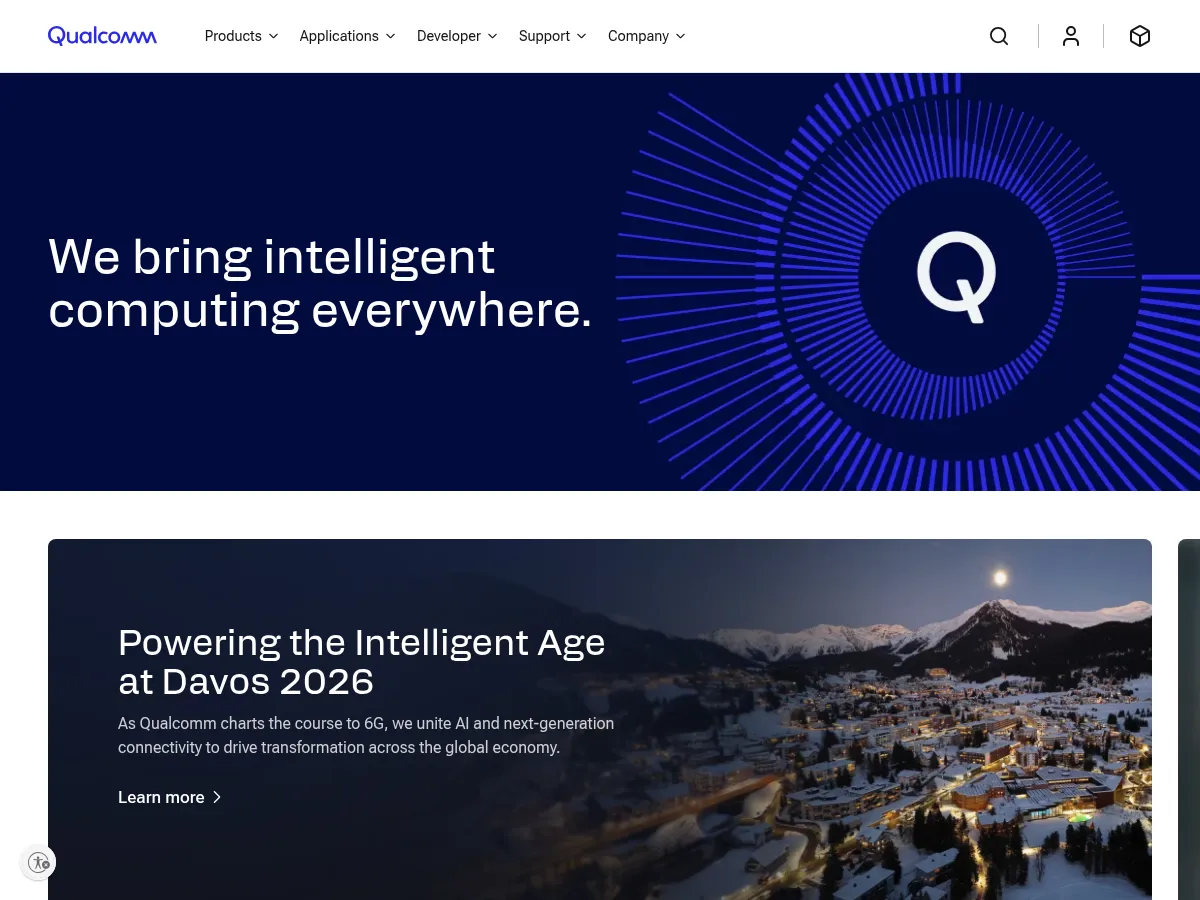
Qualcomm Screenshot

Added: Feb 11, 2026

qualcomm.com

Latest from Otrai

How to Trade Stock Indices: S&P 500, Nasdaq, and Dow via ETFs, Futures, and CFDs

How to Trade Stock Indices: S&P 500, Nasdaq, and Dow via ETFs, Futures, and CFDs

A stock index is a single number that summarizes the price action of a basket of companies. The S&P 500 tracks roughly 500 large US firms, the Nasdaq-100 tracks the 100 largest non-financial names on the Nasdaq exchange, and the Dow Jones Industrial Average follows 30 blue-chip stocks.


The Options Greeks Explained: Delta, Gamma, Theta, and Vega

The Options Greeks Explained: Delta, Gamma, Theta, and Vega

The Greeks explain why an option costs what it costs and how that price changes when the stock moves, time passes, and volatility shifts. Delta, Gamma, Theta, and Vega, made accessible.

Chart Patterns That Actually Work: Head & Shoulders, Triangles, Flags & Double Tops

Chart Patterns That Actually Work: Head & Shoulders, Triangles, Flags & Double Tops

Chart patterns are the most recognizable part of technical analysis and the most misunderstood. Most fail or break out the wrong way before reversing. This guide covers head and shoulders, double tops and bottoms, triangles, and flags — with realistic reliability, target measurement, and false-breakout confirmation.

Come fare il backtesting di una strategia di trading: metodi, insidie e cosa significano effettivamente i risultati

Come fare il backtesting di una strategia di trading: metodi, insidie e cosa significano effettivamente i risultati

Ogni trader ha una strategia che sembra fantastica nella sua testa. Il backtesting è il modo per scoprire se effettivamente funziona. Ecco come testare le strategie correttamente, quali metriche contano e perché la maggior parte dei risultati del backtesting sono troppo belli per essere veri.