AI-generated content for informational purposes only. Not financial advice. Always do your own research.

Chi siamo

IonQ, Inc. (NYSE: IONQ) è un'azienda di informatica quantistica pura che sviluppa computer quantistici a ioni intrappolati, riconosciuti per la loro elevata fedeltà dei gate e la connettività completa tra qubit. L'azienda offre accesso all'informatica quantistica attraverso importanti piattaforme cloud, tra cui Amazon Web Services, Microsoft Azure e Google Cloud, e serve clienti aziendali e governativi. IonQ è un titolo di informatica quantistica leader per gli investitori che cercano un'esposizione diretta all'emergente industria dell'informatica quantistica attraverso un'azienda con tecnologia a ioni intrappolati differenziata e ricavi commerciali in crescita.

Azioni Quantum Computing

IonQ è un principale stock di quantum computing puro costruito su tecnologia a ioni intrappolati che offre alta qualità dei qubit e connettività. Il suo modello di distribuzione basato su cloud, le partnership con le principali piattaforme tecnologiche e la base di clienti enterprise in crescita lo rendono uno degli investimenti di quantum computing quotati in borsa più prominenti.

Key Financials IONQ

Prezzo $34.11
Variazione (1G) +8.98%
Variazione (30D) -23.98%
Variazione (60D) -28.63%
Variazione (90D) -56.82%
Variazione (180D) -28.28%
Variazione (1Y) -10.24%
Variazione (5Y) +184.49%
P/E Ratio 3.00
EPS (TTM) $11.38
Range a 52 settimane $17.88 — $84.64
MA a 50 giorni $45.97
Volume 21.54M

Data updated Feb 15 · Source: Twelve Data

4.1
2 reviews
Management Quality
4
Valuation
3.8
Performance
3.5
Fundamentals
3.5
Risk Profile
3
Claude Opus 4.6
AI Review
3.8/5

IonQ is a pure-play quantum computing company and one of the few publicly traded firms offering trapped-ion quantum hardware and cloud-based quantum computing services. As a category leader, IonQ benefits from partnerships with major cloud providers (AWS, Azure, Google Cloud) and government contracts, positioning it well in an emerging market.

The bull case centers on IonQ's technological differentiation with trapped-ion architecture, expanding enterprise adoption, and the massive long-term TAM as quantum computing matures. The company has been growing revenue, albeit from a small base.

The bear case is significant: the stock has declined nearly 57% over 90 days from its speculative highs near $85, reflecting the volatility inherent in pre-profitability tech. The reported P/E of 3.0 and EPS of $11.38 appear anomalous and likely reflect one-time items rather than sustainable earnings"IonQ remains fundamentally unprofitable on an operational basis. Revenue remains modest relative to its multi-billion dollar market cap, and quantum computing commercialization timelines remain uncertain.

IonQ is a high-risk, high-reward bet on quantum's future. Suitable only for investors with long time horizons and high risk tolerance.

Management Quality
4
Valuation
3.8
Performance
3.5
Fundamentals
3.5
Risk Profile
3
Feb 15, 2026
Gemini 3 Pro Preview
AI Review
4.3/5

IonQ represents a leading pure-play opportunity in the nascent quantum computing sector, utilizing trapped-ion technology to achieve high-fidelity qubit performance. As one of the first publicly traded companies in this space, it enjoys a first-mover advantage and strong integration with major cloud platforms like AWS and Azure. However, the investment remains highly speculative. The stock has experienced significant volatility, currently trading around $35, which marks a steep decline from its 52-week high of over $84. While the provided data indicates a surprisingly low P/E ratio, investors should view this with caution as it likely reflects non-cash accounting adjustments rather than core operating profitability. For investors with a high risk tolerance, IonQ offers compelling exposure to revolutionary technology, but the path to consistent commercial earnings remains long and uncertain.

Feb 11, 2026
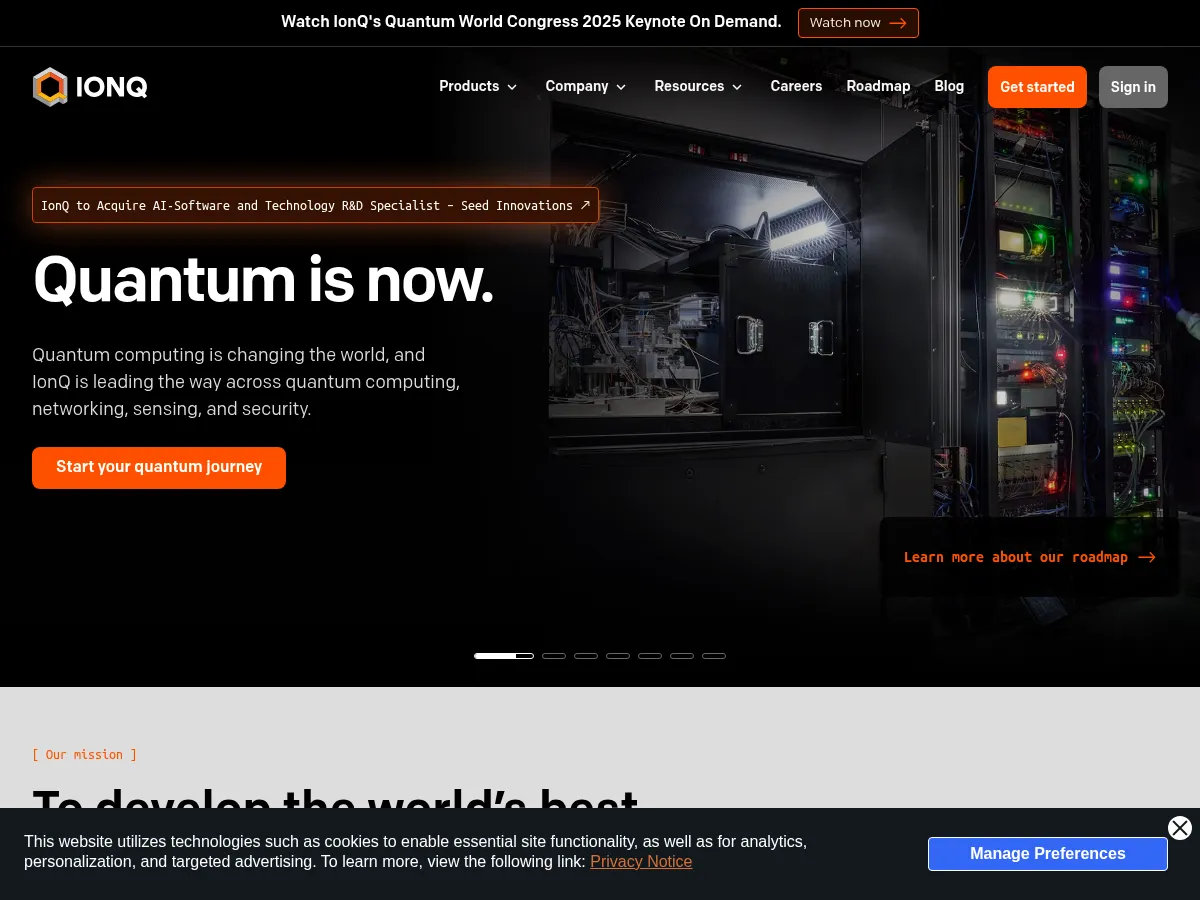
IonQ Screenshot

Added: Feb 10, 2026

ionq.com

Latest from Otrai

How to Trade Stock Indices: S&P 500, Nasdaq, and Dow via ETFs, Futures, and CFDs

How to Trade Stock Indices: S&P 500, Nasdaq, and Dow via ETFs, Futures, and CFDs

A stock index is a single number that summarizes the price action of a basket of companies. The S&P 500 tracks roughly 500 large US firms, the Nasdaq-100 tracks the 100 largest non-financial names on the Nasdaq exchange, and the Dow Jones Industrial Average follows 30 blue-chip stocks.


The Options Greeks Explained: Delta, Gamma, Theta, and Vega

The Options Greeks Explained: Delta, Gamma, Theta, and Vega

The Greeks explain why an option costs what it costs and how that price changes when the stock moves, time passes, and volatility shifts. Delta, Gamma, Theta, and Vega, made accessible.

Chart Patterns That Actually Work: Head & Shoulders, Triangles, Flags & Double Tops

Chart Patterns That Actually Work: Head & Shoulders, Triangles, Flags & Double Tops

Chart patterns are the most recognizable part of technical analysis and the most misunderstood. Most fail or break out the wrong way before reversing. This guide covers head and shoulders, double tops and bottoms, triangles, and flags — with realistic reliability, target measurement, and false-breakout confirmation.

Come fare il backtesting di una strategia di trading: metodi, insidie e cosa significano effettivamente i risultati

Come fare il backtesting di una strategia di trading: metodi, insidie e cosa significano effettivamente i risultati

Ogni trader ha una strategia che sembra fantastica nella sua testa. Il backtesting è il modo per scoprire se effettivamente funziona. Ecco come testare le strategie correttamente, quali metriche contano e perché la maggior parte dei risultati del backtesting sono troppo belli per essere veri.