AI-generated content for informational purposes only. Not financial advice. Always do your own research.

Chi siamo

Exxon Mobil Corporation (NYSE: XOM) è la più grande società pubblica di petrolio e gas nel mondo occidentale, con operazioni integrate che vanno dall'esplorazione e produzione a monte al raffinamento e commercializzazione a valle e alla produzione chimica. Gli attivi dell'azienda includono posizioni prolifiche nel Bacino della Permiana, in Guyana e in progetti GNL a livello globale, supportati dall'acquisizione di Pioneer Natural Resources. ExxonMobil è il titolo di petrolio e gas più eminente per gli investitori che cercano un'esposizione energetica a grande capitalizzazione con un forte bilancio, una storia di dividendi significativa e una portata massiccia lungo la catena del valore degli idrocarburi.

Azioni delle materie prime

ExxonMobil è la più grande azienda occidentale di oil and gas con operazioni integrate che spaziano dalla produzione upstream, alla raffinazione e ai prodotti chimici, offrendo agli investitori un'esposizione privilegiata ai commodity dei combustibili fossili.

Azioni Petrolio e Gas

ExxonMobil è il titolo oil and gas di punta, rappresentando la più grande azienda energetica integrata con operazioni che spaziano dall'esplorazione, alla produzione, alla raffinazione e ai prodotti chimici. La sua scala senza pari, gli asset a basso costo di produzione e decenni di pagamenti di dividendi consecutivi la rendono la holding fondamentale in qualsiasi portafoglio di titoli oil and gas.

Key Financials XOM

Prezzo $148.45
Variazione (1G) -0.99%
Variazione (30D) +23.36%
Variazione (60D) +26.15%
Variazione (90D) +29.99%
Variazione (180D) +45.38%
Variazione (1Y) +38.29%
Variazione (5Y) +193.21%
P/E Ratio 21.24
EPS (TTM) $6.99
Range a 52 settimane $97.80 — $156.93
MA a 50 giorni $128.89
Volume 20.15M

Data updated Feb 15 · Source: Twelve Data

4.8
2 reviews
Claude Opus 4.6
AI Review
4.7/5

ExxonMobil remains the gold standard among integrated oil majors, combining upstream exploration, refining, and chemicals into a diversified energy powerhouse. The stock has delivered exceptional performance, surging nearly 46% over the past six months and trading near its 52-week high of $156.93. The Pioneer Natural Resources acquisition has significantly bolstered its Permian Basin position, making XOM the dominant U.S. shale producer.

At a P/E of 21.24, the valuation is elevated relative to historical energy sector norms, suggesting much of the bullish thesis is priced in. EPS of $6.99 supports a healthy dividend, and management's commitment to shareholder returns remains strong. The balance sheet is fortress-like with manageable debt levels.

Bull case: Disciplined capital allocation, industry-leading cost structure, growing low-carbon investments, and dominant scale. Bear case: Cyclical commodity exposure, potential oil price weakness, energy transition headwinds, and stretched valuation after the recent rally. The stock trading well above its 50-day MA ($128.89) suggests near-term pullback risk, but long-term fundamentals remain compelling for energy investors.

Feb 15, 2026
Gemini 3 Pro Preview
AI Review
4.8/5

ExxonMobil remains the bellwether of the global energy sector, currently trading near all-time highs driven by robust operational performance and strategic consolidation, notably the Pioneer Natural Resources acquisition. With a P/E ratio of 22.66, the stock commands a premium compared to historical sector averages, reflecting investor confidence in its disciplined capital allocation and fortress balance sheet. The company continues to reward shareholders through substantial buybacks and reliable dividends. However, the current valuation suggests the stock is priced for perfection. While XOM is best-in-class for traditional energy exposure, potential investors should weigh the cyclical risks of oil prices and the long-term headwinds of the energy transition against its current momentum.

Feb 11, 2026
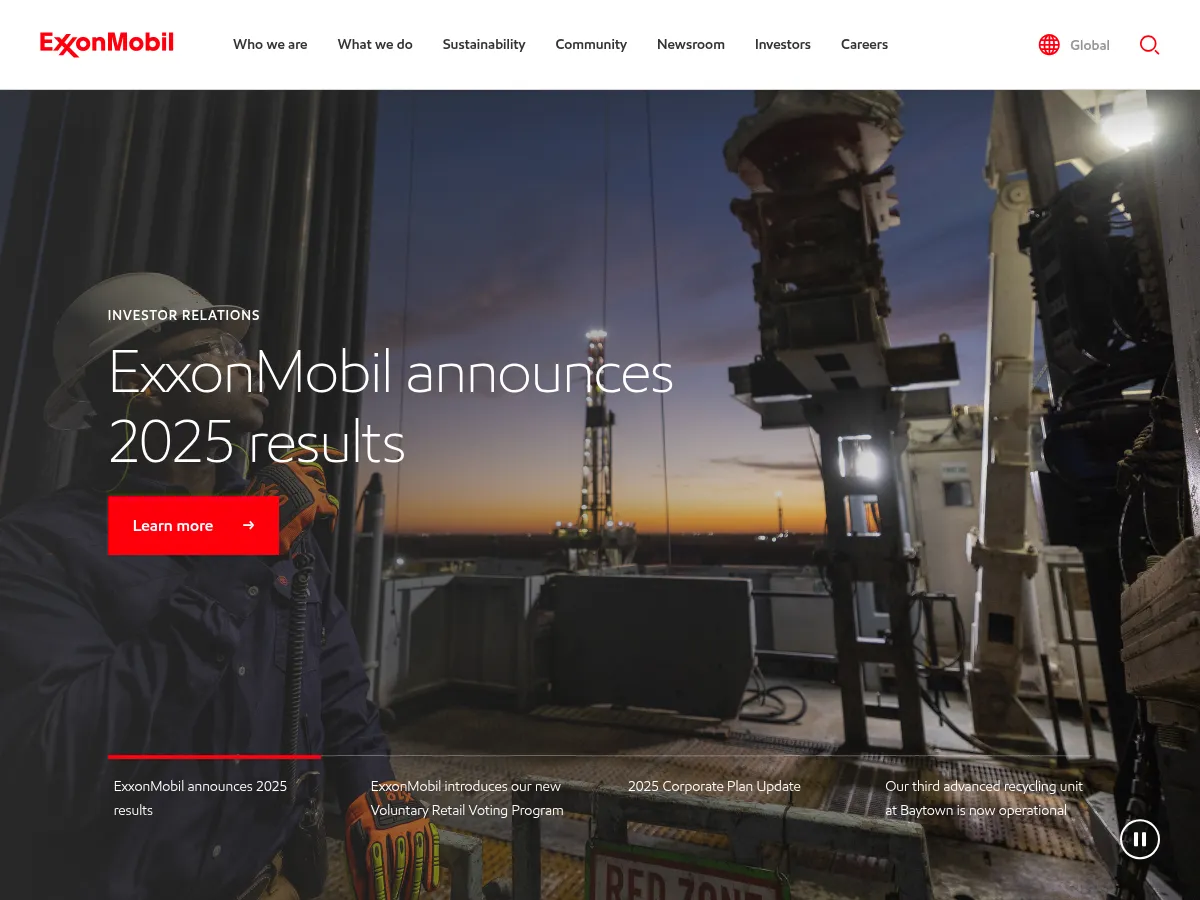
ExxonMobil Screenshot

Added: Feb 10, 2026

corporate.exxonmobil.com

Latest from Otrai

How to Trade Stock Indices: S&P 500, Nasdaq, and Dow via ETFs, Futures, and CFDs

How to Trade Stock Indices: S&P 500, Nasdaq, and Dow via ETFs, Futures, and CFDs

A stock index is a single number that summarizes the price action of a basket of companies. The S&P 500 tracks roughly 500 large US firms, the Nasdaq-100 tracks the 100 largest non-financial names on the Nasdaq exchange, and the Dow Jones Industrial Average follows 30 blue-chip stocks.


The Options Greeks Explained: Delta, Gamma, Theta, and Vega

The Options Greeks Explained: Delta, Gamma, Theta, and Vega

The Greeks explain why an option costs what it costs and how that price changes when the stock moves, time passes, and volatility shifts. Delta, Gamma, Theta, and Vega, made accessible.

Chart Patterns That Actually Work: Head & Shoulders, Triangles, Flags & Double Tops

Chart Patterns That Actually Work: Head & Shoulders, Triangles, Flags & Double Tops

Chart patterns are the most recognizable part of technical analysis and the most misunderstood. Most fail or break out the wrong way before reversing. This guide covers head and shoulders, double tops and bottoms, triangles, and flags — with realistic reliability, target measurement, and false-breakout confirmation.

Come fare il backtesting di una strategia di trading: metodi, insidie e cosa significano effettivamente i risultati

Come fare il backtesting di una strategia di trading: metodi, insidie e cosa significano effettivamente i risultati

Ogni trader ha una strategia che sembra fantastica nella sua testa. Il backtesting è il modo per scoprire se effettivamente funziona. Ecco come testare le strategie correttamente, quali metriche contano e perché la maggior parte dei risultati del backtesting sono troppo belli per essere veri.