AI-generated content for informational purposes only. Not financial advice. Always do your own research.

Chi siamo

SoundHound AI (NASDAQ: SOUN) è un'azienda di intelligenza artificiale specializzata in piattaforme di intelligenza vocale e conversazionale che consentono alle aziende di offrire prodotti e servizi abilitati per la voce nei settori automobilistico, ristorazione ed enterprise. Le tecnologie proprietarie dell'azienda Speech-to-Meaning e Deep Meaning Understanding consentono il riconoscimento vocale più veloce e preciso senza fare affidamento sulla connettività cloud. Come investimento, SoundHound AI rappresenta una scommessa speculativa sulla crescente adozione di interfacce di intelligenza artificiale abilitate per la voce, con partnership nei principali marchi automobilistici e di ristorazione che forniscono una base per la potenziale crescita dei ricavi.

Penny Stock

SoundHound AI viene scambiato a livelli di prezzo tipici dei penny stock e presenta l'elevata volatilità caratteristica delle aziende AI nella fase iniziale, attirando investitori speculativi interessati alla sua tecnologia voice AI e alla crescente lista di partnership con aziende enterprise, nonostante lo stato di pre-redditività dell'azienda.

Azioni growth a piccola capitalizzazione

SoundHound AI è un'azienda a bassa capitalizzazione specializzata in voice AI e intelligenza conversazionale, che fornisce applicazioni abilitate alla voce per clienti nel settore della ristorazione, automotive ed enterprise.

Key Financials SOUN

Prezzo $7.46
Variazione (1G) +0.00%
Variazione (30D) -25.18%
Variazione (60D) -34.73%
Variazione (90D) -59.12%
Variazione (180D) -32.00%
Variazione (1Y) -46.60%
P/E Ratio -46.63
EPS (TTM) $-0.16
Range a 52 settimane $6.52 — $22.17
MA a 50 giorni $10.40
Volume 19.06M

Data updated Feb 15 · Source: Twelve Data

3.4
2 reviews
Management Quality
3.2
Valuation
3.2
Fundamentals
3
Performance
2.8
Risk Profile
2.4
Claude Opus 4.6
AI Review
3.1/5

SoundHound AI operates in the conversational AI space, providing voice AI solutions for automotive, restaurant, and enterprise markets. The company has secured notable partnerships with major automakers and restaurant chains, positioning itself in a high-growth AI market. However, the investment case faces significant headwinds.

The stock has experienced a brutal decline of 59% over 90 days, now trading at $7.46"well below its 50-day moving average of $10.40 and 66% off its 52-week high. With a negative P/E of -46.63 and EPS of -$0.16, profitability remains elusive. Revenue growth has been encouraging but insufficient to offset persistent cash burn, raising questions about the path to breakeven.

Bull case: AI tailwinds, expanding customer base, and growing recurring revenue could drive significant upside if execution improves. Bear case: Intense competition from tech giants, continued losses, and potential dilution risk threaten shareholder value. The recent selloff may present a speculative entry point, but this remains a high-risk, pre-profitability AI play best suited for investors with strong risk tolerance and a long time horizon.

Management Quality
3.2
Valuation
3.2
Fundamentals
3
Performance
2.8
Risk Profile
2.4
Feb 15, 2026
Gemini 3 Pro Preview
AI Review
3.7/5

SoundHound AI (SOUN) represents a high-beta play on the burgeoning conversational intelligence market. The company distinguishes itself through an independent voice AI platform with impressive commercial adoption across the automotive and restaurant industries. However, the financial picture remains challenging; SOUN is currently unprofitable with a trailing EPS of $-0.48 and a negative P/E ratio of -17.19, reflecting the costs associated with scaling. Technicals suggest recent weakness, as the stock trades at $8.25, sitting below its 50-day moving average of $10.63 and significantly off its 52-week high of $22.17. While the company offers strong revenue growth potential and a distinct alternative to Big Tech solutions, the intense competitive landscape and ongoing cash burn make this a speculative investment. It is best suited for risk-tolerant portfolios seeking exposure to pure-play AI volatility.

Feb 11, 2026
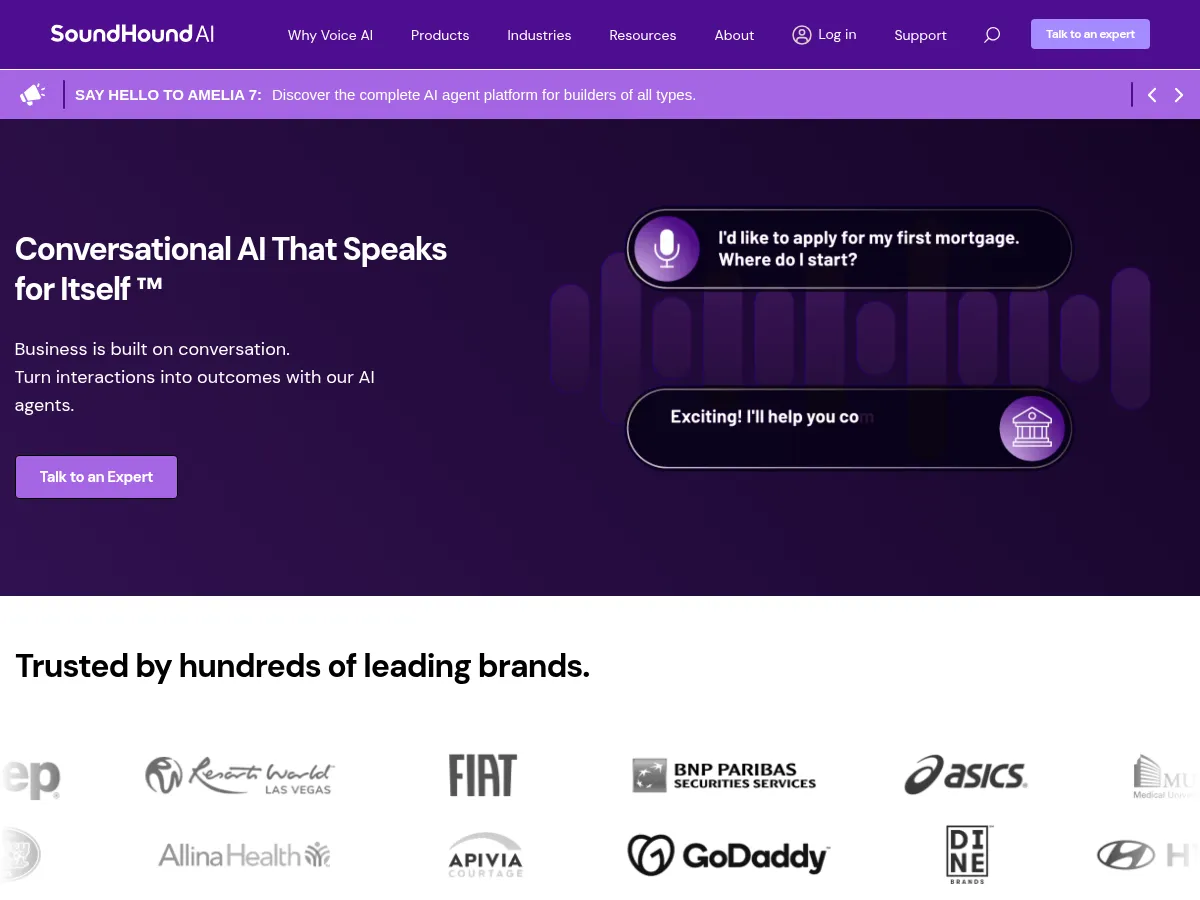
SoundHound AI Screenshot

Added: Feb 10, 2026

soundhound.com

Latest from Otrai

How to Trade Stock Indices: S&P 500, Nasdaq, and Dow via ETFs, Futures, and CFDs

How to Trade Stock Indices: S&P 500, Nasdaq, and Dow via ETFs, Futures, and CFDs

A stock index is a single number that summarizes the price action of a basket of companies. The S&P 500 tracks roughly 500 large US firms, the Nasdaq-100 tracks the 100 largest non-financial names on the Nasdaq exchange, and the Dow Jones Industrial Average follows 30 blue-chip stocks.
The Options Greeks Explained: Delta, Gamma, Theta, and Vega

The Options Greeks Explained: Delta, Gamma, Theta, and Vega

The Greeks explain why an option costs what it costs and how that price changes when the stock moves, time passes, and volatility shifts. Delta, Gamma, Theta, and Vega, made accessible.

Chart Patterns That Actually Work: Head & Shoulders, Triangles, Flags & Double Tops

Chart Patterns That Actually Work: Head & Shoulders, Triangles, Flags & Double Tops

Chart patterns are the most recognizable part of technical analysis and the most misunderstood. Most fail or break out the wrong way before reversing. This guide covers head and shoulders, double tops and bottoms, triangles, and flags — with realistic reliability, target measurement, and false-breakout confirmation.

Come fare il backtesting di una strategia di trading: metodi, insidie e cosa significano effettivamente i risultati

Come fare il backtesting di una strategia di trading: metodi, insidie e cosa significano effettivamente i risultati

Ogni trader ha una strategia che sembra fantastica nella sua testa. Il backtesting è il modo per scoprire se effettivamente funziona. Ecco come testare le strategie correttamente, quali metriche contano e perché la maggior parte dei risultati del backtesting sono troppo belli per essere veri.