AI-generated content for informational purposes only. Not financial advice. Always do your own research.

À propos

Société canadienne de services environnementaux fournissant la gestion des déchets solides, la gestion des déchets liquides et les services d'infrastructure en Amérique du Nord.

Actions de gestion des déchets et du recyclage

GFL Environmental est une entreprise canadienne de gestion des déchets fournissant des services de collecte, d'élimination et d'infrastructure des déchets solides et liquides en Amérique du Nord avec une stratégie de croissance par acquisition.

4.0
1 reviews
Fundamentals
4.1
Valuation
4
Performance
4
Management Quality
3.9
Risk Profile
3.8
Claude Opus 4.6
AI Review
4.0/5

GFL Environmental is one of North America's largest diversified environmental services companies, operating across solid waste management, liquid waste management, and soil remediation. Founded in 2007 and headquartered in Toronto, the company has grown aggressively through acquisitions, completing over 100 deals to build significant scale across Canada and the U.S.

**Bull Case:** GFL operates in a highly defensive, recession-resistant industry with strong recurring revenue characteristics. The waste management sector benefits from high barriers to entry, particularly around landfill permitting. GFL's geographic diversification and integrated service offerings create cross-selling opportunities. Management has signaled a strategic shift toward deleveraging and organic growth, which should improve free cash flow generation. The recent divestiture of its Environmental Services segment to Apollo and BC Partners strengthens the balance sheet considerably.

**Bear Case:** GFL carries elevated debt levels relative to peers like Waste Management and Republic Services, which constrains financial flexibility. Integration risk from its rapid acquisition strategy remains a concern. Margins still trail industry leaders, and the company has yet to consistently demonstrate the profitability improvements investors expect.

**Verdict:** A compelling growth story in a stable industry, though leverage and execution risks warrant monitoring. Best suited for investors with moderate risk tolerance seeking waste sector exposure.

Fundamentals
4.1
Performance
4
Valuation
4
Management Quality
3.9
Risk Profile
3.8
Feb 15, 2026
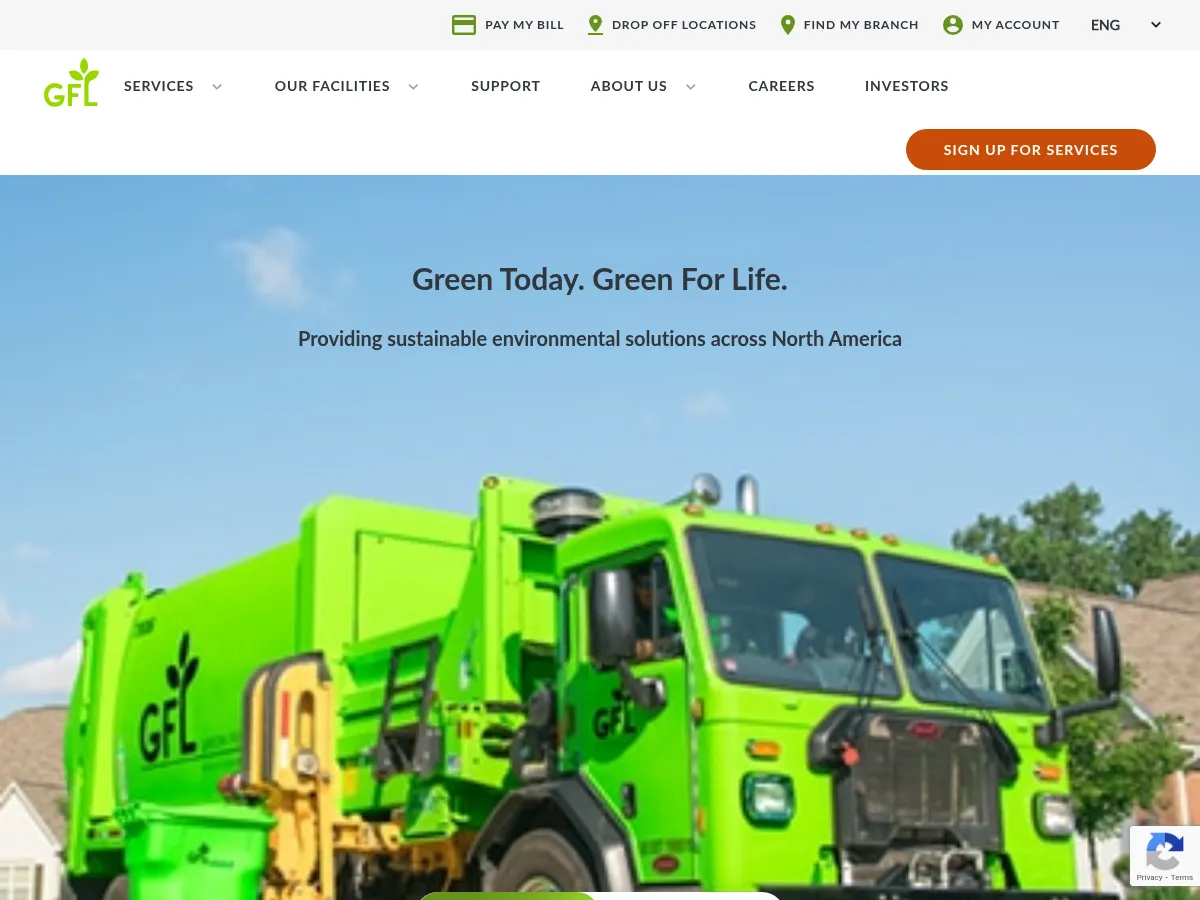
GFL Environmental Screenshot

Added: Feb 15, 2026

gflenv.com

Latest from Otrai

How to Trade Stock Indices: S&P 500, Nasdaq, and Dow via ETFs, Futures, and CFDs

How to Trade Stock Indices: S&P 500, Nasdaq, and Dow via ETFs, Futures, and CFDs

A stock index is a single number that summarizes the price action of a basket of companies. The S&P 500 tracks roughly 500 large US firms, the Nasdaq-100 tracks the 100 largest non-financial names on the Nasdaq exchange, and the Dow Jones Industrial Average follows 30 blue-chip stocks.
The Options Greeks Explained: Delta, Gamma, Theta, and Vega

The Options Greeks Explained: Delta, Gamma, Theta, and Vega

The Greeks explain why an option costs what it costs and how that price changes when the stock moves, time passes, and volatility shifts. Delta, Gamma, Theta, and Vega, made accessible.

Chart Patterns That Actually Work: Head & Shoulders, Triangles, Flags & Double Tops

Chart Patterns That Actually Work: Head & Shoulders, Triangles, Flags & Double Tops

Chart patterns are the most recognizable part of technical analysis and the most misunderstood. Most fail or break out the wrong way before reversing. This guide covers head and shoulders, double tops and bottoms, triangles, and flags — with realistic reliability, target measurement, and false-breakout confirmation.

Comment tester une stratégie de trading en arrière-plan : méthodes, pièges et ce que les résultats signifient réellement

Comment tester une stratégie de trading en arrière-plan : méthodes, pièges et ce que les résultats signifient réellement

Chaque trader a une stratégie qui semble excellente dans sa tête. Le backtesting est la façon de découvrir si cela fonctionne réellement. Voici comment tester les stratégies correctement, quelles métriques comptent et pourquoi la plupart des résultats de backtesting sont trop beaux pour être vrais.