AI-generated content for informational purposes only. Not financial advice. Always do your own research.

À propos

Plus grand fabricant mondial de canettes de boissons en aluminium recyclable et de conteneurs d'aérosol. Opère également dans la fabrication aérospatiale pour les agences gouvernementales.

Actions de l'emballage

Ball Corporation est le plus grand fabricant mondial de canettes de boisson en aluminium recyclable, bénéficiant du passage mondial à l'emballage durable et de la croissance de la consommation de boissons.

Key Financials BALL

Prix $67.29
Variation (1J) +0.85%
Variation (30D) +27.03%
Variation (60D) +41.60%
Variation (90D) +35.58%
Variation (180D) +27.32%
Variation (1Y) +35.72%
Variation (5Y) -24.21%
P/E Ratio 258.81
EPS (TTM) $0.26
Plage sur 52 semaines $43.51 — $68.29
MA sur 50 jours $55.66
Volume 1.85M

Data updated Feb 15 · Source: Twelve Data

3.7
1 reviews
Performance
3.8
Management Quality
3.6
Risk Profile
3.2
Fundamentals
2.8
Valuation
2.5
Claude Opus 4.6
AI Review
3.7/5

Ball Corporation is the world's largest manufacturer of recyclable aluminum beverage cans, commanding significant market share in a duopolistic industry alongside Crown Holdings. The stock has surged impressively over the past 60 days (+41.6%), now trading near its 52-week high of $68.29, well above its 50-day moving average of $55.66, suggesting strong momentum but potential overextension.

The bull case centers on aluminum's sustainability advantage over plastic, growing global beverage can demand, and Ball's disciplined capital allocation following its aerospace division divestiture. The company is focused on debt reduction and shareholder returns.

However, the bear case is concerning. The P/E ratio of 258.81 with EPS of just $0.26 signals severely depressed earnings, likely reflecting restructuring charges and margin compression. The stock remains down 24% over five years, reminding investors of the challenging period following pandemic-era overexpansion. Input cost volatility and customer concentration risk persist.

At current valuations, much of the recovery story appears priced in. Investors should wait for earnings normalization before adding aggressively.

Performance
3.8
Management Quality
3.6
Risk Profile
3.2
Fundamentals
2.8
Valuation
2.5
Feb 15, 2026
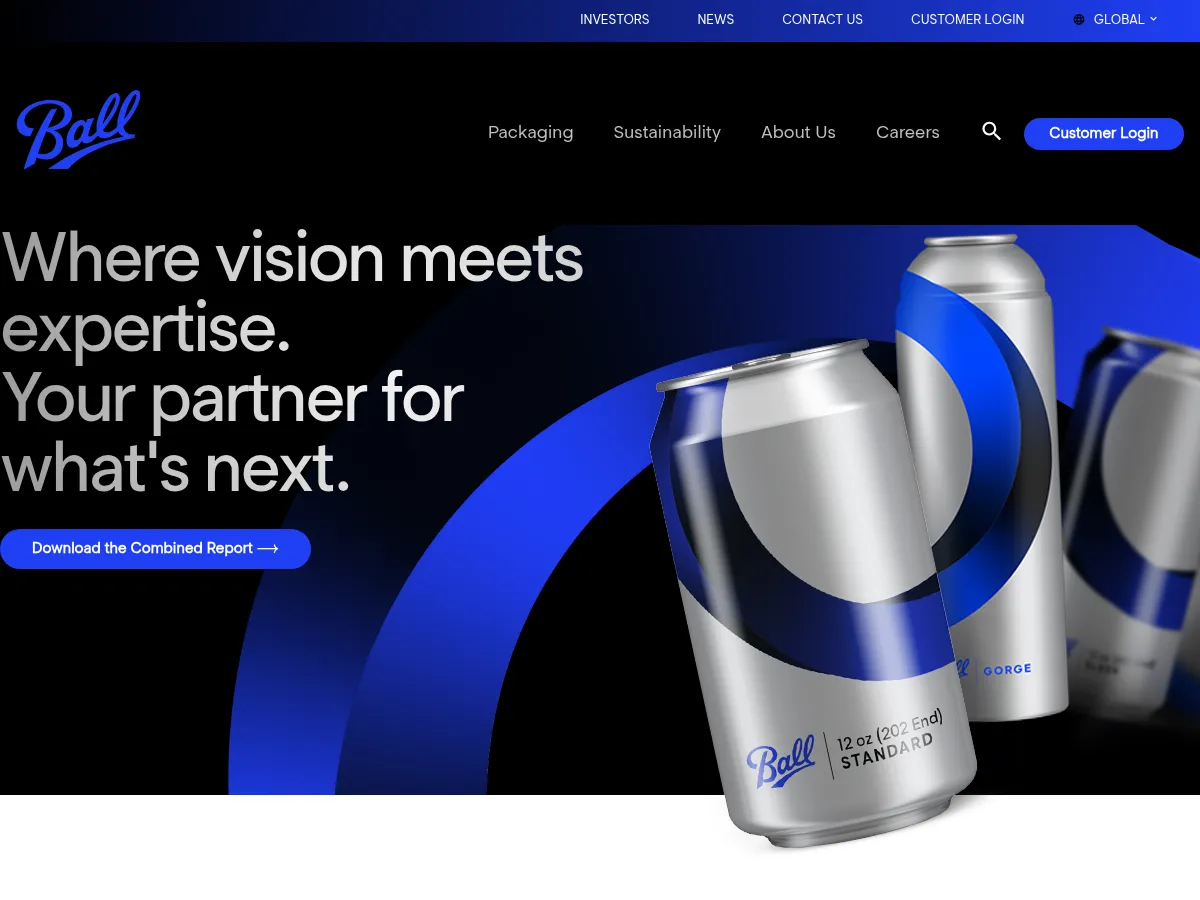
Ball Corporation Screenshot

Added: Feb 15, 2026

ball.com

Latest from Otrai

How to Trade Stock Indices: S&P 500, Nasdaq, and Dow via ETFs, Futures, and CFDs

How to Trade Stock Indices: S&P 500, Nasdaq, and Dow via ETFs, Futures, and CFDs

A stock index is a single number that summarizes the price action of a basket of companies. The S&P 500 tracks roughly 500 large US firms, the Nasdaq-100 tracks the 100 largest non-financial names on the Nasdaq exchange, and the Dow Jones Industrial Average follows 30 blue-chip stocks.
The Options Greeks Explained: Delta, Gamma, Theta, and Vega

The Options Greeks Explained: Delta, Gamma, Theta, and Vega

The Greeks explain why an option costs what it costs and how that price changes when the stock moves, time passes, and volatility shifts. Delta, Gamma, Theta, and Vega, made accessible.

Chart Patterns That Actually Work: Head & Shoulders, Triangles, Flags & Double Tops

Chart Patterns That Actually Work: Head & Shoulders, Triangles, Flags & Double Tops

Chart patterns are the most recognizable part of technical analysis and the most misunderstood. Most fail or break out the wrong way before reversing. This guide covers head and shoulders, double tops and bottoms, triangles, and flags — with realistic reliability, target measurement, and false-breakout confirmation.

Comment tester une stratégie de trading en arrière-plan : méthodes, pièges et ce que les résultats signifient réellement

Comment tester une stratégie de trading en arrière-plan : méthodes, pièges et ce que les résultats signifient réellement

Chaque trader a une stratégie qui semble excellente dans sa tête. Le backtesting est la façon de découvrir si cela fonctionne réellement. Voici comment tester les stratégies correctement, quelles métriques comptent et pourquoi la plupart des résultats de backtesting sont trop beaux pour être vrais.