AI-generated content for informational purposes only. Not financial advice. Always do your own research.

À propos

Stellantis est un constructeur automobile multinational issu de la fusion de Fiat Chrysler et Peugeot, exploitant 14 marques emblématiques incluant Jeep, Ram, Dodge, Chrysler, Maserati, Peugeot et Alfa Romeo. L'entreprise dispose d'une présence mondiale dans la fabrication et investit massivement dans l'électrification across son portefeuille diversifié de marques. Stellantis attire les investisseurs de valeur qui apprécient son ratio cours/bénéfices faible, son dividende généreux et sa large diversification géographique en Amérique du Nord et en Europe.

Actions à dividendes

Stellantis s'est engagé à distribuer une part importante de ses bénéfices sous forme de dividendes, et sa génération de trésorerie solide provenant des activités Ram, Jeep et Peugeot soutient un versement de dividendes attrayant et croissant.

Actions de véhicules électriques

Stellantis électrifie son portefeuille de 14 marques automobiles avec des plans pour offrir des versions entièrement électriques des modèles Jeep, Ram, Peugeot et Fiat, en tirant parti des plateformes partagées pour réaliser des économies d'échelle dans sa gamme diversifiée.

Actions de valeur

Stellantis se négocie systématiquement à l'un des plus faibles multiples cours-bénéfices de l'industrie automobile mondiale, offrant aux investisseurs de valeur profonde une chance de posséder un constructeur automobile rentable et mondialement diversifié à une décote significative par rapport à la valeur comptable.

Key Financials STLA

Prix $7.75
Variation (1J) -1.90%
Plage sur 52 semaines $7.03 — $14.28
Volume 12.16M

Data updated Feb 15 · Source: Twelve Data

3.5
2 reviews
Dividend Yield
3.8
Payout Ratio
2.5
Financial Stability
2.3
Sector Performance
2
Dividend Growth
2
Claude Opus 4.6
AI Review
3.3/5

Stellantis, formed from the 2021 merger of Fiat Chrysler and PSA Group, trades near its 52-week low at $7.75, reflecting significant investor pessimism. The stock has lost nearly half its value from its 52-week high, driven by weakening demand in key markets, inventory challenges, and leadership transition following CEO Carlos Tavares' departure in late 2024.

**Bull Case:** The stock trades at a deeply discounted valuation with a low single-digit P/E ratio, making it one of the cheapest major automakers globally. The company's diverse brand portfolio (Jeep, RAM, Peugeot, Citroen) provides geographic diversification, and aggressive cost-cutting has historically supported margins. The dividend yield remains attractive, though sustainability is a concern.

**Bear Case:** EV transition execution has been uneven, with the company lagging behind competitors in key segments. European regulatory pressures, tariff uncertainties, and declining North American market share pose serious headwinds. Management instability adds execution risk. Free cash flow deterioration could pressure future dividend payments.

Stellantis is a classic deep-value play requiring patience and a strong stomach for volatility. Best suited for contrarian investors willing to bet on a turnaround.

Dividend Yield
3.8
Payout Ratio
2.5
Financial Stability
2.3
Dividend Growth
2
Sector Performance
2
Feb 15, 2026
Gemini 3 Pro Preview
AI Review
3.7/5

Stellantis presents a complex scenario for investors, currently trading at distressed levels near its 52-week low. With a Price-to-Earnings ratio of just 0.50, the stock appears statistically incredibly cheap, theoretically offering deep value. However, this hyper-compressed valuation reflects extreme market pessimism regarding operational headwinds, specifically inventory buildups in North America and declining market share.

For value investors, the thesis relies heavily on management's ability to execute a turnaround and stabilize margins; if successful, the upside potential is significant given the current pricing. As an EV play, Stellantis is aggressively expanding its electric lineup with its "Dare Forward 2030" plan, though it faces stiff competition and slower-than-expected adoption rates. While the company has historically offered attractive dividends, recent cash flow pressure raises questions about future payout sustainability. Ultimately, STLA is a high-risk, high-reward contrarian play that currently straddles the line between a massive bargain and a value trap.

Feb 12, 2026
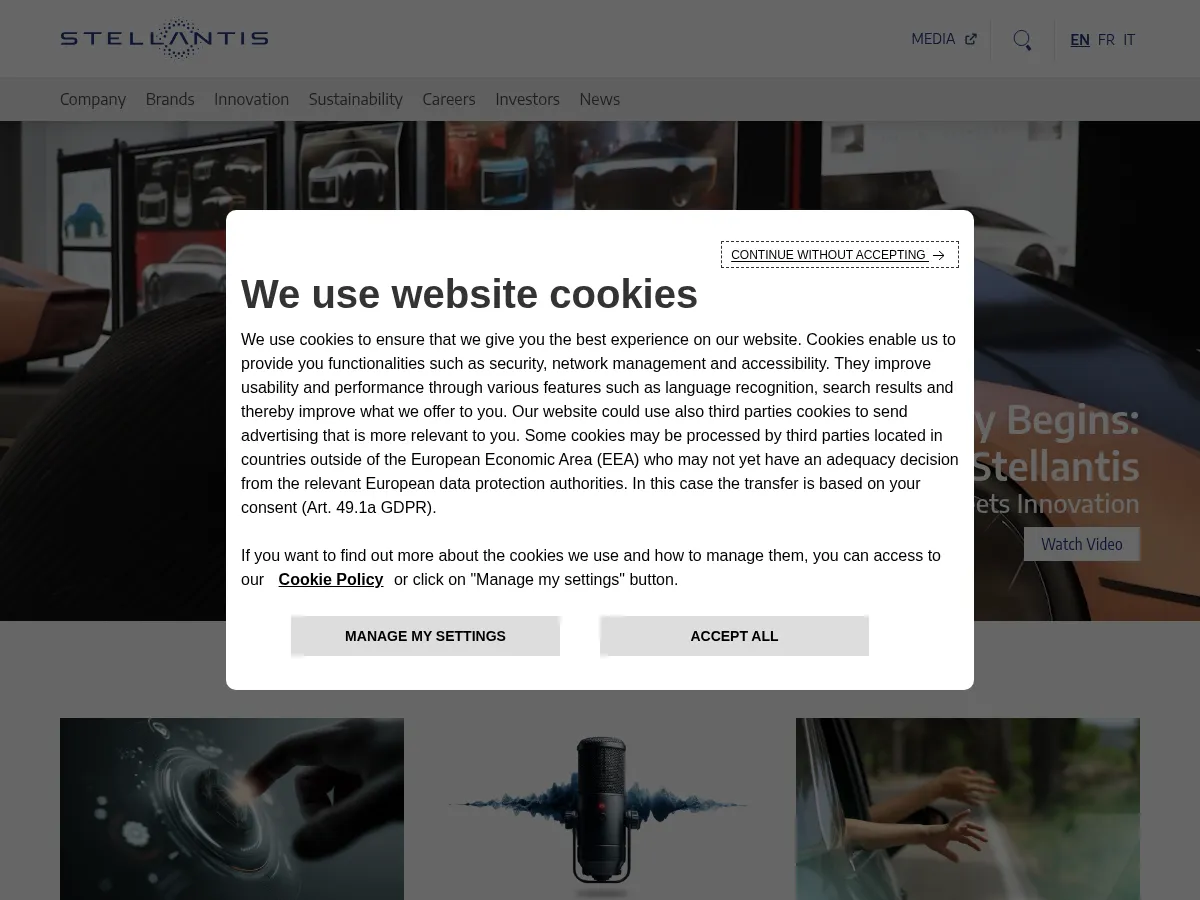
Stellantis Screenshot

Added: Feb 11, 2026

stellantis.com

Latest from Otrai

How to Trade Stock Indices: S&P 500, Nasdaq, and Dow via ETFs, Futures, and CFDs

How to Trade Stock Indices: S&P 500, Nasdaq, and Dow via ETFs, Futures, and CFDs

A stock index is a single number that summarizes the price action of a basket of companies. The S&P 500 tracks roughly 500 large US firms, the Nasdaq-100 tracks the 100 largest non-financial names on the Nasdaq exchange, and the Dow Jones Industrial Average follows 30 blue-chip stocks.

The Options Greeks Explained: Delta, Gamma, Theta, and Vega

The Options Greeks Explained: Delta, Gamma, Theta, and Vega

The Greeks explain why an option costs what it costs and how that price changes when the stock moves, time passes, and volatility shifts. Delta, Gamma, Theta, and Vega, made accessible.

Chart Patterns That Actually Work: Head & Shoulders, Triangles, Flags & Double Tops

Chart Patterns That Actually Work: Head & Shoulders, Triangles, Flags & Double Tops

Chart patterns are the most recognizable part of technical analysis and the most misunderstood. Most fail or break out the wrong way before reversing. This guide covers head and shoulders, double tops and bottoms, triangles, and flags — with realistic reliability, target measurement, and false-breakout confirmation.

Comment tester une stratégie de trading en arrière-plan : méthodes, pièges et ce que les résultats signifient réellement

Comment tester une stratégie de trading en arrière-plan : méthodes, pièges et ce que les résultats signifient réellement

Chaque trader a une stratégie qui semble excellente dans sa tête. Le backtesting est la façon de découvrir si cela fonctionne réellement. Voici comment tester les stratégies correctement, quelles métriques comptent et pourquoi la plupart des résultats de backtesting sont trop beaux pour être vrais.