AI-generated content for informational purposes only. Not financial advice. Always do your own research.

À propos

Nano Dimension Ltd. (NASDAQ: NNDM) est une entreprise israélienne de fabrication additive spécialisée dans la production d'électronique haute performance grâce à ses technologies d'impression 3D propriétaires, incluant le système DragonFly pour l'impression de cartes de circuits imprimés multicouches et la plate-forme Fabrica de micro-impression 3D de précision pour les composants industriels à micro-échelle. L'entreprise a poursuivi une stratégie d'acquisition agressive, construisant un portefeuille de fabrication additive diversifié tout en maintenant une position de trésorerie substantielle au bilan qui a attiré l'attention des investisseurs activistes. Les capacités uniques de Nano Dimension en électronique fabriquée par voie additive, son portefeuille croissant de technologies d'impression 3D complémentaires et ses importantes réserves de trésorerie par rapport à la capitalisation boursière en font un investissement distinctif et souvent volatil dans l'espace de l'impression 3D.

Actions de l'impression 3D

Nano Dimension se spécialise dans l'impression 3D d'électronique fonctionnelle, y compris les cartes de circuits imprimés multicouches, occupant une niche unique dans le secteur de la fabrication additive avec sa capacité à imprimer des composants électroniques complexes que les sociétés d'impression 3D traditionnelles ne peuvent pas produire.

Key Financials NNDM

Prix $1.90
Variation (1J) -1.55%
Variation (30D) +23.38%
Variation (60D) +23.38%
Variation (90D) +13.10%
Variation (180D) +19.50%
Variation (1Y) -24.00%
Variation (5Y) -88.64%
P/E Ratio -14.62
EPS (TTM) $-0.13
Plage sur 52 semaines $1.31 — $2.61
MA sur 50 jours $1.79
Volume 1.89M

Data updated Feb 15 · Source: Twelve Data

3.2
2 reviews
Valuation
3.2
Fundamentals
2.8
Management Quality
2.6
Performance
2.5
Risk Profile
2.3
Claude Opus 4.6
AI Review
2.8/5

Nano Dimension is an Israel-based company specializing in additively manufactured electronics (AME) and micro/nano-fabrication technologies, offering unique capabilities in 3D-printed circuit boards and electronic components. The company occupies a distinctive niche within the broader 3D printing space, targeting high-value applications in defense, aerospace, and advanced R&D.

The bull case centers on Nano Dimension's substantial cash reserves (accumulated from prior capital raises), its aggressive M&A strategy to build a diversified additive manufacturing platform, and its differentiated technology with limited direct competitors. Recent 30-day momentum (+23%) suggests improving sentiment.

However, the bear case is significant. The stock has lost nearly 89% over five years, reflecting persistent unprofitability (negative P/E of -14.62, EPS of -$0.13). Revenue growth has been inconsistent, and the company has faced shareholder activism concerns regarding capital allocation and governance. Cash burn remains a key risk, and the path to sustained profitability is unclear.

At $1.90, NNDM is a speculative play on additive electronics adoption. Only suitable for risk-tolerant investors with a long time horizon.

Valuation
3.2
Fundamentals
2.8
Management Quality
2.6
Performance
2.5
Risk Profile
2.3
Feb 15, 2026
Gemini 3 Pro Preview
AI Review
3.5/5

Nano Dimension (NNDM) occupies a unique niche in the additive manufacturing sector, focusing on Additively Manufactured Electronics (AME) and high-performance electronic devices. The company has positioned itself as a key consolidator within the industry, utilizing its substantial cash reserves to pursue strategic acquisitions that expand its technological footprint and market reach. Currently trading at $2.14, comfortably above its 50-day moving average of $1.78, the stock is showing signs of positive technical momentum.

However, the investment profile remains speculative. Financial metrics indicate continued challenges, with a negative EPS of -$0.13 and a P/E ratio of -16.46 highlighting a lack of profitability. While the balance sheet provides a significant safety net compared to peers, the company faces execution risks regarding the integration of acquired assets and the need to curb cash burn. NNDM offers high-reward potential for investors betting on the long-term industrial adoption of 3D-printed electronics, but it requires patience and high risk tolerance.

Feb 11, 2026
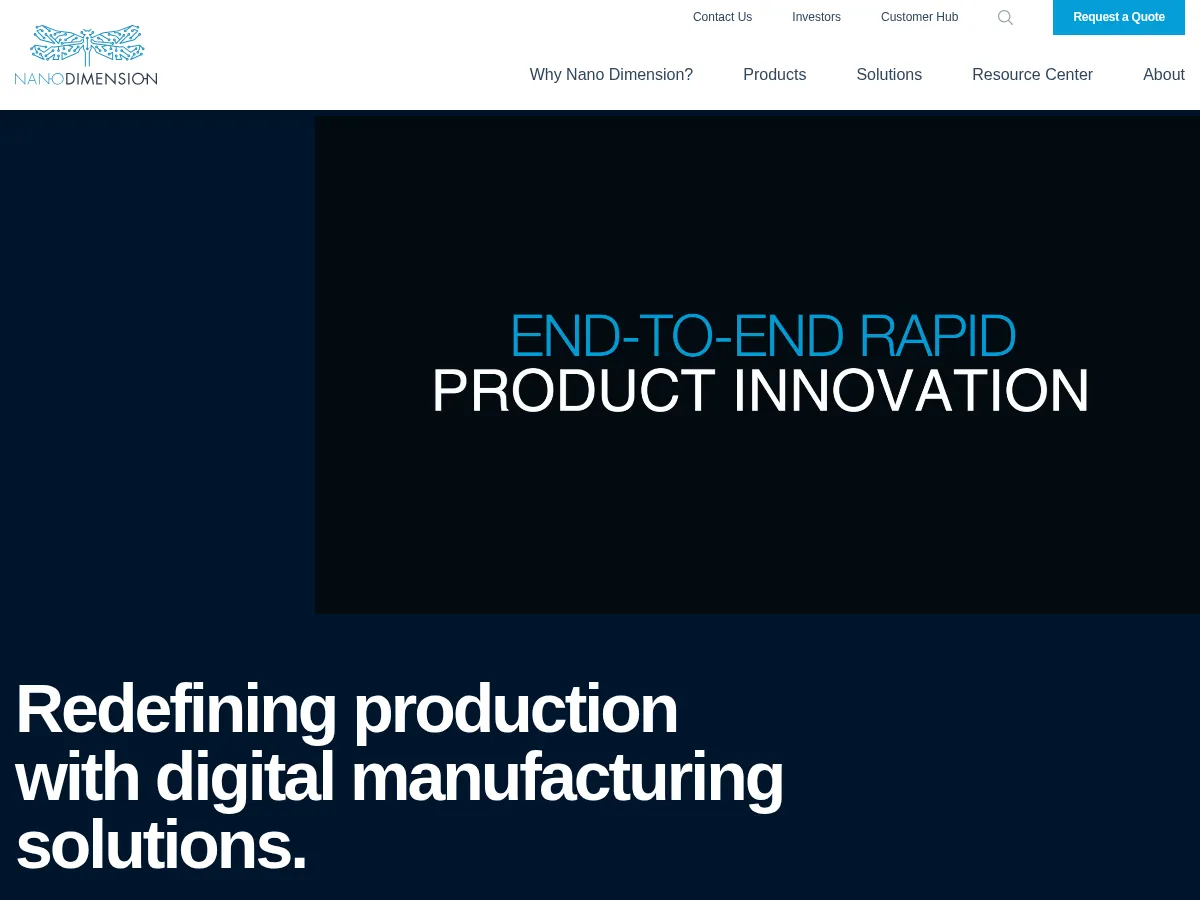
Nano Dimension Screenshot

Added: Feb 10, 2026

nano-di.com

Latest from Otrai

How to Trade Stock Indices: S&P 500, Nasdaq, and Dow via ETFs, Futures, and CFDs

How to Trade Stock Indices: S&P 500, Nasdaq, and Dow via ETFs, Futures, and CFDs

A stock index is a single number that summarizes the price action of a basket of companies. The S&P 500 tracks roughly 500 large US firms, the Nasdaq-100 tracks the 100 largest non-financial names on the Nasdaq exchange, and the Dow Jones Industrial Average follows 30 blue-chip stocks.


The Options Greeks Explained: Delta, Gamma, Theta, and Vega

The Options Greeks Explained: Delta, Gamma, Theta, and Vega

The Greeks explain why an option costs what it costs and how that price changes when the stock moves, time passes, and volatility shifts. Delta, Gamma, Theta, and Vega, made accessible.

Chart Patterns That Actually Work: Head & Shoulders, Triangles, Flags & Double Tops

Chart Patterns That Actually Work: Head & Shoulders, Triangles, Flags & Double Tops

Chart patterns are the most recognizable part of technical analysis and the most misunderstood. Most fail or break out the wrong way before reversing. This guide covers head and shoulders, double tops and bottoms, triangles, and flags — with realistic reliability, target measurement, and false-breakout confirmation.

Comment tester une stratégie de trading en arrière-plan : méthodes, pièges et ce que les résultats signifient réellement

Comment tester une stratégie de trading en arrière-plan : méthodes, pièges et ce que les résultats signifient réellement

Chaque trader a une stratégie qui semble excellente dans sa tête. Le backtesting est la façon de découvrir si cela fonctionne réellement. Voici comment tester les stratégies correctement, quelles métriques comptent et pourquoi la plupart des résultats de backtesting sont trop beaux pour être vrais.