AI-generated content for informational purposes only. Not financial advice. Always do your own research.

À propos

ARM Holdings plc (NASDAQ: ARM) est la plus influente société mondiale de conception de semiconducteurs, octroyant des licences de ses architectures de puces éconergétiques et de sa propriété intellectuelle à pratiquement tous les grands fabricants de technologie et de puces du monde, avec les processeurs basés sur ARM alimentant plus de 99 % des smartphones mondiaux et une part croissante des appareils de centres de données, automobiles et IoT. L'entreprise est devenue publique en septembre 2023 dans l'un des IPO les plus attendus de l'année après que SoftBank Group l'ait privatisée en 2016, revenant sur les marchés publics avec une valorisation reflétant sa position critique dans l'écosystème mondial des semiconducteurs. Le modèle commercial de redevances et de licences d'ARM, sa présence omniprésente dans l'informatique mobile et sa pénétration croissante dans l'informatique en nuage et les charges de travail IA en font un investissement unique en propriété intellectuelle de semiconducteurs avec des caractéristiques de marge exceptionnelles.

Actions de l'aérospatiale

Les architectures de puces éconergétiques d'ARM sont de plus en plus adoptées dans les applications aérospatiales et de défense, des systèmes de satellites aux avioniques avancées nécessitant une informatique haute performance à faible consommation d'énergie.

Actions d'introduction en bourse

ARM Holdings est revenu sur les marchés publics en septembre 2023 avec l'une des introductions en bourse les plus grandes et les plus attendues de l'année, attirant un intérêt massif des investisseurs en raison de sa position dominante dans les licences de propriété intellectuelle de semi-conducteurs et de son rôle critique dans l'alimentation de l'écosystème mondial des smartphones et des puces d'IA émergentes.

Key Financials ARM

Prix $125.28
Variation (1J) +2.53%
Variation (30D) +14.61%
Variation (60D) -10.68%
Variation (90D) -19.81%
Variation (180D) -7.57%
Variation (1Y) -19.39%
P/E Ratio 28.87
EPS (TTM) $4.34
Plage sur 52 semaines $80.00 — $183.16
MA sur 50 jours $117.65
Volume 4.42M

Data updated Feb 15 · Source: Twelve Data

3.4
2 reviews
Market Position
4.5
Innovation & R&D
4
Contract Pipeline
3.5
Financial Performance
3
Management Team
2.5
Claude Opus 4.6
AI Review
2.5/5

ARM Holdings is the dominant designer of semiconductor architectures powering virtually all smartphones and increasingly penetrating data centers, automotive, and IoT markets. The company's royalty-based licensing model provides high-margin, recurring revenue with exceptional scalability. With a P/E of 28.87 and EPS of $4.34, the valuation has become more reasonable after a significant pullback from its 52-week high of $183.16, now trading roughly 32% below that peak.

Bull case: ARM's architecture is becoming the standard beyond mobile, with growing adoption in cloud computing (AWS Graviton, Microsoft Cobalt) and AI edge inference. The licensing model means revenue scales with industry chip volumes without manufacturing risk. Recent 30-day momentum (+14.6%) suggests renewed buyer interest.

Bear case: The stock remains volatile post-IPO, down ~19% over the past year. Revenue concentration from a few major licensees creates dependency risk, and competition from RISC-V open-source architecture poses a long-term threat.

Note: ARM's categorization as an Aerospace stock is misleading"it's fundamentally a semiconductor IP company with minimal direct aerospace exposure. As a recent IPO, it remains a compelling but volatile play on the global chip ecosystem.

Market Position
4.5
Innovation & R&D
4
Contract Pipeline
3.5
Financial Performance
3
Management Team
2.5
Feb 15, 2026
Gemini 3 Pro Preview
AI Review
4.2/5

ARM Holdings remains a cornerstone of the global semiconductor ecosystem, leveraging its dominant architecture to capture value in the booming AI and data center markets. With a P/E ratio of roughly 29x based on recent earnings, the stock appears reasonably valued relative to its high-growth peers, particularly as it shifts customers to higher-royalty v9 architecture. Currently trading above its 50-day moving average of $118.33 yet well below its 52-week high of $183.16, ARM offers an intriguing entry point for investors seeking established tech infrastructure rather than speculative plays. While the company faces long-term threats from open-source alternatives like RISC-V and broader semiconductor cyclicality, its near-monopoly in mobile and growing footprint in automotive and cloud computing solidify its investment thesis. ARM represents a mature, high-quality addition to recent IPO portfolios.

Feb 11, 2026
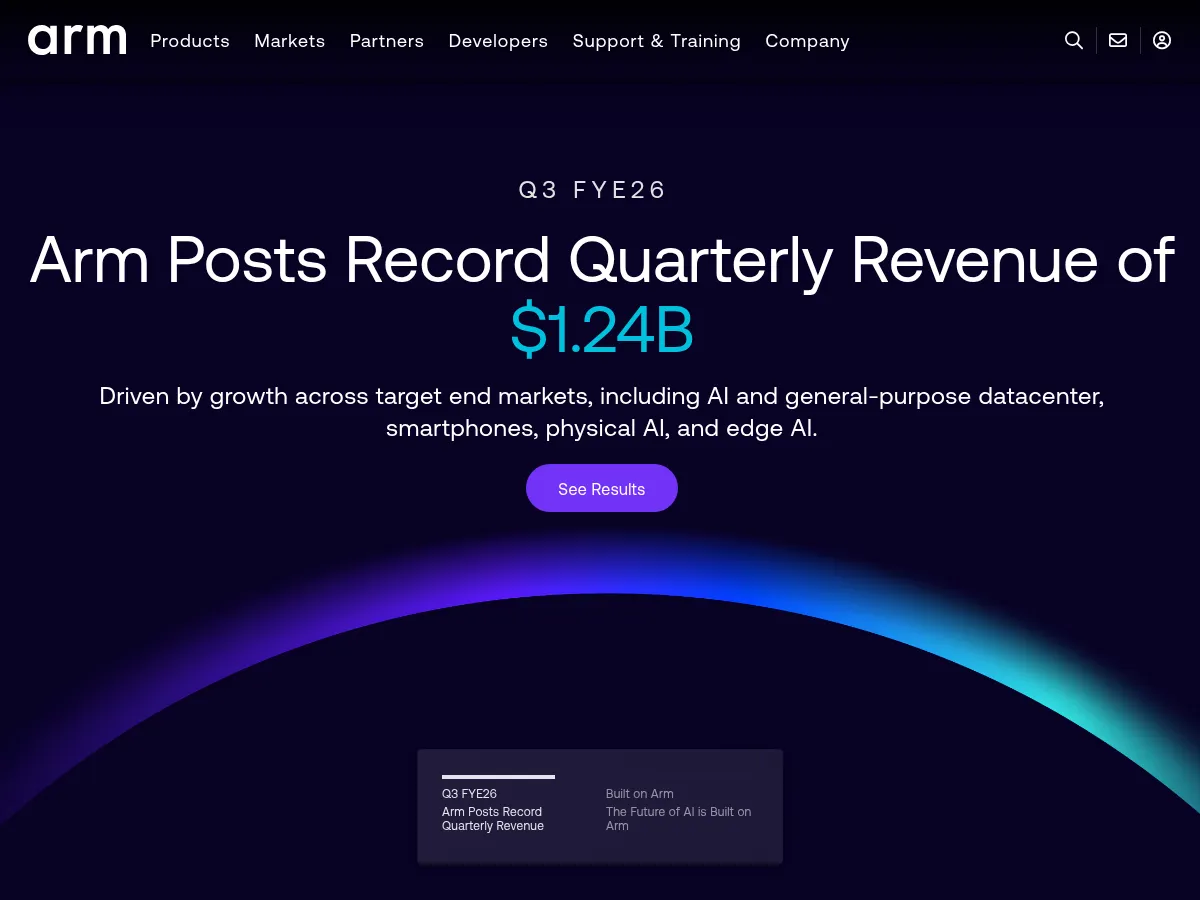
ARM Holdings Screenshot

Added: Feb 10, 2026

arm.com

Latest from Otrai

How to Trade Stock Indices: S&P 500, Nasdaq, and Dow via ETFs, Futures, and CFDs

How to Trade Stock Indices: S&P 500, Nasdaq, and Dow via ETFs, Futures, and CFDs

A stock index is a single number that summarizes the price action of a basket of companies. The S&P 500 tracks roughly 500 large US firms, the Nasdaq-100 tracks the 100 largest non-financial names on the Nasdaq exchange, and the Dow Jones Industrial Average follows 30 blue-chip stocks.
The Options Greeks Explained: Delta, Gamma, Theta, and Vega

The Options Greeks Explained: Delta, Gamma, Theta, and Vega

The Greeks explain why an option costs what it costs and how that price changes when the stock moves, time passes, and volatility shifts. Delta, Gamma, Theta, and Vega, made accessible.

Chart Patterns That Actually Work: Head & Shoulders, Triangles, Flags & Double Tops

Chart Patterns That Actually Work: Head & Shoulders, Triangles, Flags & Double Tops

Chart patterns are the most recognizable part of technical analysis and the most misunderstood. Most fail or break out the wrong way before reversing. This guide covers head and shoulders, double tops and bottoms, triangles, and flags — with realistic reliability, target measurement, and false-breakout confirmation.

Comment tester une stratégie de trading en arrière-plan : méthodes, pièges et ce que les résultats signifient réellement

Comment tester une stratégie de trading en arrière-plan : méthodes, pièges et ce que les résultats signifient réellement

Chaque trader a une stratégie qui semble excellente dans sa tête. Le backtesting est la façon de découvrir si cela fonctionne réellement. Voici comment tester les stratégies correctement, quelles métriques comptent et pourquoi la plupart des résultats de backtesting sont trop beaux pour être vrais.